
Portrait
Octabox Corporate Headshot
85–105mm at ~1.3m — the flattering headshot distance where the face reads true.
Open in Light BuilderPortrait photographers and anyone choosing a lens
Wide lenses do not distort faces — standing close does. Learn the distance geometry behind the "big nose" look and the telephoto flatten.
9 min read
Ask ten photographers why a 24mm portrait gives someone a big nose and most will say "wide lenses distort faces." It is the most repeated sentence in photography, and it is wrong. Swap the 24mm for a 200mm without moving your feet, then crop the 200mm frame down to the same head-and-shoulders — the nose is exactly as big. The lens never touched the proportions. What drew that face was where the camera stood.
Perspective — the relative apparent size of near things versus far things — is set by one variable only: the distance from the camera to the subject. Focal length feels like the cause because you rarely change one without the other. To keep the same crop on a wide lens you have to walk right up to the face; to keep it on a telephoto you have to back across the room. It is that walk, not the glass, that makes or breaks the proportions. Once you separate the two, every lens choice stops being superstition and becomes a decision about how far away you want to be.
The lens is a cropping tool. Your feet are the perspective tool. Learn to feel the distance first, then pick the focal length that frames it.
Here is the whole mechanism, and it is just similar triangles. A feature of a given size looks bigger the closer it is, because it subtends a wider angle at the camera — its apparent size is proportional to one over the distance. A face is not flat: the nose tip sits a couple of centimetres in front of the cheekbones, and the ears sit roughly nine centimetres behind them. So the nose and the ears are at different distances from the camera, and the camera renders them at different scales.
How different depends entirely on how far away you are. Work the numbers. Stand close for a tight head-and-shoulders on a wide lens — say the cheekbones are 40cm from the camera. The nose tip is then about 38cm away and the ears about 49cm. Their apparent-size ratio is 49 divided by 38, which is 1.29: the nose renders 29% larger relative to the ears than a flat map of the face would show. That is the "big nose" look, and nothing about the lens caused it.
Now shoot the same face from 2 metres with a longer lens to hold the same crop. The nose sits at 1.98m, the ears at 2.09m, and the ratio is 2.09 divided by 1.98, which is 1.06 — the nose is only 6% larger than the ears. Same person, same nose, same 11cm of facial depth. The difference is that 11cm is a big slice of 40cm and a trivial slice of 2m. A feature 2cm closer than its neighbour matters enormously at 40cm and vanishes at 4m. That is the entire lesson, and it is arithmetic, not optics.
The face has depth. Distance decides how much that depth costs. Close makes the depth loud; far makes it quiet.
If the lens does not draw the perspective, what does it do? It sets the angle of view — how wide a slice of the world lands on the sensor. A long focal length sees a narrow angle (a small crop of the scene, magnified); a short focal length sees a wide angle. That is the beginning and end of it. Two photographs taken from the same spot at different focal lengths are literally crops of one another — you can enlarge the centre of the wide frame and land on the telephoto frame, perspective and all.
Because focal length only changes the crop, it changes which distance gives you your framing. Want a head-and-shoulders portrait? On a 50mm you get it at about 0.7m; on an 85mm at about 1.2m; on a 200mm at about 2.8m. The lens is a distance selector: pick the focal length and you have picked, for a given crop, how far back you must stand — and that is what sets the perspective. This is why "double the focal length, double the distance" holds at constant framing, and why the lens number is really a distance dial wearing a millimetre label.
So the honest way to read your kit: a portrait lens is not flattering because of anything happening inside the barrel. An 85mm is flattering because it forces you to stand at a flattering distance to fill the frame. A cheaper way to describe an 85mm is "the lens that stops you getting close enough to ruin the nose."
Telephoto "compression" — the backdrop looming huge and close behind the subject — gets blamed on the lens just as often, and it is the same story running the other way. Compression is a distance effect on the background.
Picture the subject 3m in front of a wall. Shoot from 0.4m and the background is 3.4m away; its apparent size relative to the subject scales as 0.4 divided by 3.4, which is 0.12. Back up to 2m and the background is now 5m away, and the ratio is 2.0 divided by 5.0, which is 0.40. The wall renders about 3.4 times larger relative to the subject from the far position, purely because the 3m subject-to-background gap shrank from being most of the total distance to being a minor fraction of it. The camera didn't squeeze anything. It stepped back, and stepping back always makes the distances behind the subject matter less, so the background swells up to meet them.
That is why a 200mm portrait feels cinematic: the far world is rendered nearly to the same scale as the subject, stacked up close behind them. It is the flip side of the wide-angle look, where the near world (the nose) is rendered huge and the far world falls away small. One cause, two symptoms, both distance.
Say it plainly: wide lenses do not distort faces. They let you — and often tempt you — to stand too close, and close is what enlarges the nearest features. A 24mm lens used from across a room renders a face with perfectly natural proportions; that face just occupies a tiny patch of a very wide frame. The distortion people blame on the 24mm only appears when they walk up to fill the frame with a head, and it would appear identically with any lens used from that same short distance.
There is a separate, real thing called optical distortion — barrel and pincushion bending of straight lines near the frame edge — that some wide lenses do exhibit. That is a lens flaw about line straightness, not about facial proportion, and it is corrected in software every day. It is not what makes the nose big. Keep the two ideas apart.
The practical upshot is liberating: you are never stuck with a "distorting" lens, and you never need to buy your way to good proportions. You need to control your distance. If a face looks too heavy in the nose, the fix is not a longer lens — it is to step back, then re-crop or change focal length to reframe from the new, better distance.
Because distance is the real control, choose it by intent and let the focal length follow:
Headshots and beauty want distance, so pick a long lens: 85mm and up puts you 1.2m or more from the face, where facial depth goes quiet and proportions read true and flattering. This is the library's workhorse range — the octabox corporate headshot, the clamshell beauty setup, and the flagship dramatic portrait are all shot around that comfortable headshot distance (linked in the Related setups panel).
Environmental portraits want the room in the story, so accept a close distance and a wide lens: 24–35mm from a metre or less shows a person in a place, and the mild near-far exaggeration reads as energy and presence rather than error. The cinematic practical-interior portrait and the lantern-lit overhead living-room portrait use exactly this — the close working distance is why the space feels large around the subject.
The compressed, editorial look wants maximum distance: a 135–200mm from several metres pulls the background forward and large. The athlete rim-grid setup leans on the telephoto to stack a tight backdrop behind the subject.
Product and macro are the quiet exception: with an inanimate subject there is no "flattering" to protect, so distance is chosen for working room, depth of field, and keeping your own shadow off the set — which is why product work lives around 90–100mm, far enough to light freely without wide-angle exaggeration of the nearest edge.
Architecture and interiors deliberately want the wide, close-in geometry — the near-far spread that exaggerates a nose is the same spread that makes a room feel deep and grand. There the "distortion" is the point.
Buying a longer lens to fix "distortion." The symptom is a portrait where the nose dominates; the reflex is to blame the 35mm and reach for an 85mm. The 85mm helps — but only because it makes you stand farther back. The fix that costs nothing is to step back with the lens you own and re-crop. If you take the 85mm and then walk right up to fill the frame, the big nose returns, because you have recreated the short distance. Fix the distance, and any lens behaves.
Getting close "to fill the frame" on a headshot. The symptom is a technically sharp, well-lit portrait that somehow makes the subject look heavier or odd, and nobody can say why. You crept forward to get a tight crop instead of zooming or swapping to a longer lens from farther away. Back up until you are at least a metre or more from the face, then reframe with focal length or a crop. Comfort distance for the subject and flattering distance for the camera are, conveniently, the same place.
Blaming compression on the telephoto. The symptom is confusion about why the background looks huge and close in a 200mm shot — and a belief that the lens is "squashing" space. Nothing is squashed; you are simply far away, so the gap behind the subject stopped mattering. Understanding this lets you use it deliberately: want a bigger backdrop behind the subject, move the camera back (and reframe long); want the backdrop smaller and airier, move in (and reframe wide). The background size is a distance dial, and it is in your feet.
Confusing optical distortion with perspective. The symptom is calling a bulging nose "barrel distortion." They are unrelated: barrel distortion bends straight lines near the frame edge and is a lens property you correct in software; the big nose is perspective and is a property of where you stood. If straight lines are curved, that is the lens. If proportions are off but lines are straight, that is your distance — and no lens-correction profile will touch it.
Reading the geometry is one thing; watching it redraw a face is another. The interactive companion to this guide — the Focal Length Lab, coming soon to this Learn section — holds one person, one light, and one crop constant and lets you scrub the camera from 24mm to 200mm, which, because framing is locked, is really scrubbing the camera from 0.33m to 2.8m. Watch the nose recede and the background loom as the only thing that changed: the distance. The lab's top-down diagram traces exactly that retreat, so you can see the feet moving while the crop stays still.
Then take the idea into the library. Every setup states its lens, and now that number tells you two extra things for free: roughly how far the camera stood, and therefore what the perspective is doing. Compare a 16–24mm environmental frame against an 85–105mm headshot against a 70–200mm compressed portrait, and read each one as a distance first and a focal length second. For related reading, the guides on your first softbox portrait and on window light for portraits (both in the Related guides panel) are shot in the flattering-distance range this guide explains, so the lens numbers on those pages will now read like a map.
Same lighting idea, different canonical setups — open any card in Light Builder.
Portrait
85–105mm at ~1.3m — the flattering headshot distance where the face reads true.
Open in Light Builder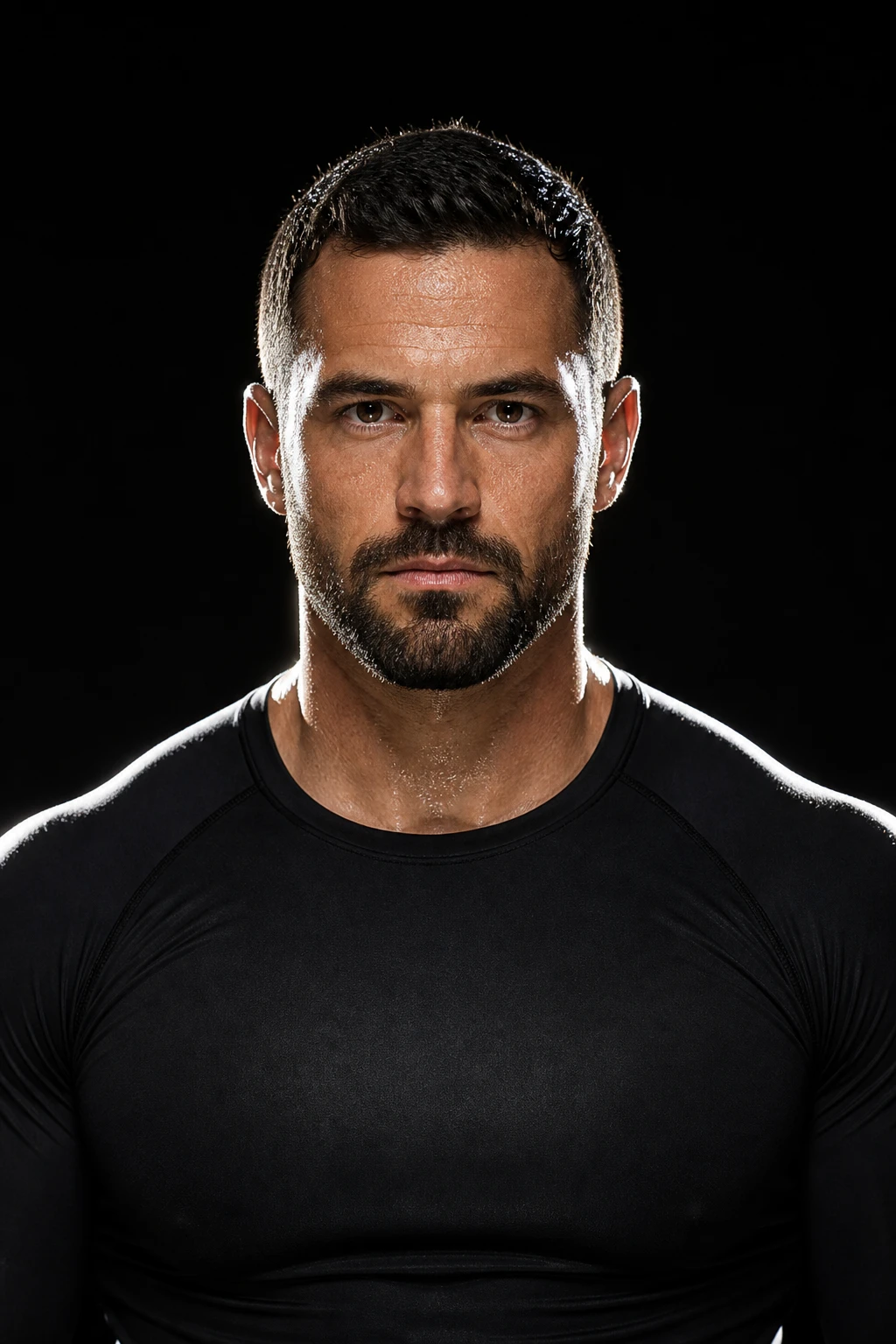
Sports
70–200mm telephoto — the compressed look, background pulled in tight behind the subject.
Open in Light Builder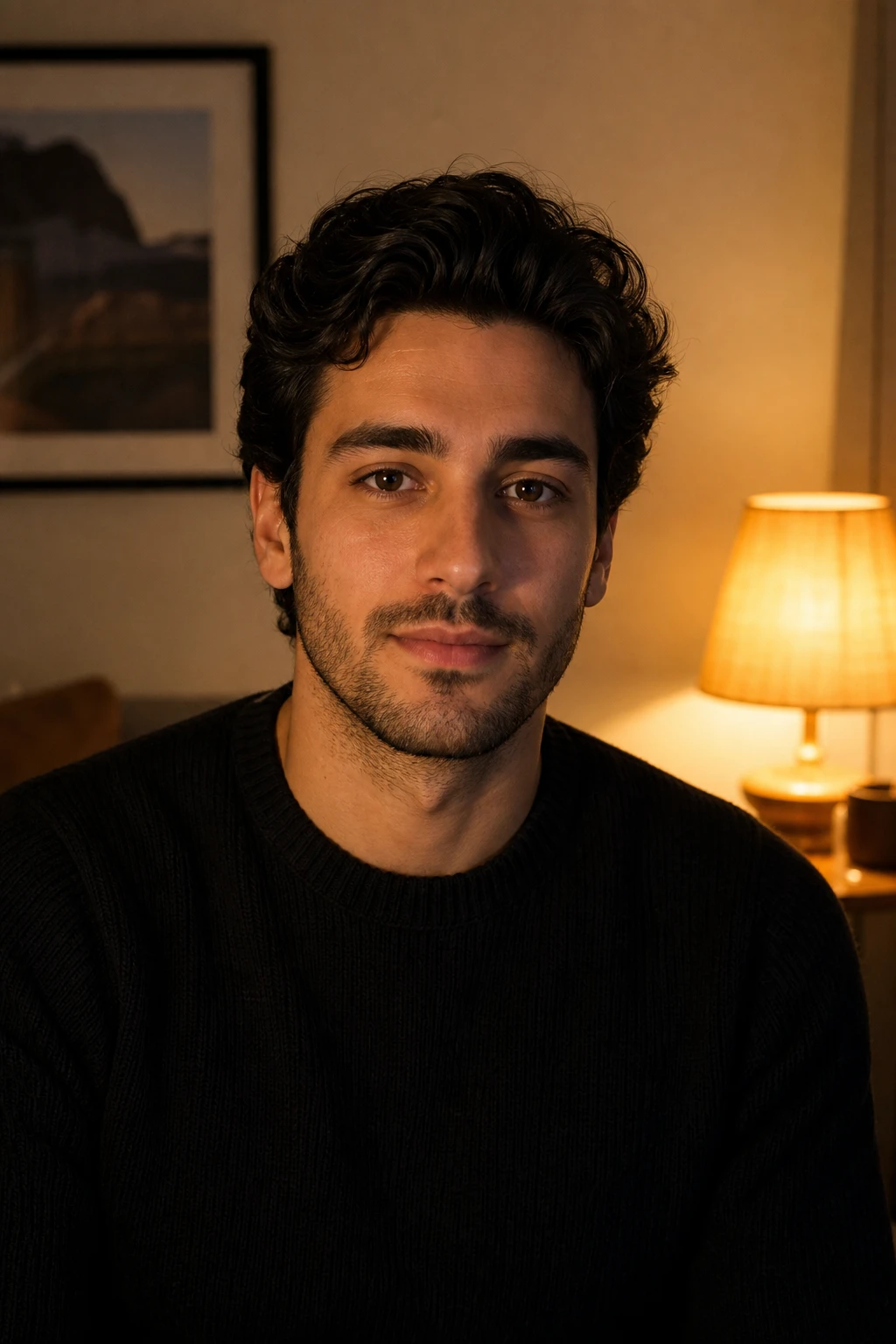
Cinematic
16–24mm wide — a subject in a room, the close working distance making the space read large.
Open in Light BuilderWalk the setup one light at a time, or dial passes live in the relight studio.