What it does
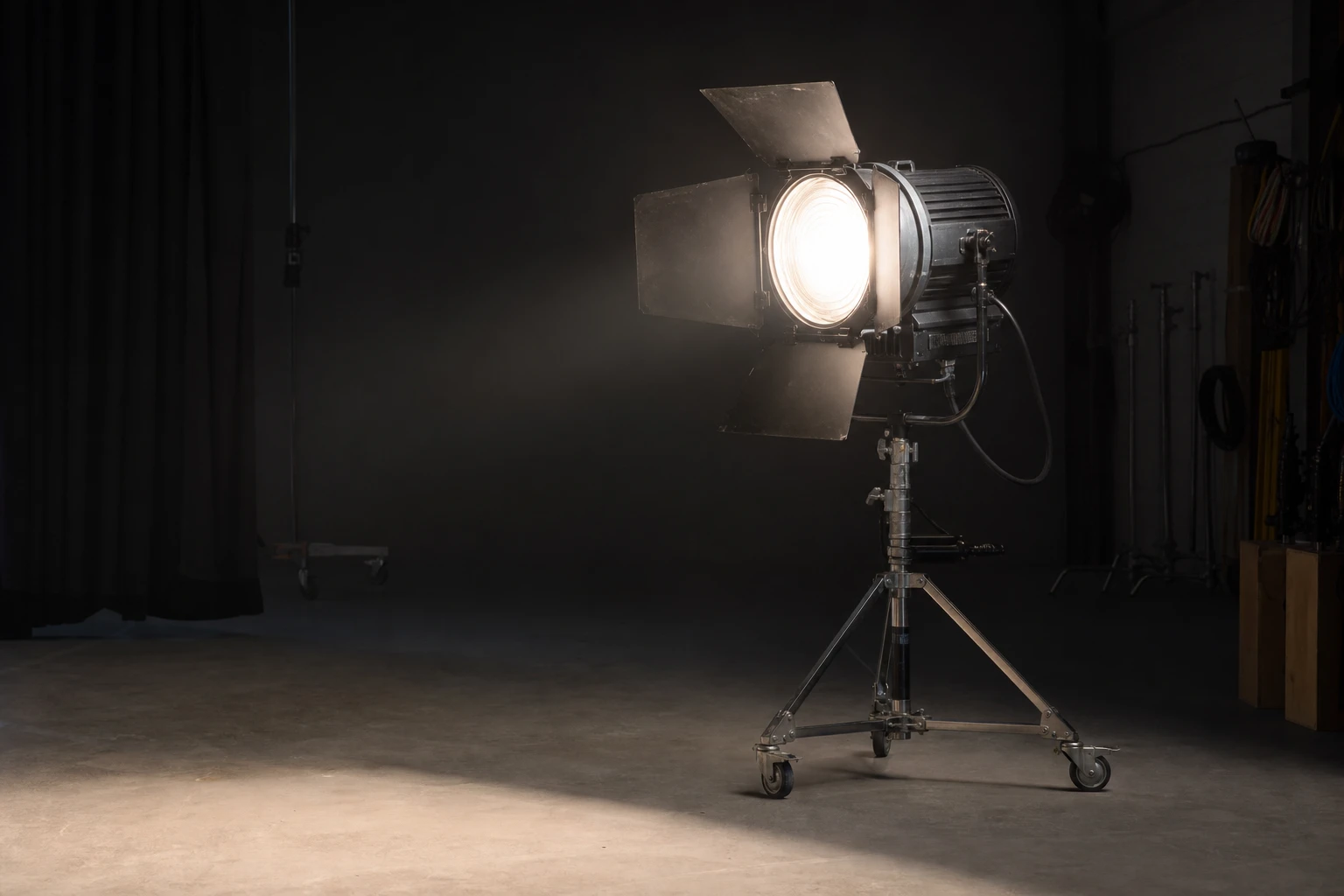
Particles redirect rays; contrast drops globally when heavy. Fresnels and hard sources read strongest; softboxes look like grey fog banks.
Surfaces & effects
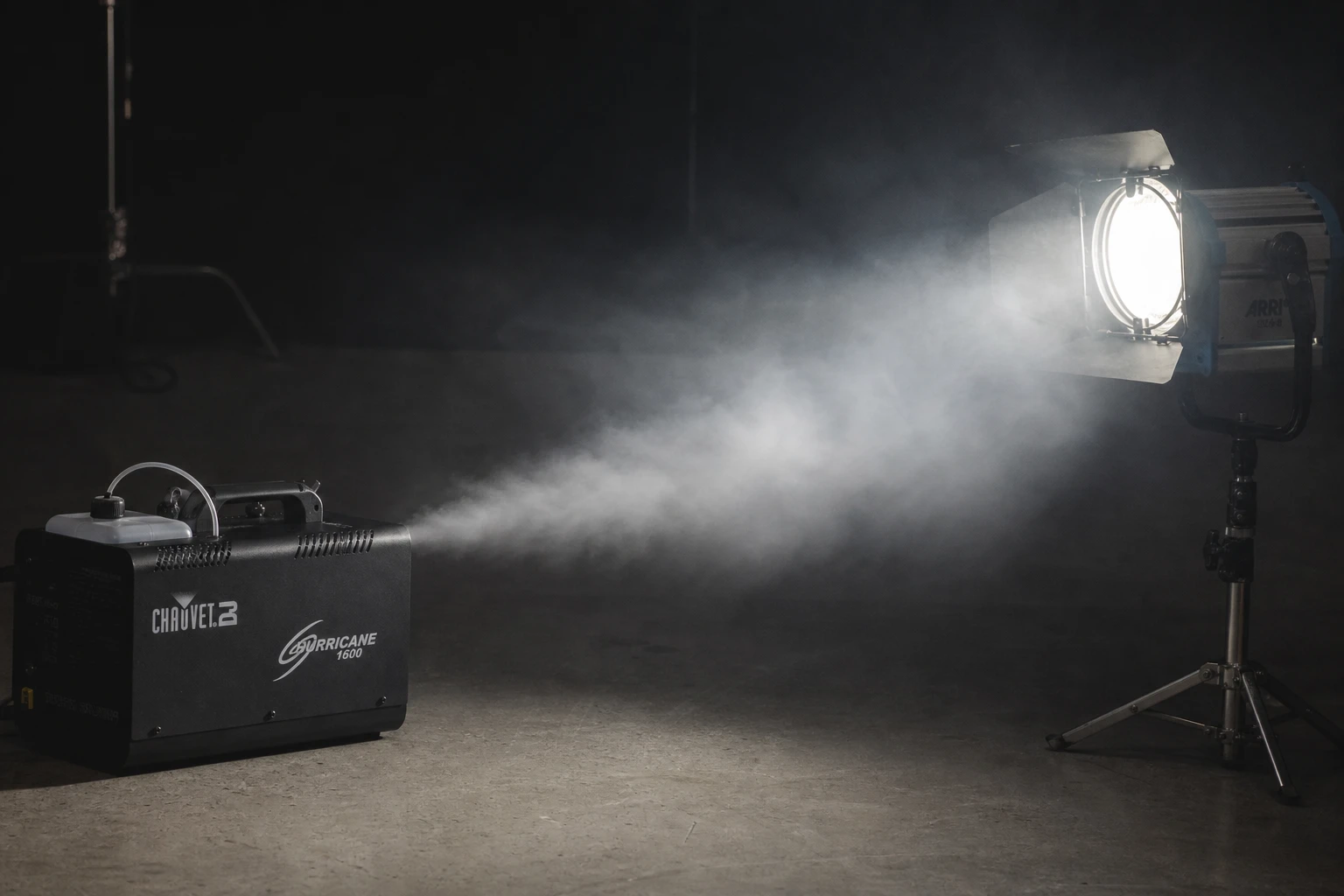
Haze (fog oil, hazer, light smoke) scatters light so beams become visible volumes — advanced atmosphere.
What it looks like
Particles redirect rays; contrast drops globally when heavy. Fresnels and hard sources read strongest; softboxes look like grey fog banks.
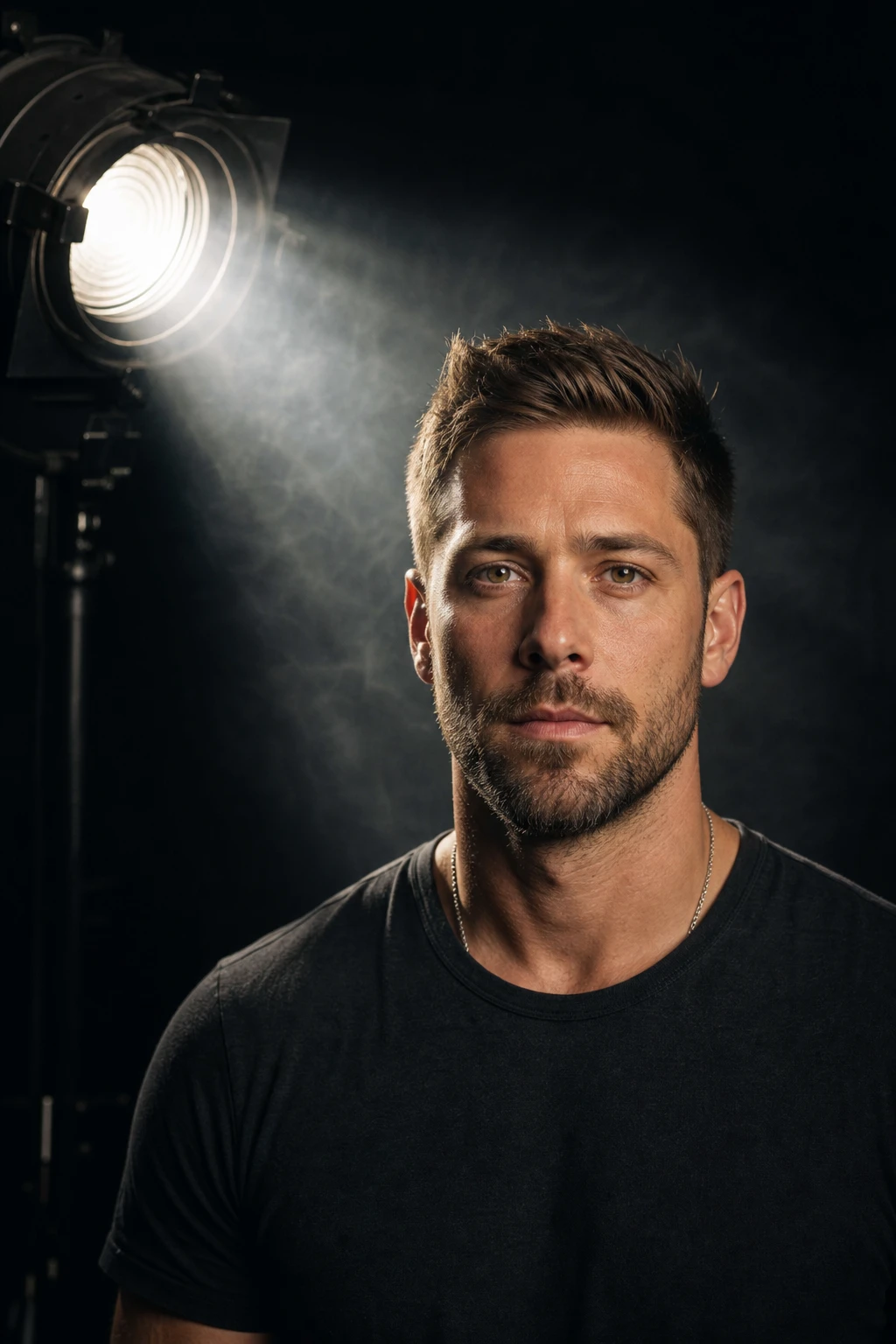
Cinematic beams, noir volume, concert-style portraits, teaching exposure under scatter.
Visible light shaft; lowered contrast; halos around highlights; background layers feel thicker.
Spot hard source first without haze; add short hazer bursts; re-meter face (usually brighter). Flag lens; ventilate room.
Lower key power after haze; scatter adds fill. Heavy haze → raise ISO or open aperture for same skin brightness.
So much haze face looks flat grey. Fix: ventilate, wait, shoot minimal haze frames only.
Continuous light haze test on grey card — find maximum haze before contrast collapse.
Strongest matches for this tool — 2 of 3 shown. Browse all in the library →
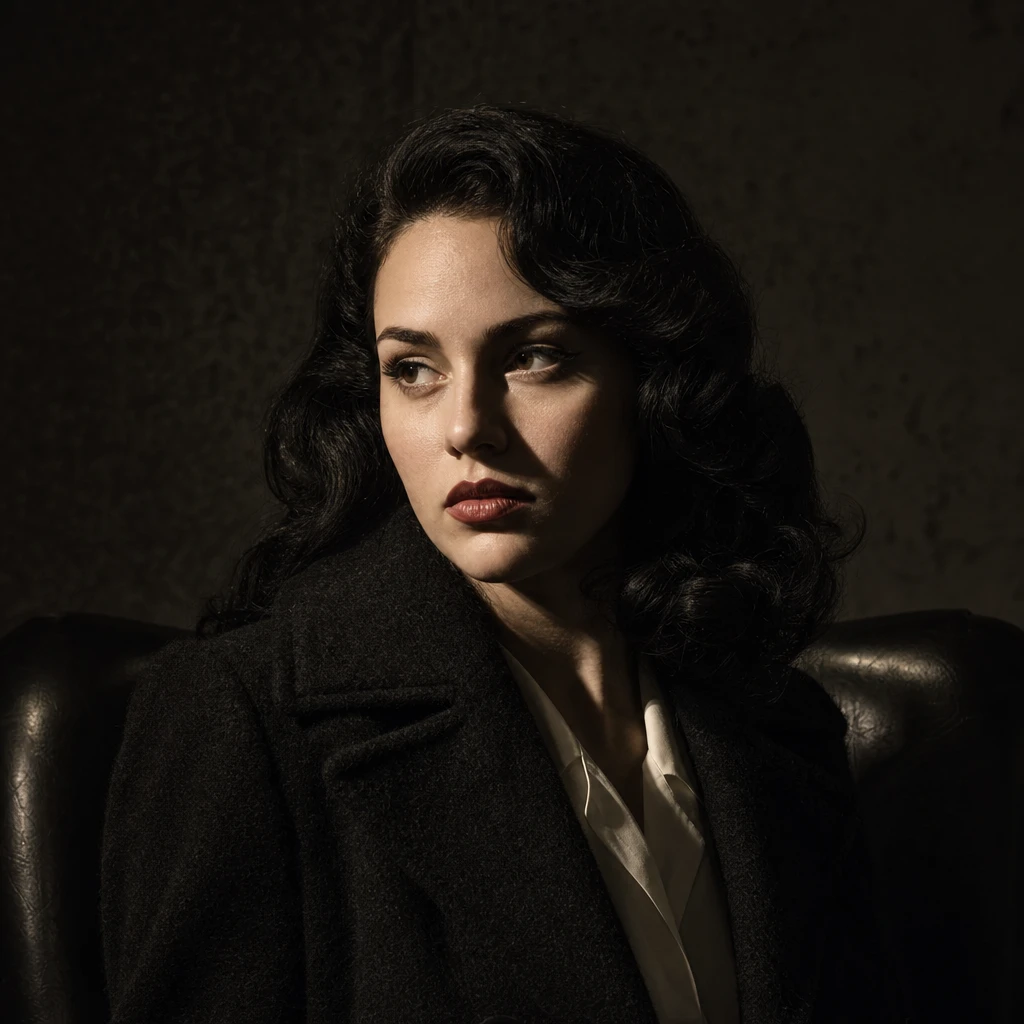
Cinematic
One gridded Fresnel, hard shadow, a set dropped deep into shadow. Pure cinema tension.
2 lights
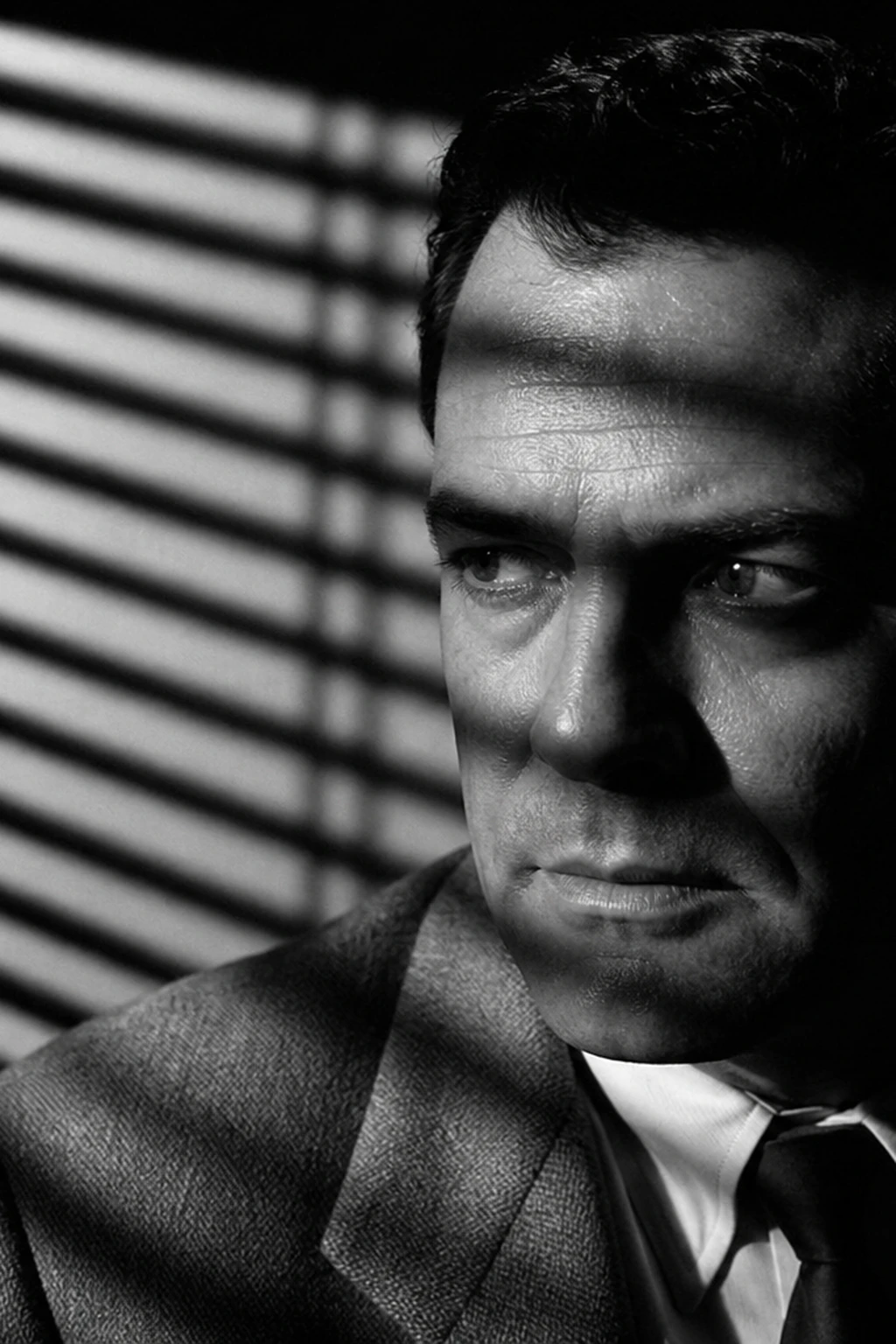
Noir
A spotted Fresnel throws venetian-blind shadow bars across the background while the face keeps a clean hard key — a graphic noir portrait with rapid falloff.
2 lights