Portrait and fashion photographers
Negative fill: flags and V-flats
Deepen shadows and restore contrast by subtracting bounce — not by adding another light.
16 min read

What is negative fill?
Negative fill is the deliberate removal of bounce light from the shadow side of a subject — not adding a second light, but subtracting ambient return so shadows stay deep and contrast reads clearly. A black flag, V-flat, or even dark clothing on an assistant absorbs light that would otherwise lift the shadow side toward middle gray. You are sculpting by absence: the key still comes from one direction, but the opposite side stops acting like a accidental fill card.
Photographers reach for negative fill when a single key feels flat despite good placement, when fashion or editorial briefs demand crisp shadow edges, or when window light wraps too evenly around a face. Studio walls, concrete floors, white ceilings, and nearby wardrobe all return light. Negative fill restores the ratio you thought you had when you looked only at the strobe or window. It is especially valuable with hard keys, where a small amount of bounce can halve the perceived contrast.
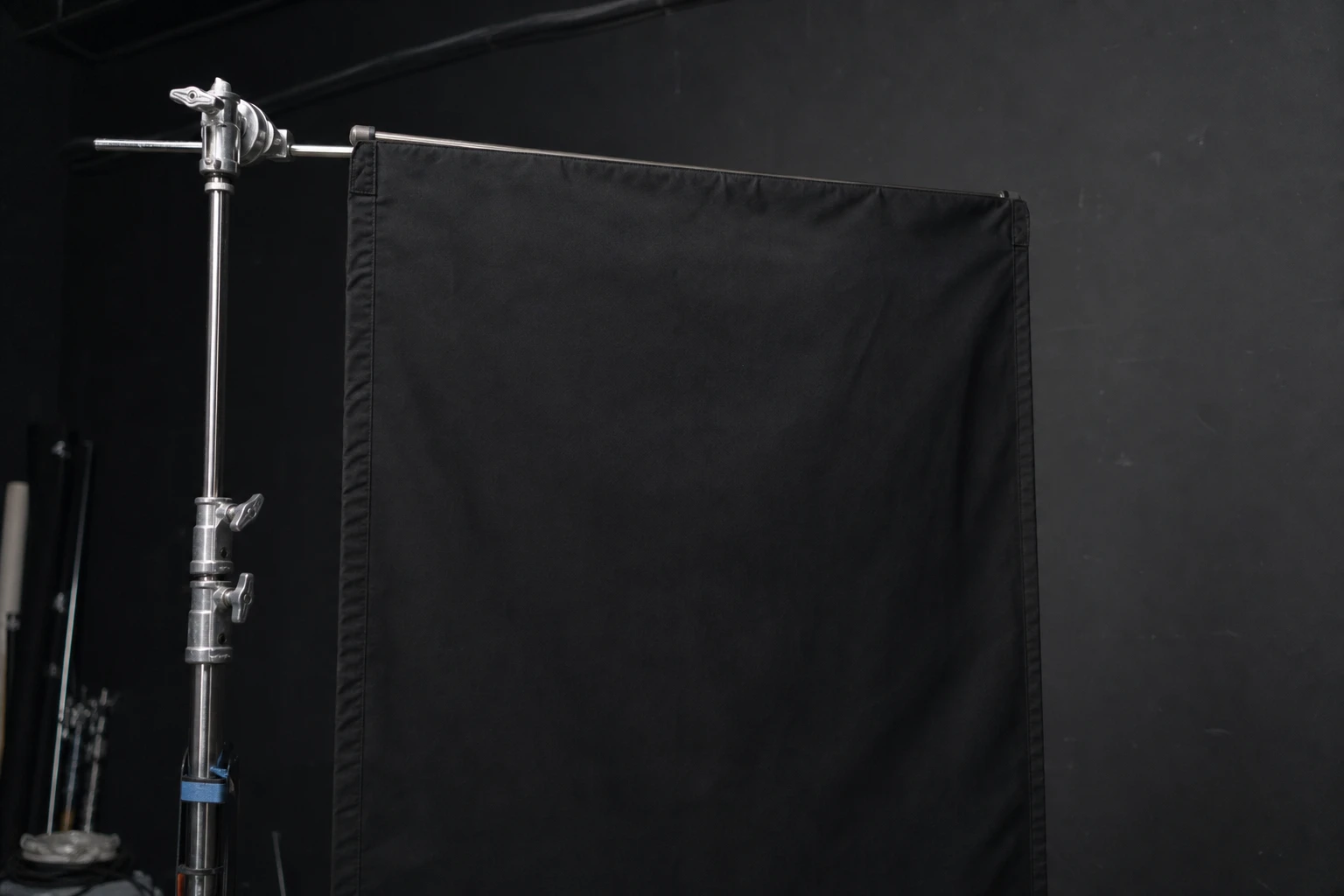
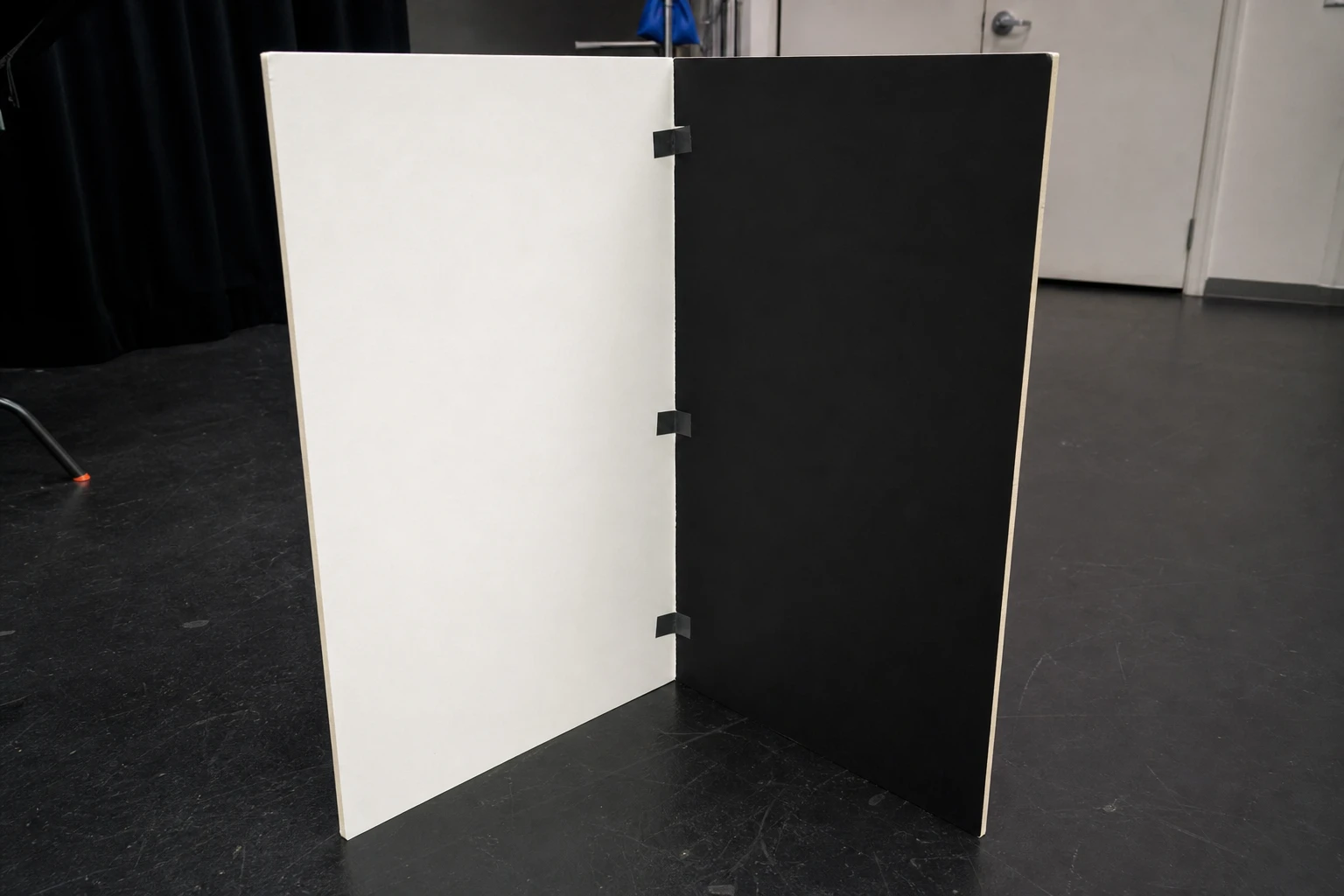
Negative fill differs from a black backdrop, though both use absorption. A backdrop controls what is behind the subject; a flag or V-flat controls what hits the subject from the side or below. V-flats — two large foam boards hinged in a V — give a broad, stable absorption surface that stands without a grip arm. Hand flags are faster for tight adjustments and cutting spill off a specific cheek. Both belong in the same family: tools that darken by blocking return paths, not tools that emit.
Negative fill works closest to the shadow side. If the flag is ten feet away, the room still fills the cheek — move absorption until you see the shadow deepen in the viewfinder.
Placement in practice
Place flags on the shadow side, just outside the frame line, with the black surface facing the subject. For a key from camera-left, the flag lives camera-right, parallel to the subject's cheek plane or angled slightly to catch spill from the floor as well as the wall. Height should cover from chin to hairline at minimum; a flag that only blocks the cheek leaves the neck and jaw lifted by bounce from below.
V-flats work best when you can stand them in a tight V with the opening toward the subject's shadow side — the inner faces absorb from multiple angles. One leaf alone acts like a large flag; the V catches wrap from the key that would skim across the subject from behind. For seated portraits, extend absorption below frame with a black drape or a second flag laid on the floor angled up; table bounce is a common reason shadow sides stay gray.
Distance changes strength. A flag touching the subject's shoulder plane gives maximum subtraction; pull it back six inches at a time until the shadow side opens to the level you want. For window keys, negative fill often needs to be closer than in strobe setups because window light wraps more softly and room surfaces have more time to fill. Rotate the subject so the shadow side faces the V-flat rather than a white wall — placement of the person matters as much as placement of the flag.

Distance and power
Negative fill has no power setting, but distance from subject to absorber behaves like a control dial. Closer flags deepen shadows without changing key exposure; farther flags let more bounce return. If you meter the shadow side, you are not measuring a strobe — you are measuring how much ambient and reflected key reaches that cheek. Moving a black V-flat from four feet to two feet might not change your key reading at all, but the shadow side can drop a perceptible half-stop or more in apparent density.
Key distance still interacts with negative fill. A hard key close to the subject throws more specular and directional light that skips into walls; negative fill must be positioned to catch that spill path. A soft key farther back wraps more around the nose toward the shadow side; you may need larger absorption or a tighter V to keep the shadow edge defined. When you pull the key back, shadow-side bounce often increases relative to the lit side because wrap increases — compensate with closer flags rather than abandoning negative fill.
Do not confuse negative fill with lowering key power. Dropping the strobe darkens both highlight and shadow while preserving a flat ratio if bounce is equal. Flags darken the shadow side only, increasing contrast. If the lit cheek blows, fix key distance or power first; if the shadow side looks muddy, add or move negative fill before you chase a second light.
When the shadow side looks "almost right," half the fix is moving the V-flat six inches closer — not buying a stronger key.
Fill, spill, and control
Negative fill is one half of spill control; the other half is blocking key spill where you do not want it. Flags between the key and the background keep the backdrop darker for separation. Black cards on product sets absorb reflections in bottles and packaging; the same logic applies to skin — you are preventing unwanted fill paths. Combine a shadow-side V-flat with a flag on the key side to stop light from skimming across the forehead into the shadow cheek.
Room management matters. Turn off overhead practicals if they fill the shadow side evenly. Dark carpet or a black floor mat reduces bounce up into the chin and neck. If you must work in a white room, treat the white as a fill source you are fighting — larger V-flats, closer placement, and harder keys that fall off faster. Scrims and diffusion on the key reduce spill to walls but also change the character of the light; negative fill preserves a hard or soft key while fixing ratio.
Pair negative fill with intentional positive fill when you need a hybrid. A white reflector far on the shadow side adds a controllable lift; a black flag closer to the subject sets the floor of how dark that side can go. The reflector sets the ceiling; the flag sets the floor. Without the flag, the reflector alone often over-fills because walls already contribute bounce.
What to look for
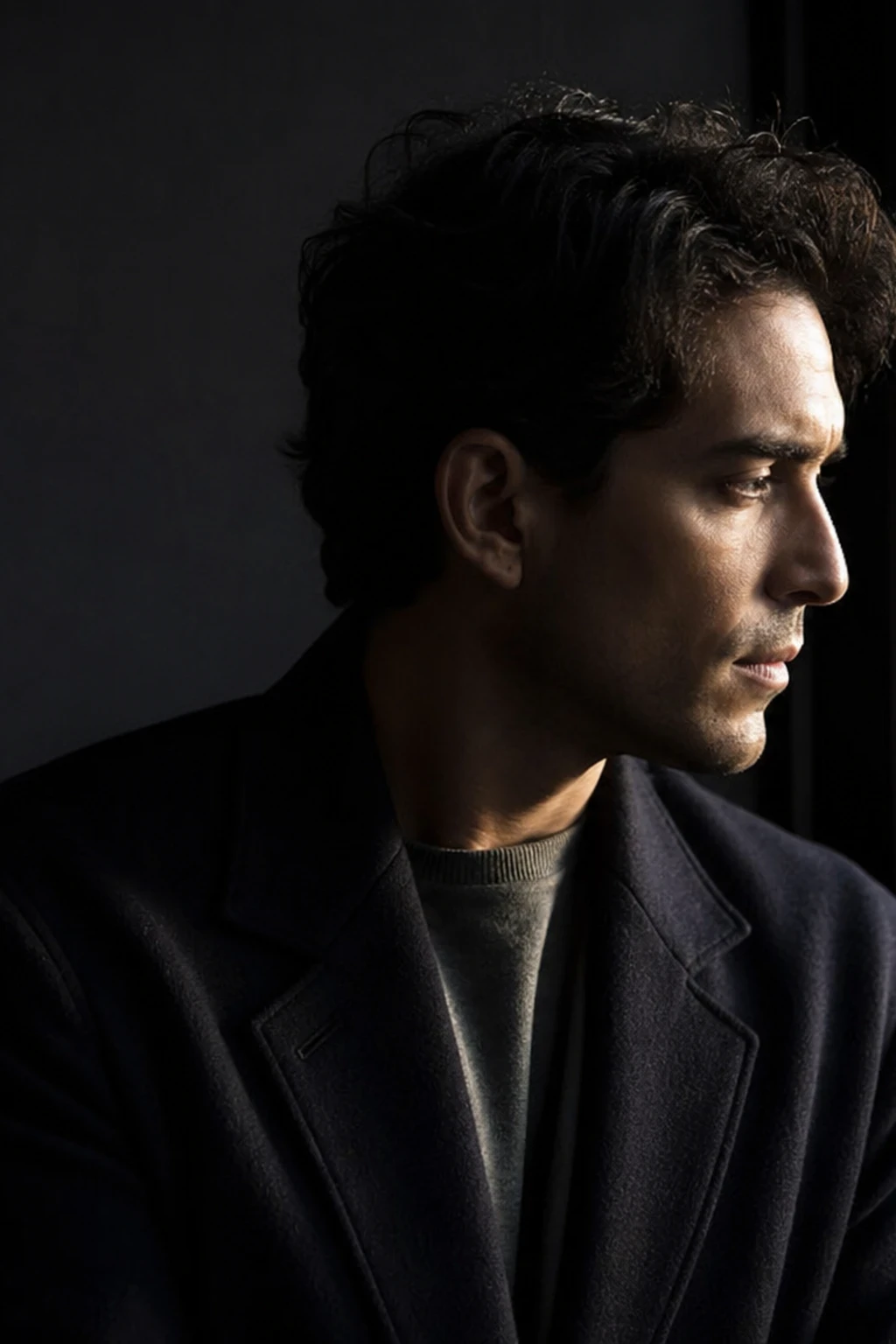
Watch the shadow edge on the cheek — the line where highlight transitions to shadow. If that edge is soft and gray with no depth near the jaw, bounce is filling the shadow side. Add or move negative fill until the jaw shadow holds a readable density without going pure black unless that is the intent. The triangle of light under the eye on the shadow side should stay controlled; if it opens to match the key side, you have too much fill from somewhere.
Compare catchlights and shadow-side eye brightness. Negative fill should not darken the key side; if the lit cheek drops when you bring in a V-flat, the flag is blocking the key, not absorbing bounce. Reposition so the flag sits in the shadow-side hemisphere only. Check the neck and collar area — bounce from the chest and table lifts shadows under the chin; a low flag or black drape on the lap fixes shirt bounce that flags at face height miss.
On set, shoot a frame with and without negative fill at the same exposure. The difference should be visible on the shadow cheek and background contrast, not on the key cheek exposure. If both sides change equally, your flag is in the wrong place or the key is so flat that direction barely matters — fix key angle first.
Common mistakes
Using negative fill on the wrong side blocks the key instead of absorbing bounce. The symptom is an underexposed lit cheek and confused shadow shape. Walk to the key side and confirm the flag is not casting a shadow on the face from the strobe. The fix is to move the absorber to the true shadow side, usually opposite the key, and clear the key path.
Placing flags too far away produces no visible effect. The photographer adds a V-flat, sees no change, and declares negative fill useless. The fix is proximity — move the black surface until the shadow cheek deepens in the live view. In large rooms, you may need two flats or a corner of black fabric closer than feels natural.
Relying on negative fill to fix a flat key angle wastes time. If the key is on-axis or too frontal, both sides of the face receive similar light and flags cannot create dimension that was never lit. Rotate the key thirty degrees off camera, then add negative fill on the short side. Shape direction first, then subtract bounce.
Forgetting floor and ceiling bounce leaves a gray neck and chin while the cheeks look fine. High flags alone miss upward fill from a white floor or light clothing. Add a black flag below frame, angle a V-flat leaf under the chin, or darken the floor with matting. Negative fill is a system of surfaces, not a single panel at head height.
Try it yourself
Walk the setup one light at a time, or dial passes live in the relight studio.