Fashion and portrait photographers
Color gel backgrounds
Separate subject from backdrop with gelled rim or background wash — without relighting the face.
13 min read

What are color gel backgrounds?
Color gel backgrounds use colored filters on lights aimed at backdrop — or gelled rim on subject — to separate figure from environment with saturated hue while keeping skin neutral under ungelled key. Fashion and portrait photographers gel background strobes blue, magenta, or amber so subject pops against chromatic seamless without relighting the face through the same gel. The gel shifts background Kelvin and saturation independently of key white balance when flags and distance block gel spill onto skin.
Creative portraits use gel backgrounds for energy — complementary rim gels opposing on hair, RGB tube washes behind product on white, opposing cool and warm edges on athletic wear. E-commerce sometimes forbids gel; editorial embraces it. Gel on background only preserves skin retouching pipeline; gel on rim adds colored edge without changing facial exposure if rim power controlled.
Color gel differs from mixed practical Kelvin — gels are deliberate saturated shifts on controlled strobes, not existing lamp spectra. Gel differs from white balance in camera — gel physically changes light before subject; white balance interprets what arrives. Multiple gels require power compensation — gels absorb stops — and spill control so magenta background does not paint shadow cheek.
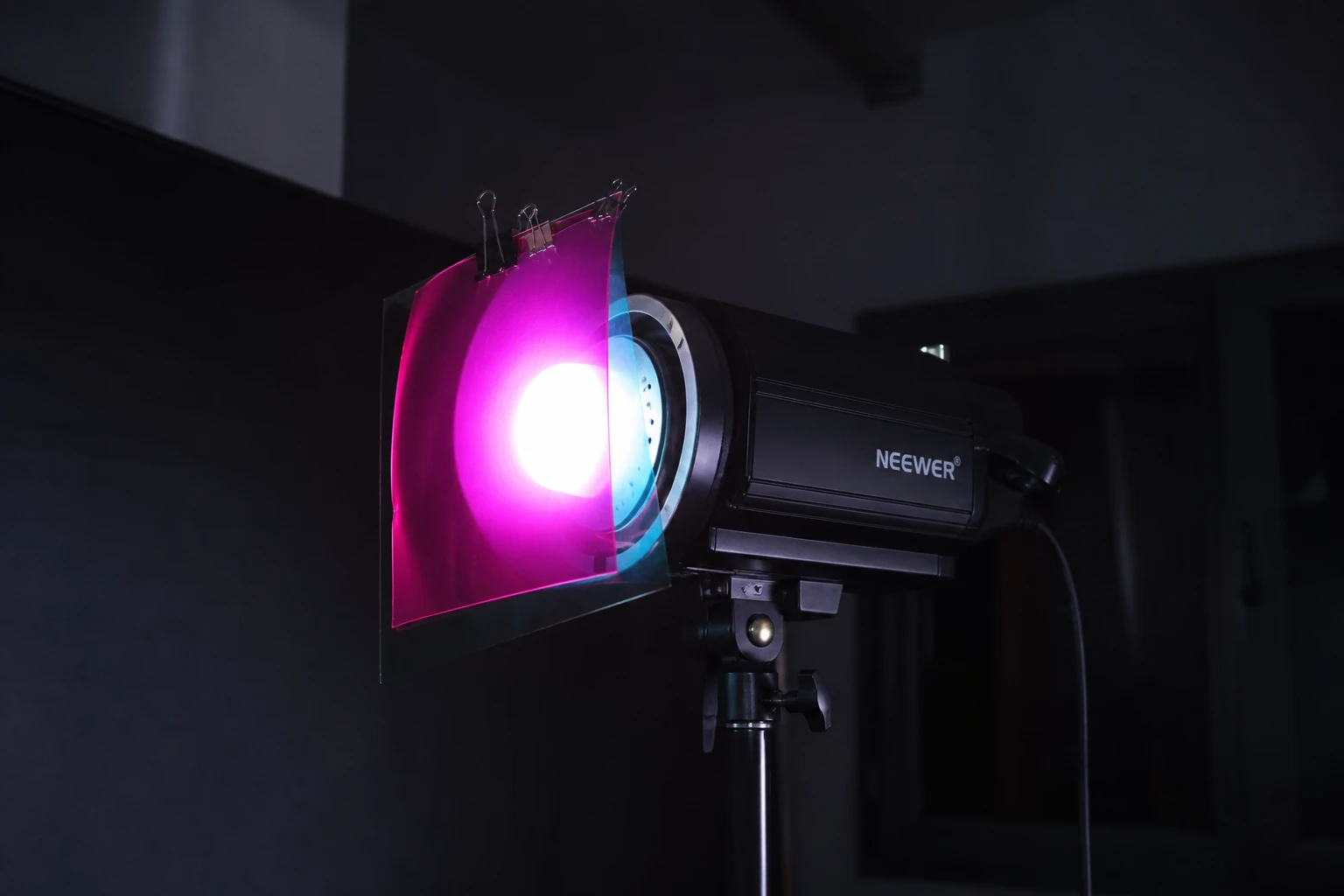
Gel vocabulary helps client conversations: full CTB pushes tungsten toward daylight blue; full CTO pushes daylight toward amber; creative gels — magenta, green, steel blue — saturate beyond white balance shift. Sleeve gels on speedlights tear in wind — tape edges on location. Large frame gels in front of background strobe need separate stand — gel not touching hot modeling bulb — fire hazard and uneven heat wave distortion.
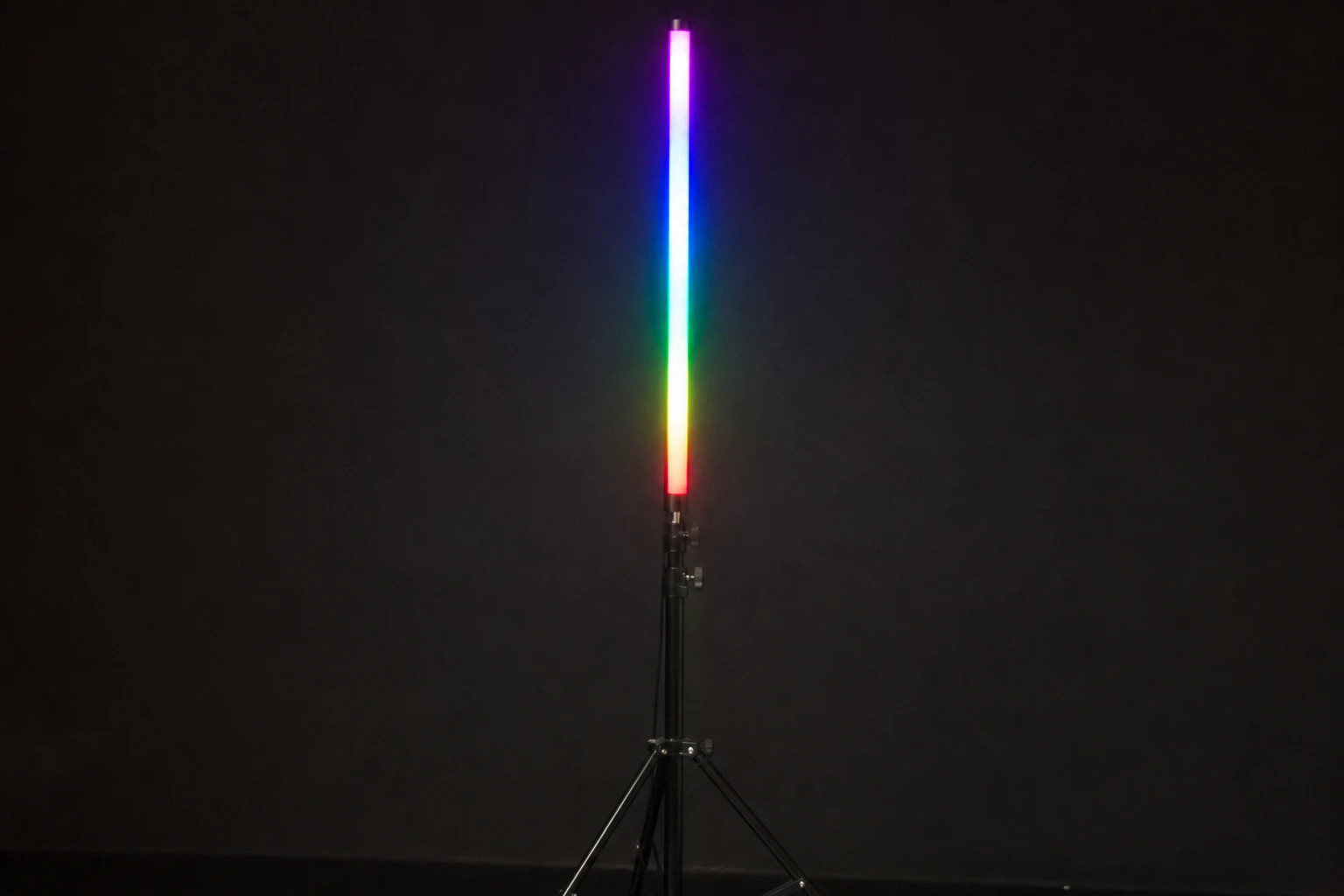
Editorial color stories often pair complementary background gel with wardrobe neutral — subject clothing black or white — so gel reads behind figure without fighting fabric hue. RGB tubes behind product on white sweep give programmable color without gel sheets — same placement logic, different tool.
Gel the background light, flag the subject — if skin picks up gel color, spill path is open, not gel too strong.
Placement in practice
Background light behind subject aimed at seamless — strobe with gel sleeve or sheet, distance two to four feet from paper for even color wash. Feather background light up and down paper — hot center spot common if too close. Subject distance from background four to six feet minimum reduces color spill wrapping subject rim — farther for high saturation without subject tint.
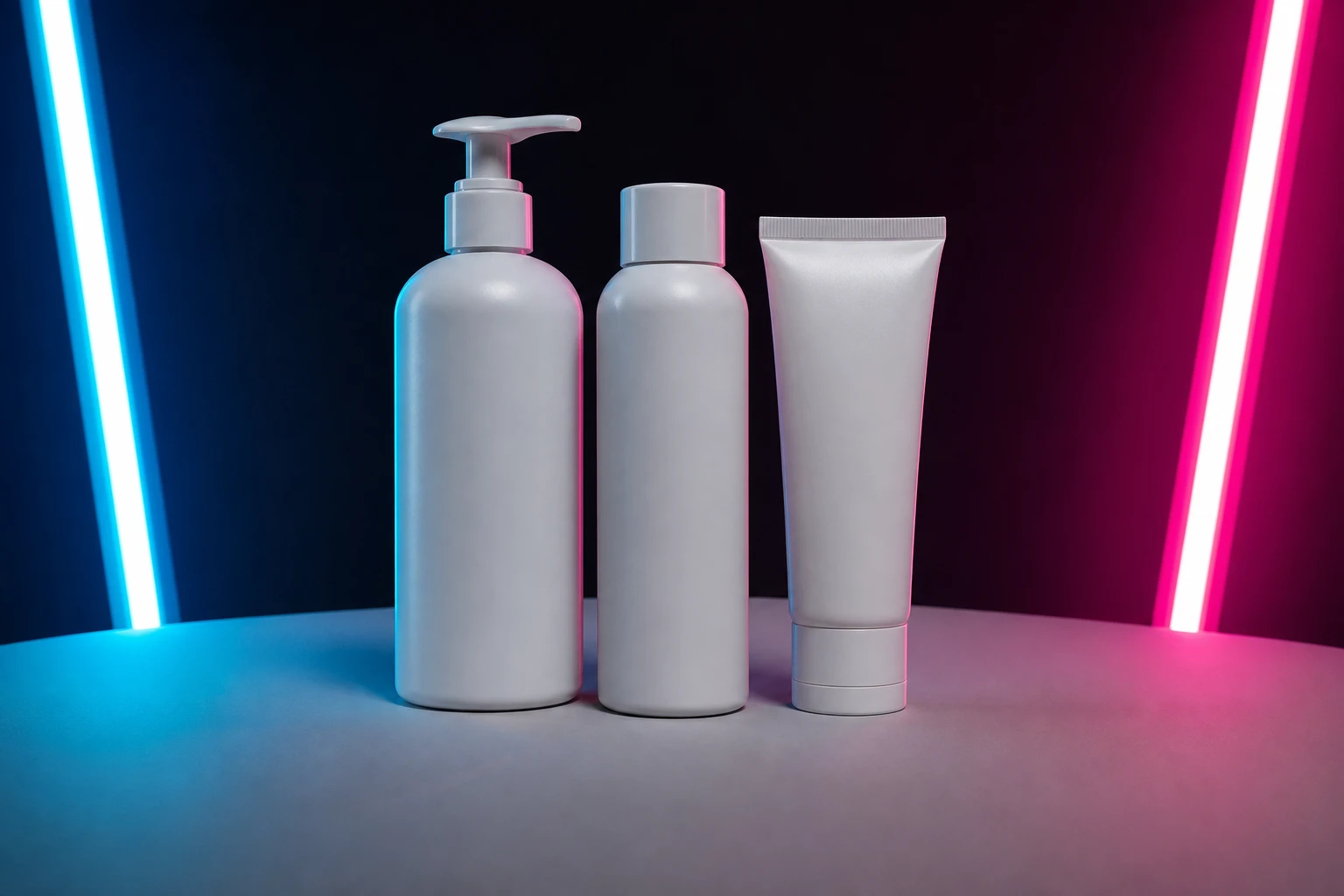
Rim gel opposing colors: warm gel camera-left rim, cool gel camera-right rim — subject between, key neutral front — rims cross behind head not on face front. Grid or snoot on rim gels prevents face color contamination. Product on white: gelled strip behind product onto sweep — product keyed neutral LED front.
Gel density full versus half CTO/CTB — test swatch on paper before subject in seat. Multiple gels stack darker — power up or open aperture.
Background light height affects gradient on seamless — low angle gelled uplight vignettes top dark; overhead gelled downlight vignettes floor. Two gelled background lights left and right at equal power reduce center hot spot on wide paper. Subject shadow on gelled paper is compositional choice — silhouette shadow graphic on magenta common in fashion — fill shadow with second background light only if client rejects dark shadow patch.
Snoot gel pool behind head for headshot — pool color visible, shoulders outside pool on gray — measure pool diameter on empty set before subject sits.

Distance and power
Gels eat one to two stops — meter background color after gel install. Closer background light saturates and evens; farther light vignettes edges dark — creative or problem depending brief. Subject-to-background separation reduces spill — move subject forward before cranking gelled strobe power onto face accidentally via wrap.
Key ungelled metered for skin — background gelled metered for RGB target — two exposures reconciled at camera if within dynamic range. Clip background color intentionally for neon look — protect skin highlights.
Rim gel power low — color visible on hair edge not on ear front facing camera — angle rim behind profile.
Raw white balance to skin under key — background gel intentionally skew — do not global WB to paper or skin turns wrong. Highlight clipping on gelled paper acceptable for neon; skin highlights must not clip — separate concerns. Gel aging: stored gels shift color — replace sun-faded sheets — test before client shoot.
Power ramp: bare strobe meter reading, gel installed meter reading, difference is your compensation stops — log per gel brand.
After gelling the background strobe, meter the paper and the subject's shadow-side cheek — cheek should stay neutral if flags are doing their job.
Fill, spill, and control
Flags between background gel light and subject block spill — black flags subject height both sides common on fashion sets. V-flat white on key side unrelated to gel — standard portrait. Subject hair catches background color if backlit by gel — acceptable separation; face front must stay neutral key.
Snoot on background light for spot color circle behind head — gel plus snoot pool on gray paper. Grid on background strobe evens wash without hitting subject shoulders.
Gel rim only when background white — color lives on edges; background stays white sweep — different look than gelled seamless. Spill control tighter because white room reflects gel color everywhere if uncontrolled.
Black studio walls absorb gel spill better than white — location white room gel shoots need more flags. Subject hair blonde — gel rim shows stronger — reduce rim power versus brunette test. Fabric wardrobe near gelled background picks up color cast — distance or wardrobe change.
Test shot gray card in front of seamless with gel only — reference for post — subject not in frame yet.
What to look for
Skin neutral versus background saturated — primary success metric. Background color even or intentionally vignetted — banding from uneven gel sleeve visible in tether. Hair rim color clean — not muddy dual gel on face skin.
Product color accuracy on SKU — gel background must not contaminate product label — flag product side, gel only behind. Glass product reflects gel color — intentional or flag reflection paths.
Shadow on background from subject — gray shadow in magenta wash — separate background light both sides or accept silhouette shadow as graphic element.
Common mistakes
Gel on key light and background same color — monochromatic face — skin tone unretouchable hue. Gel background only, key neutral.
Insufficient power after gel — muddy dark purple paper, noisy background — meter gelled strobe, add power, verify gel not burned melting.
Subject two feet from gelled seamless — skin magenta from wrap — move subject forward, flag, reduce background power.
Two rim gels hitting cheeks from front — clown color on skin — rims behind only, grids mandatory, ratio low.
Melting gel on cheap background strobe — smell and smoke — distance gel from head, use LED background light for long sessions. Wrong gel on key accidentally — entire session color wrong — key strobe never gets gel in background-only workflow — physical separation of strobe heads prevents mistake.
Over-saturating background gel until paper loses texture — seamless reads flat neon rectangle — pull power until paper grain or sweep texture faintly visible unless pure graphic brief.
Try it yourself
Walk the setup one light at a time, or dial passes live in the relight studio.