Interior and portrait photographers
Mixed Kelvin: practicals and window
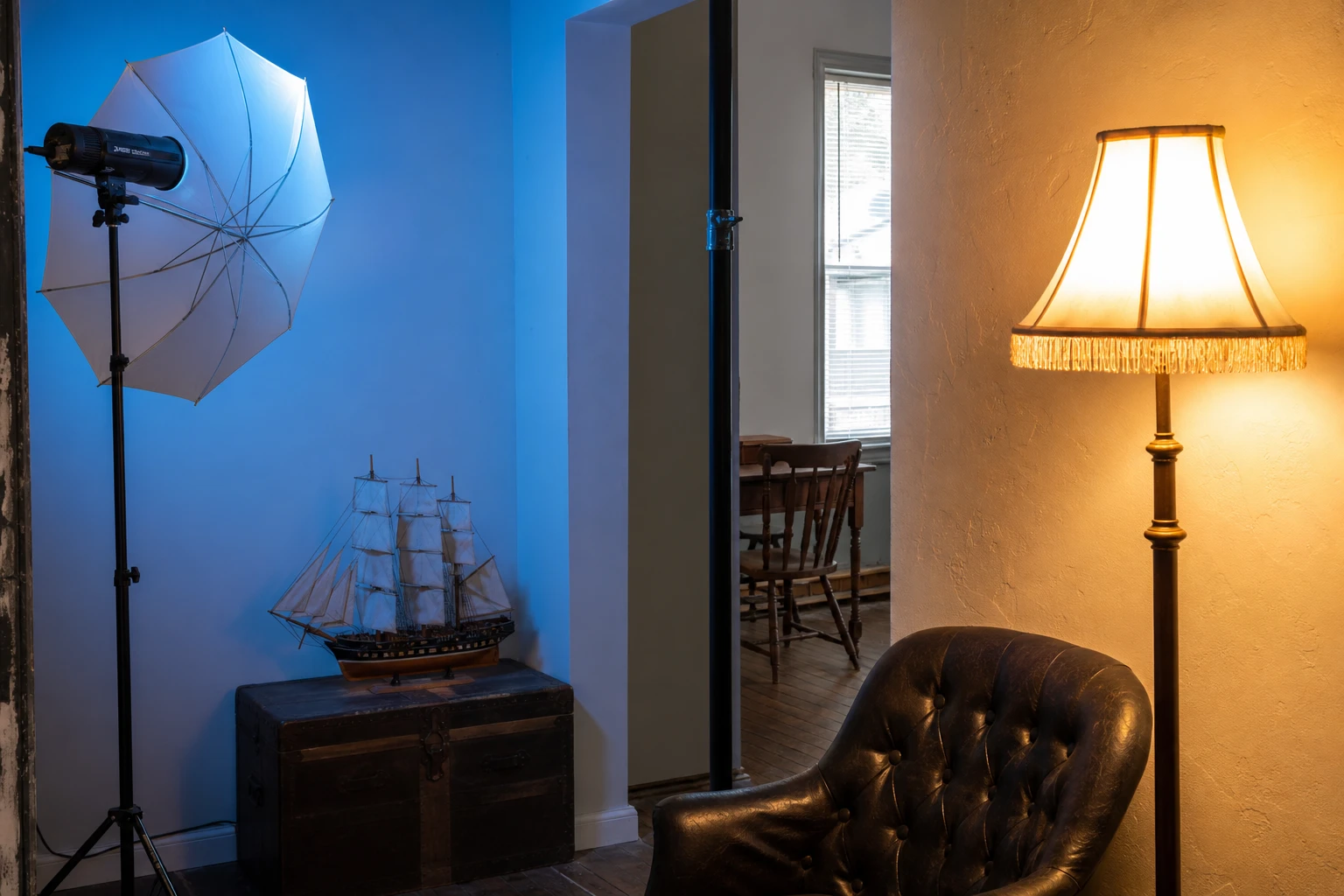
Warm lamp plus cool window — motivate color contrast instead of fighting it.
14 min read
What is mixed Kelvin lighting?
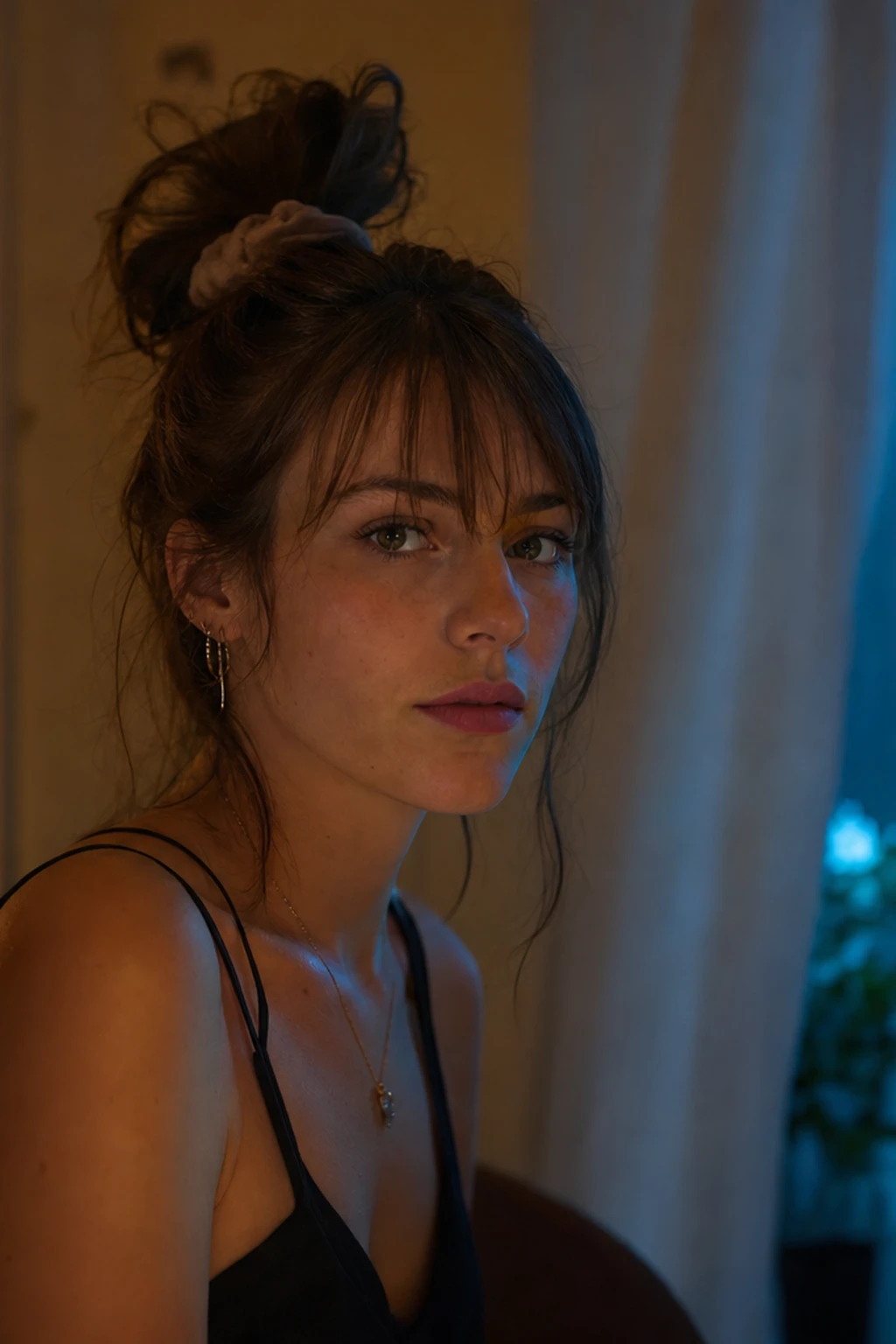
Mixed Kelvin lighting combines sources of different color temperatures in one frame — typically warm tungsten or practical lamps near 2700–3200K against cool daylight from windows near 5500–6500K. Instead of correcting everything to neutral white balance, photographers exploit the contrast for mood: warm interior intimacy against cool exterior depth, cinematic separation between subject and environment, or motivated realism when lamps and windows coexist naturally. The lesson is intentional color geometry, not accidental white balance failure.
Interior portrait and real estate photographers encounter mixed Kelvin daily — desk lamp, window, and ceiling LED each diverge. Fashion location shoots use warm practicals as hair rim while window keys face cool. Twilight exteriors blend warm interior visible through glass with blue sky outside. Adjacent technique — gels on flash to match or oppose ambient — extends control when you add strobes to mixed rooms.
Mixed Kelvin differs from gelled background-only setups: multiple illuminants hit the subject or scene with different hues simultaneously. White balance choice becomes creative — balance to skin on subject may leave window blue and lamp orange, as intended. Neutralizing everything in post loses the motivated contrast clients hire you for.
Documentary honesty versus stylized contrast: a living room portrait may keep warm lamp practical and cool window because that is the room truth; a fashion set may amplify the split with stronger practical bulb and north window. Real estate twilight exteriors sell the warm invite inside against cool dusk outside — mixed Kelvin is the product. Corporate headshot in same room may need CTO gel on flash to neutralize face while leaving window slightly cool for depth — hybrid of natural mix and controlled skin.
Train your eye to name two sources and their Kelvin before adjusting camera — "window cool key, lamp warm fill" — then decide anchor. Without naming sources, you chase sliders randomly in post.
Pick one anchor: either skin neutral and environment split, or full warm/cool story — halfway correction looks like a mistake, not a look.
Placement in practice
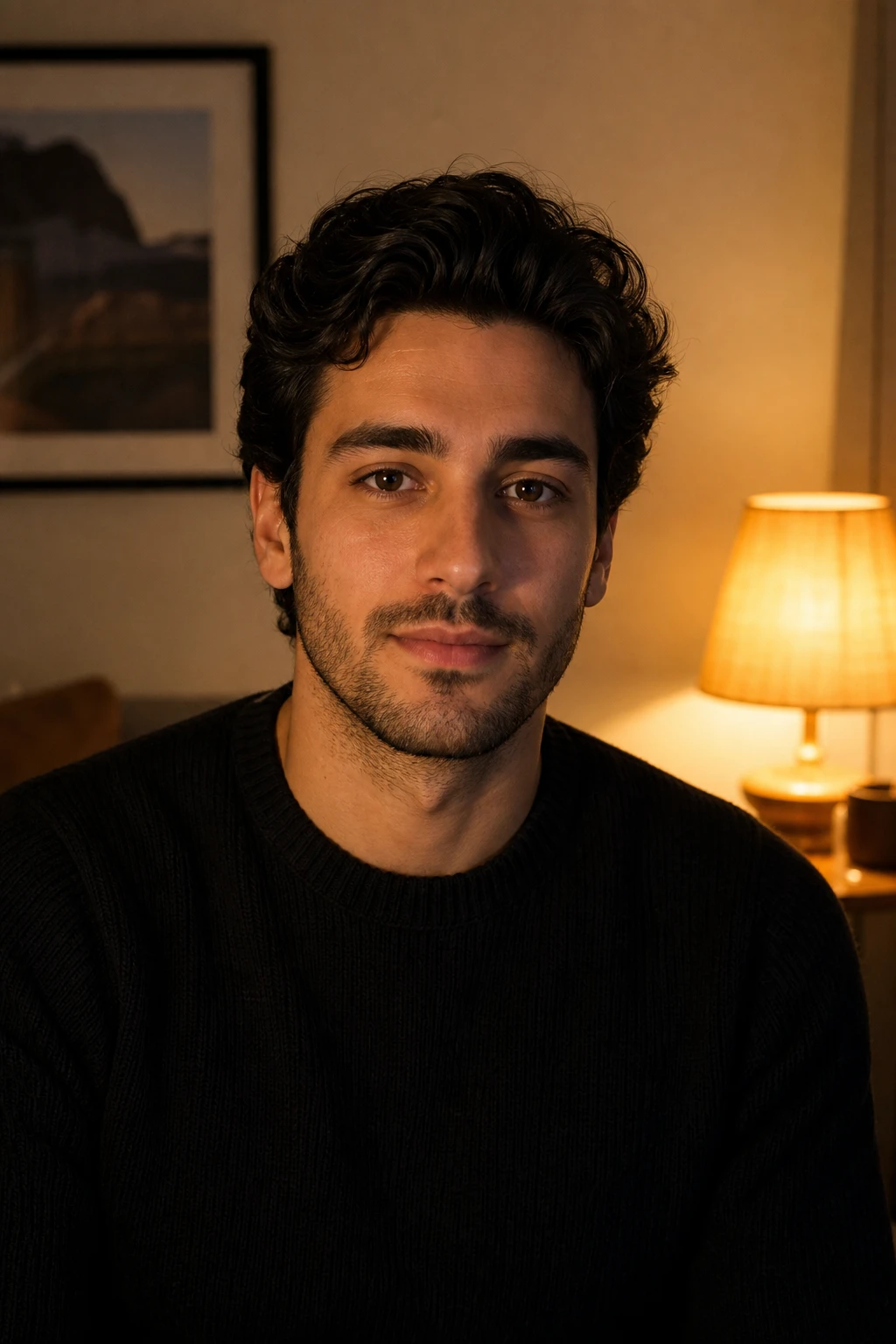
Subject near window for cool edge light on profile — warm practical behind camera or on desk lamps face from warm side. Distance to window sets cool rim intensity; distance to lamp sets warm fill on shadow cheek. Rotate subject three-quarter toward window for cool key on far cheek, warm fill from lamp on near cheek — classic motivated split.
Practical placement in frame visible — lamp in background motivates color on subject edge; hidden practical must still cast believable direction. Height: table lamp fill from below chest warm uplight — use sparingly; floor lamp or overhead practical more natural. Window large behind subject silhouettes unless fill added — expose for face, let window blow, or HDR bracket for real estate.
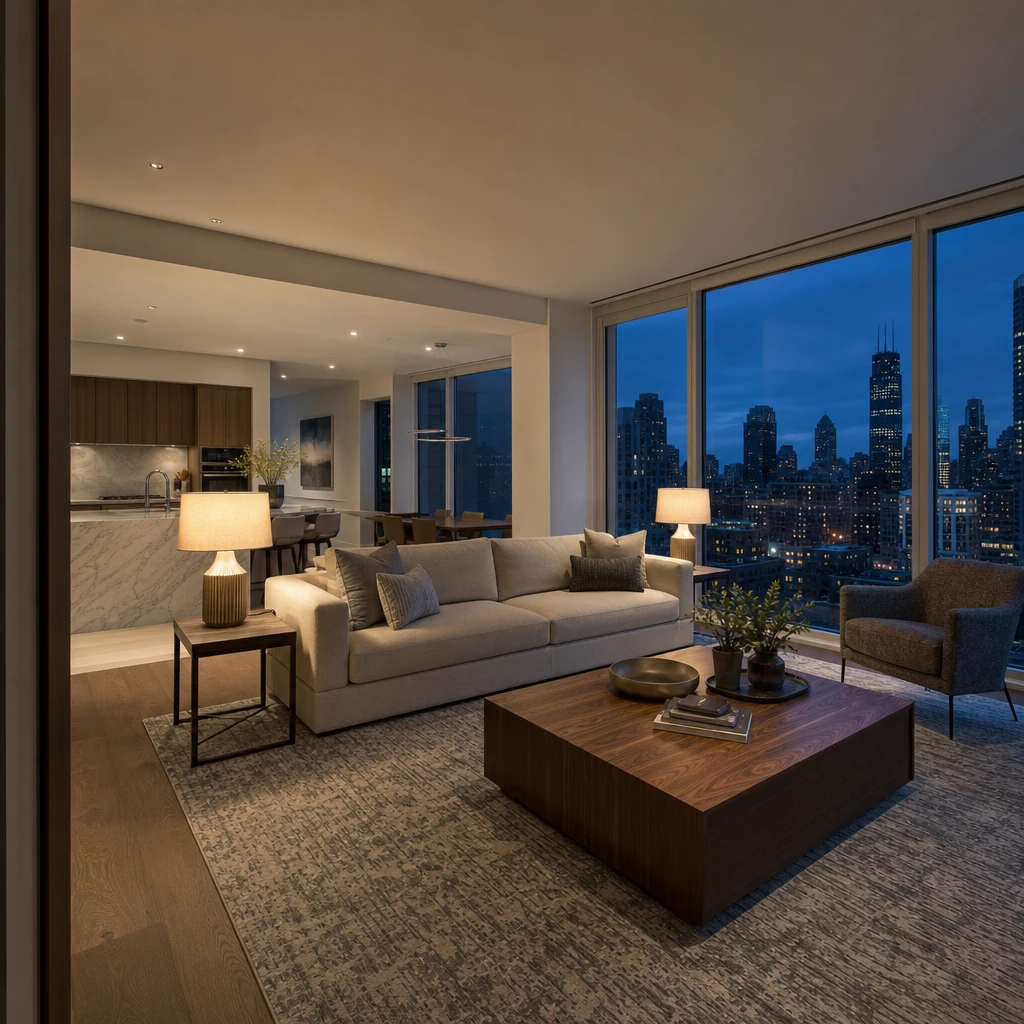
Interior real estate: shoot twilight blue hour — interior tungsten warm against cool sky — camera on tripod, multiple exposures or single balanced if dynamic range allows. Portrait in same room: subject closer to camera than window depth — window becomes color backdrop not second key on face unless intended.
Portrait placement nuance: subject seated between window and lamp equidistant gets competing fills — flat mixed gray-brown skin. Favor window with face toward glass for cool key, lamp as warm edge in background bokeh — or favor lamp with window as cool hair rim behind. Desk lamp on desk below face uplights nostrils — raise lamp on books or switch to floor lamp behind subject for motivated direction.
Sheer curtain on window reduces cool wash when lamp should dominate mood — diffusion also lowers window exposure — adjust shutter. Blackout not always needed — partial curtain often enough.
Distance and power
Practical wattage fixed — move subject closer to lamp for warmer stronger fill on skin; closer to window for cooler key. Dim practical with dimmer or lower watt bulb if fill overwhelms — never assume lamp unchangeable. LED practicals variable color — cheat if brief needs precise mix.
Window light power changes by time — morning cool, evening warm sometimes — schedule for intended contrast. Strobe fill gelled to match lamp or window when adding flash — full CTO on flash for lamp match, minus green sometimes for fluorescent practicals — ugly but real locations.
Exposure compromise: skin on subject at workable ISO; window may clip — accept or composite. Lamp in frame may clip warm — pleasing bokeh sometimes. Meter face separately from window — two readings, one creative decision.
Bracket three frames real estate twilight — interior bright, sky bright, balanced — blend in post if dynamic range exceeds sensor. Portrait single exposure: expose skin, let window blow unless interior context required. Practical dimmer on LED lamp stepless — dial warm fill while watching tether — analog control beats gel guess on variable LEDs.
Fluorescent overhead plus window plus lamp — three Kelvin sources — worst case — turn off overhead if possible; if not, gel strobe minus green and accept overhead cast on background only.
When the face looks gray, you averaged color temperatures — commit to anchor on skin or commit to the split.
Fill, spill, and control
Gels on added strobes integrate mixed rooms — gel to match dominant practical or oppose window for rim. Flags cool window spill off background when only subject should show mix — blackout portion of window difficult; reposition subject or time of day instead.
Negative fill on shadow side when warm lamp too weak — cool window fills shadow blue — black card absorbs window bounce on cheek to preserve warm/cool separation. Curtains diffuse window to reduce cool wash when lamp should dominate.
Color correction in post local — subject skin hue versus background — but capture intent on set reduces fix cost. Shoot raw, gray card for reference, not for killing all color contrast.
Wardrobe white shirt under mixed light shows split toning on fabric — educate client or change shirt to mid-tone. Skin retouch preserves hue split on edges — do not global neutralize orange lamp edge on jaw if motivated. Window blue in eyeglasses reflection acceptable if eyes readable — rotate glasses slightly if reflection distracting.
Time-lapse note: twilight window Kelvin shifts minute to minute — real estate bracket quickly; portrait sessions schedule critical frames in ten-minute window.
What to look for
Skin tone acceptable on anchor standard — client skin not green or mud. Background color contrast readable — warm interior versus cool window visible in same frame. Practical motivation — light direction from visible lamp matches shadow on table objects.
Mixed color on white shirts — split toning obvious — wardrobe choice matters; black wardrobe simplifies. Eyeglass reflections show both sources — verify not distracting.
Real estate verticals — window color rich not gray from underexposure — tripod level, correct twilight timing.
Common mistakes
Auto white balance kills intentional warm/cool split — set Kelvin manually or dual gray card reference. AWB averages to mush every time in mixed rooms.
Subject mid-room with window far and lamp far — neither source dominates, face flat gray-brown. Move subject toward one source, motivate second as accent.
Adding ungelled flash in mixed room creates third color — green or magenta spike — gel flash to match lamp or window key logic.
Correcting window to match lamp in post on every pixel flattens twilight real estate hero — client wanted blue hour outside — local adjust subject only.
Shooting mixed Kelvin with flash auto white balance — skin shifts frame to frame as subject turns toward window then lamp — manual Kelvin locked to skin anchor. Replacing practical bulb mid-session with different wattage changes mix — do not touch bulbs after test approval.
Green window garden bounce on shadow cheek in warm lamp scene — flag garden with curtain — mixed Kelvin includes bounce color not just direct sources.
Try it yourself
Walk the setup one light at a time, or dial passes live in the relight studio.