Cinematic portrait photographers
Fresnel light for cinematic portraits
Focusable beam, slash patterns, and haze — noir and drama without losing skin truth.
15 min read
What is fresnel portrait light?
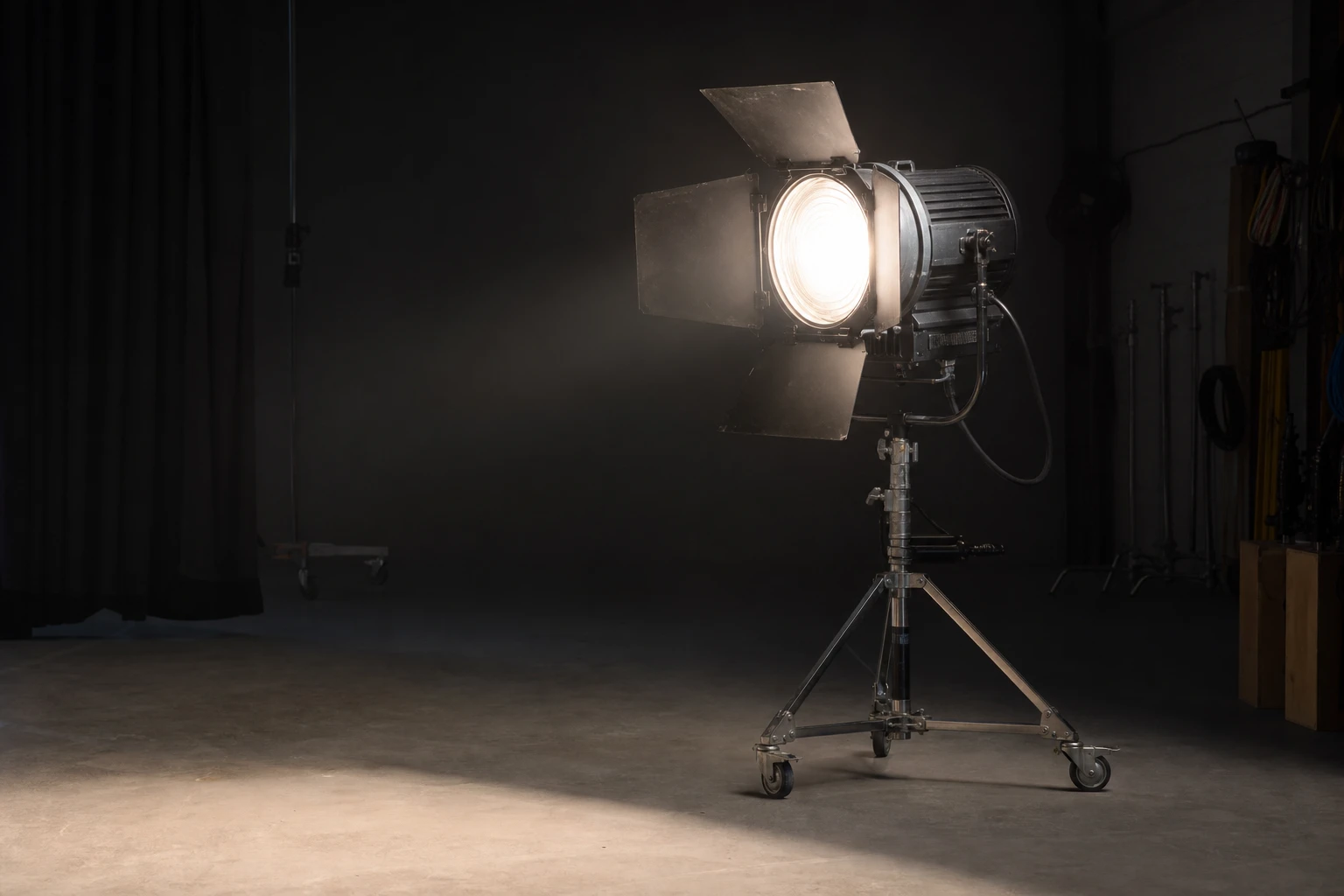
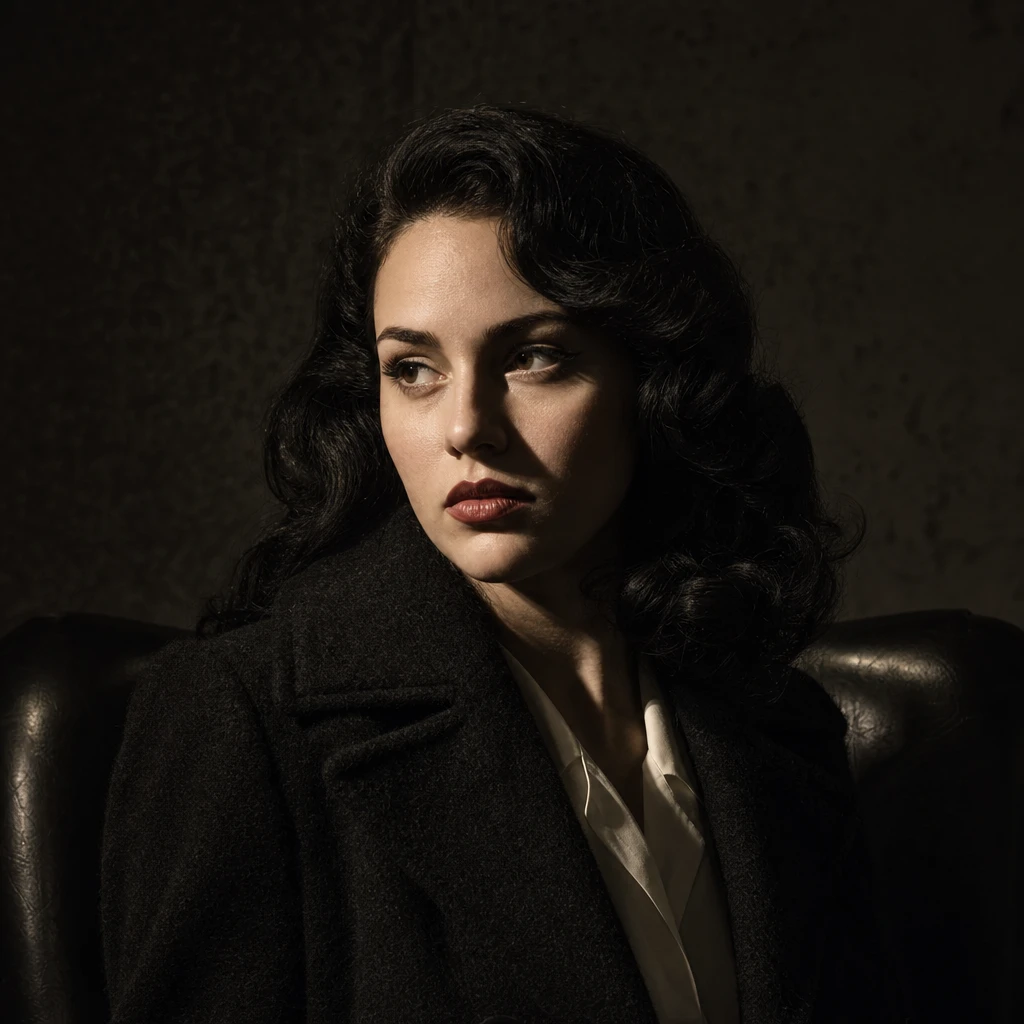
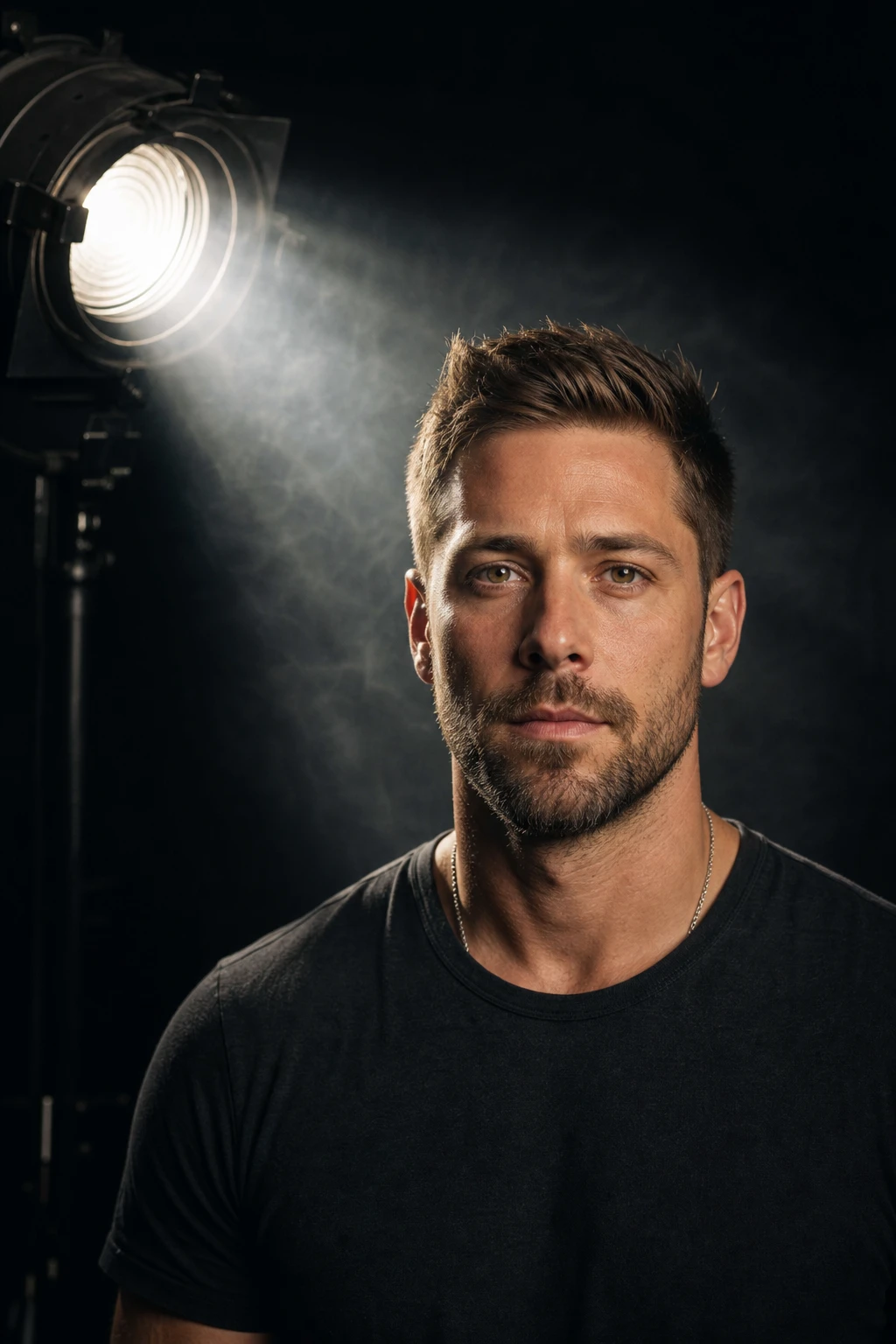
A fresnel is a focusable lens in front of a lamp or strobe that collimates light into adjustable beam from spot to flood — hard-ish quality with defined shadow edge and efficient throw distance. Cinematic portrait photographers use fresnels for noir pools on face, venetian blind slash patterns, and haze-visible beams because the light behaves like Hollywood set fixtures. Skin stays readable when exposure controlled — fresnel drama is contrast and direction, not blur.
Fresnel chosen when snoot pool too tight and softbox too wide — middle ground directional beam with focus knob control. Focus spot for narrow cheek slash; flood for broader but still defined key. Haze in air makes beam volume visible — atmospheric portrait separate from clean studio headshot. Cutters and barn doors shape fresnel further into graphic shadows on face or wall.
Fresnel differs from bare reflector head — lens focuses rays; bare head scatters wider. Differs from LED panel fresnel film lights — same optics logic, strobe fresnels for stills freeze motion. Adjacent venetian blind patterns use hard sun or fresnel through blinds — shadow line quality matches when blinds close to subject or lens.
Film-style portraits use fresnel because the beam feels motivated — like a single strong source in a dark room — even when the room is a studio painted black. The focus knob is your zoom: spot for interview-style intensity on one cheek, flood for environmental portrait where the subject moves slightly between frames. Strobe fresnels recycle fast enough for expression sessions; continuous LED fresnels let you see beam in haze before the still — many photographers focus with continuous modeling then switch to strobe for capture. Either way, skin highlight rolloff on the pool edge defines the look — expose for cheek detail inside the pool, let shadow side fall to black or negative fill.
Practice reading fresnel character on a gray mannequin head before a living subject — spot position on cheek, flood position on full face — so you vocabulary-match client references ("more slash," "wider pool") to focus knob positions you can repeat.
Focus the fresnel on a gray card at subject distance before the face is in the chair — spot and flood are not guesswork from across the set.
Placement in practice
Height above eye line, forty-five to sixty degrees off camera for cinematic short light — focus spot aimed at far cheek, shadow side camera-near. Distance eight to fifteen feet common — fresnel efficient at distance unlike softbox must stay close. Focus knob spot tight pool; flood if subject moves during session wider tolerance.
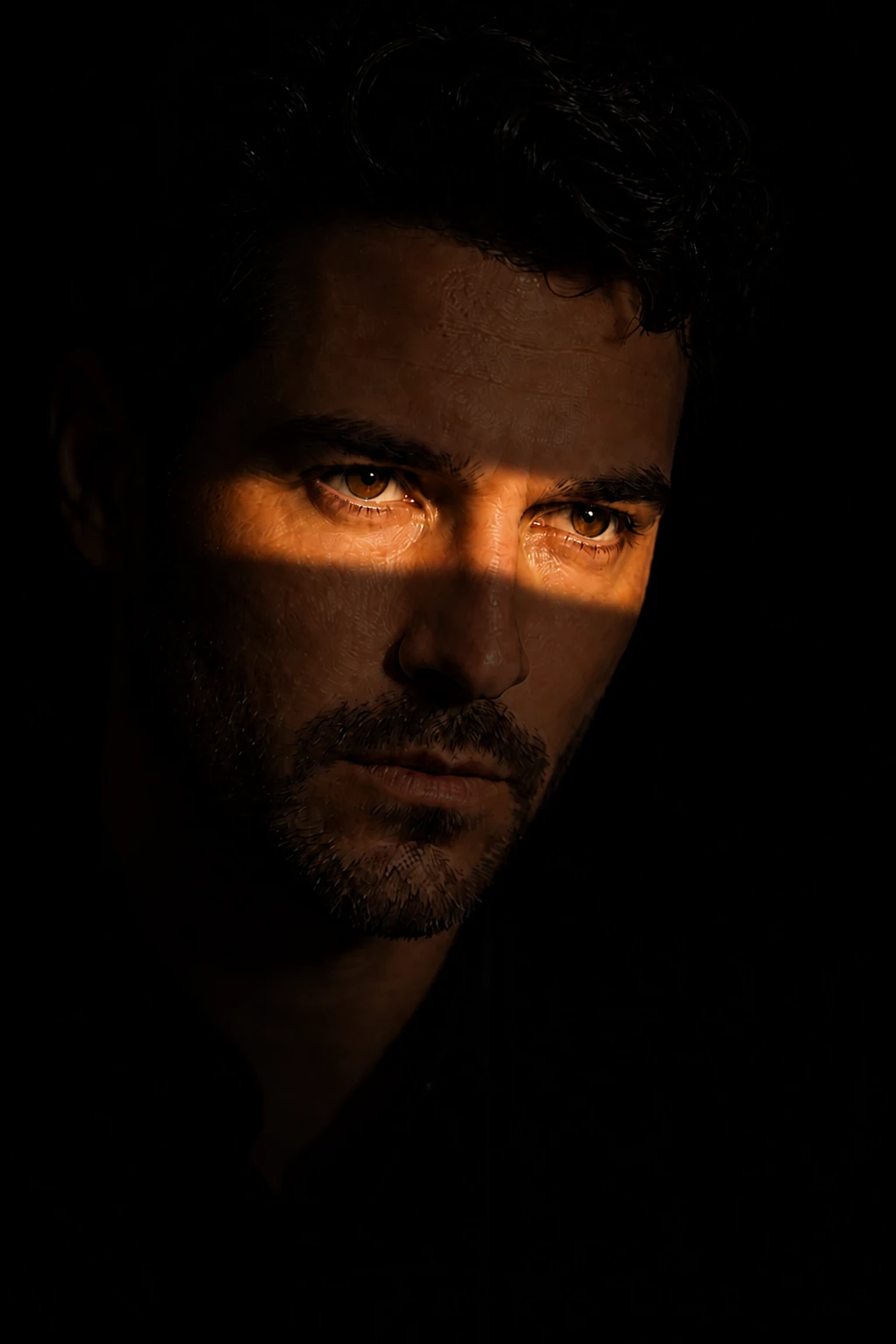
Cutter between fresnel and subject slices beam — horizontal slash across eyes, vertical bar half face — cutter close to subject sharp shadow edge, close to fresnel soft edge. Venetian blinds attached or actual blinds in path — parallel lines on background or face.
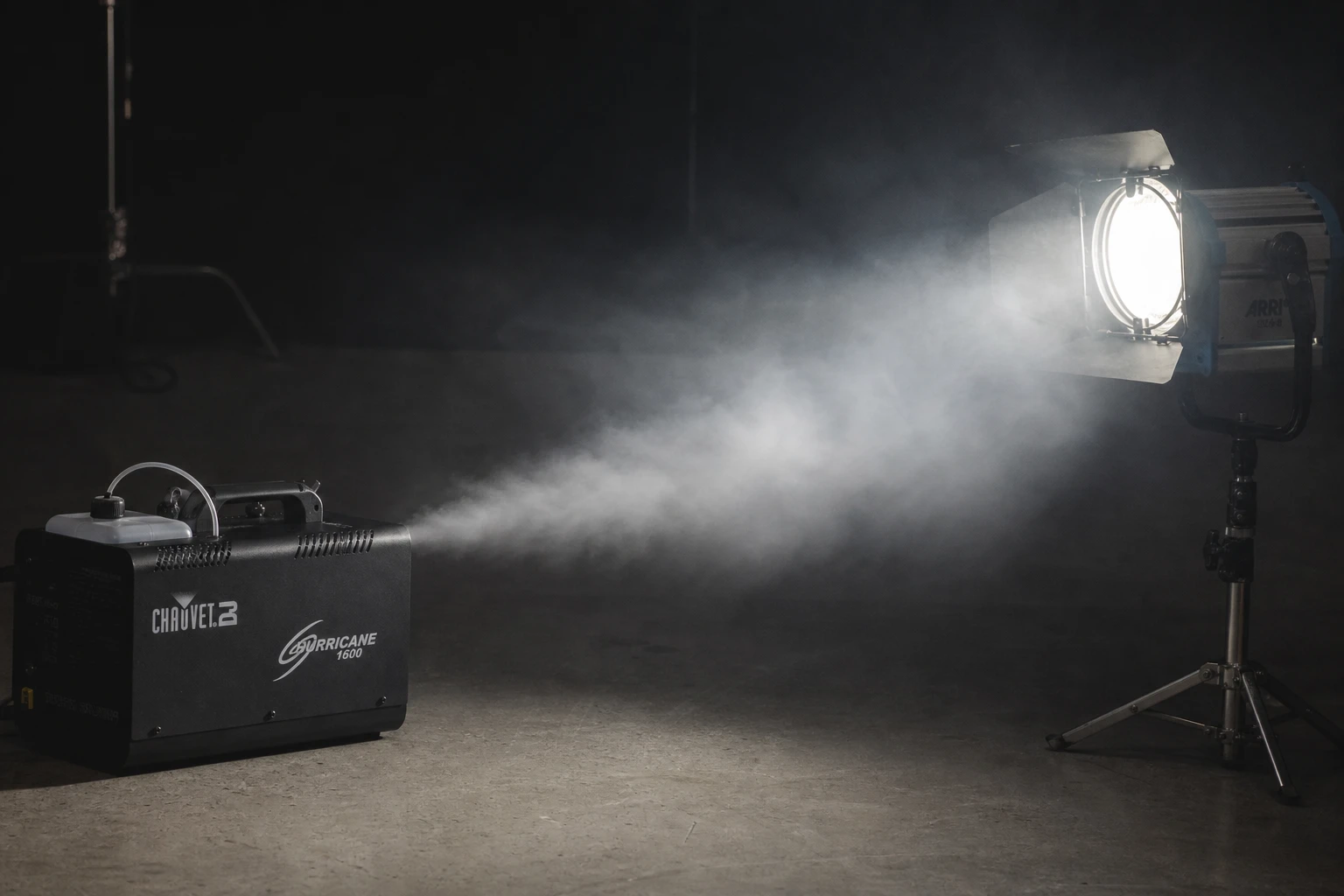
Haze machine between fresnel and camera — beam visible — reduce haze density until beam subtle not whiteout; strobe rear sync or continuous fresnel for focus pull video stills hybrid.
Mark fresnel stand feet on floor tape for spot and flood presets — focus knob position plus distance equals repeatable slash width. When subject wears glasses, rotate fresnel slightly so pool edge does not specular in lenses, or raise angle so reflection misses camera. Full-length cinematic frames need fresnel high enough that pool still reaches chest while head stays in spot — sometimes two heights: flood body, spot face, accept compromise or use cutter for face-only slash.
Blind patterns through real blinds versus fresnel through blinds on stand: real blinds near subject give sharp line edges; fresnel through blinds farther back scales pattern on wall behind subject — choose based on whether pattern lives on face or environment.
Distance and power
Spot focus concentrates power — meter pool center, protect forehead highlight. Flood spreads — same power dimmer on subject, wider coverage. Pull fresnel back enlarge pool before clipping skin in spot mode.
Focus breathing changes beam edge hardness — test spot flood marks on floor stand position. Inverse square applies — fresnel twelve feet back needs higher power than six feet — but beam still defined unlike soft source.
Feather fresnel by panning slightly off center — hot spot off nose onto cheek — barn doors trim left-right spill.
At twelve feet spot focus, pool diameter may be twelve to eighteen inches on face — enough for headshot, tight for movement. Flood at same distance covers torso — meter chest separately if wardrobe detail matters. Power headroom: fresnel at spot concentrates guide number — if pack clips at spot, flood will underexpose when client asks to widen — reserve power or accept aperture change when switching focus.
Coordinate with makeup: fresnel reveals texture — matte skin reads better than heavy shimmer on cheekbones in spot pool. Hair spray shine becomes secondary specular — flag or adjust angle if halo competes with catchlight.
In haze, if the beam disappears, you underexposed the atmosphere or used too little haze — the face can be correct while the volume reads flat.
Fill, spill, and control
Low ambient or black studio — fresnel contrast native environment — fill optional negative on shadow side. Minimal reflector far — noir often pure one light. Flags block fresnel spill on background when pool should isolated on face — black flag camera side outside pool.
Haze control ventilation — too much haze flat milky contrast — pulse haze, shoot between peaks. Cutters flag spill to lens — fresnel flare reduces contrast — flag lens axis.
Barn doors top bottom trim pool height — simulate horizon line shadow on face graphic.
Negative fill V-flat on shadow cheek preserves noir density when white studio walls fight single fresnel. Do not add soft fill strobe unless brief shifts — hybrid noir-plus-fill is different genre. Lens choice affects fresnel drama: eighty-five millimeter compresses background pool separation; wide angle in small room shows fresnel stand in frame if background not controlled.
Safety: fresnel beams through haze heat — keep clearance from fabric and hair spray fumes; ventilate between haze bursts in enclosed sets.
What to look for
Pool edge on cheek sharp in spot focus — mushy edge means flood too wide or haze too thick. Catchlight small bright — fresnel specular. Shadow nose lands cheek not lip — height adjustment.
Beam volume in haze symmetric from fresnel — asymmetric haze means fan direction wrong. Skin tone in pool not green from cheap gel on lens — clean fresnel glass.
Cutter shadow edge parallel to cutter blade — if blurred cutter too far from subject or fresnel too flood.
Common mistakes
Fresnel flood mode twelve feet away expecting snoot isolation — pool huge, background lit — spot focus or add flags.
Haze so thick subject low contrast muddy — reduce haze, increase fresnel edge on face relative atmosphere.
Cutter too close to fresnel — shadow soft ambiguous — move cutter near subject for graphic slash.
Ignoring ambient room — fresnel pool invisible against gray ambient — kill room lights, lower ISO, let pool dominate.
Using fresnel like softbox by flooding from three feet produces neither soft wrap nor tight pool — middle distance without character. Commit to spot-at-distance or switch modifier. Client references "film noir" but rejects shadow on eyes — adjust height and feather, do not flood until shadow vanishes; educate with tether comparison frames.
Dirty fresnel lens diffuses beam unevenly — clean glass before session; fingerprint on lens shows as smear in haze beam. Strobe modeling light misleads focus if modeling is flood and capture is spot — confirm focus under capture settings.
Try it yourself
Walk the setup one light at a time, or dial passes live in the relight studio.