Fashion
Octabox Turned-Head Fashion Portrait
Lighting setup
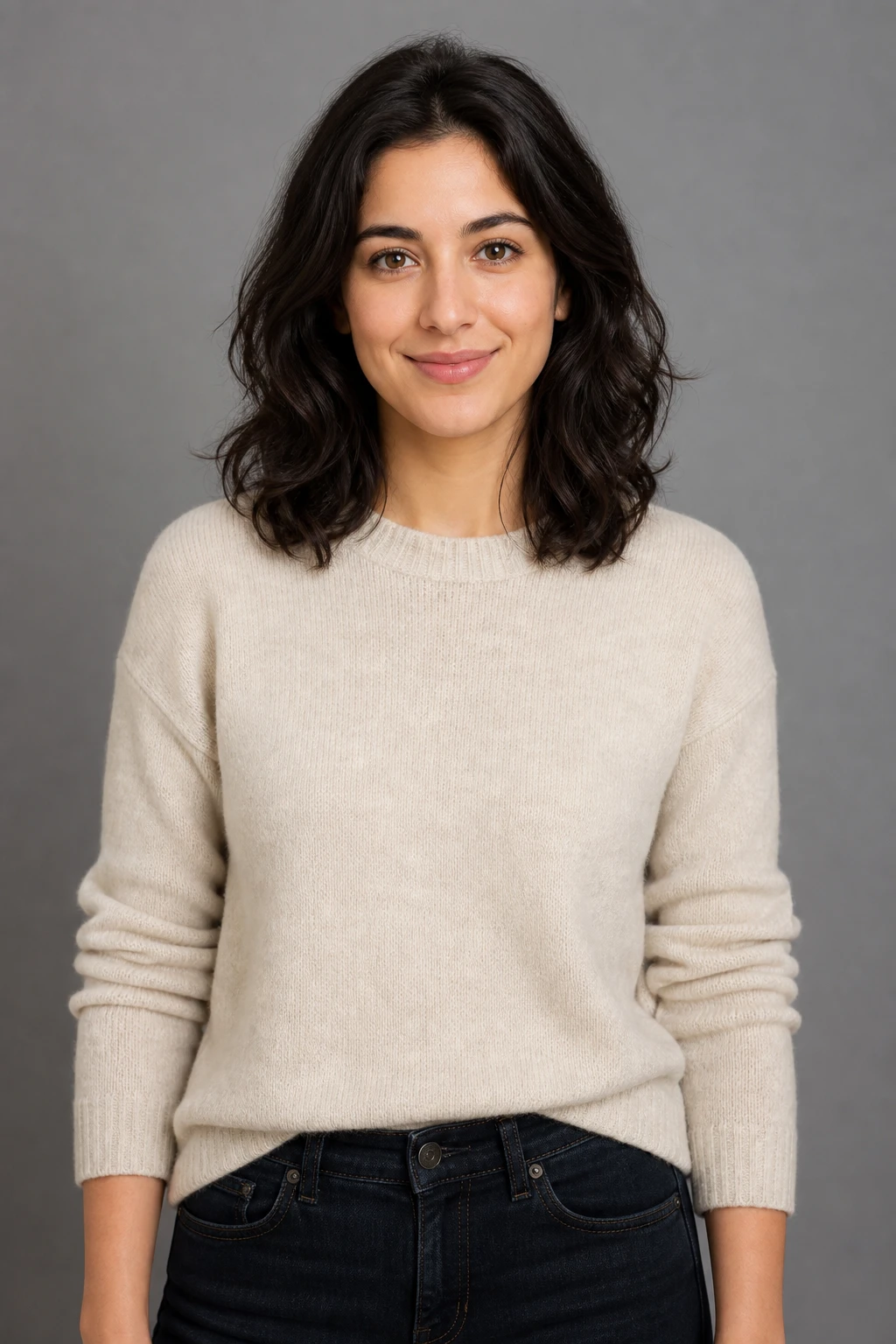
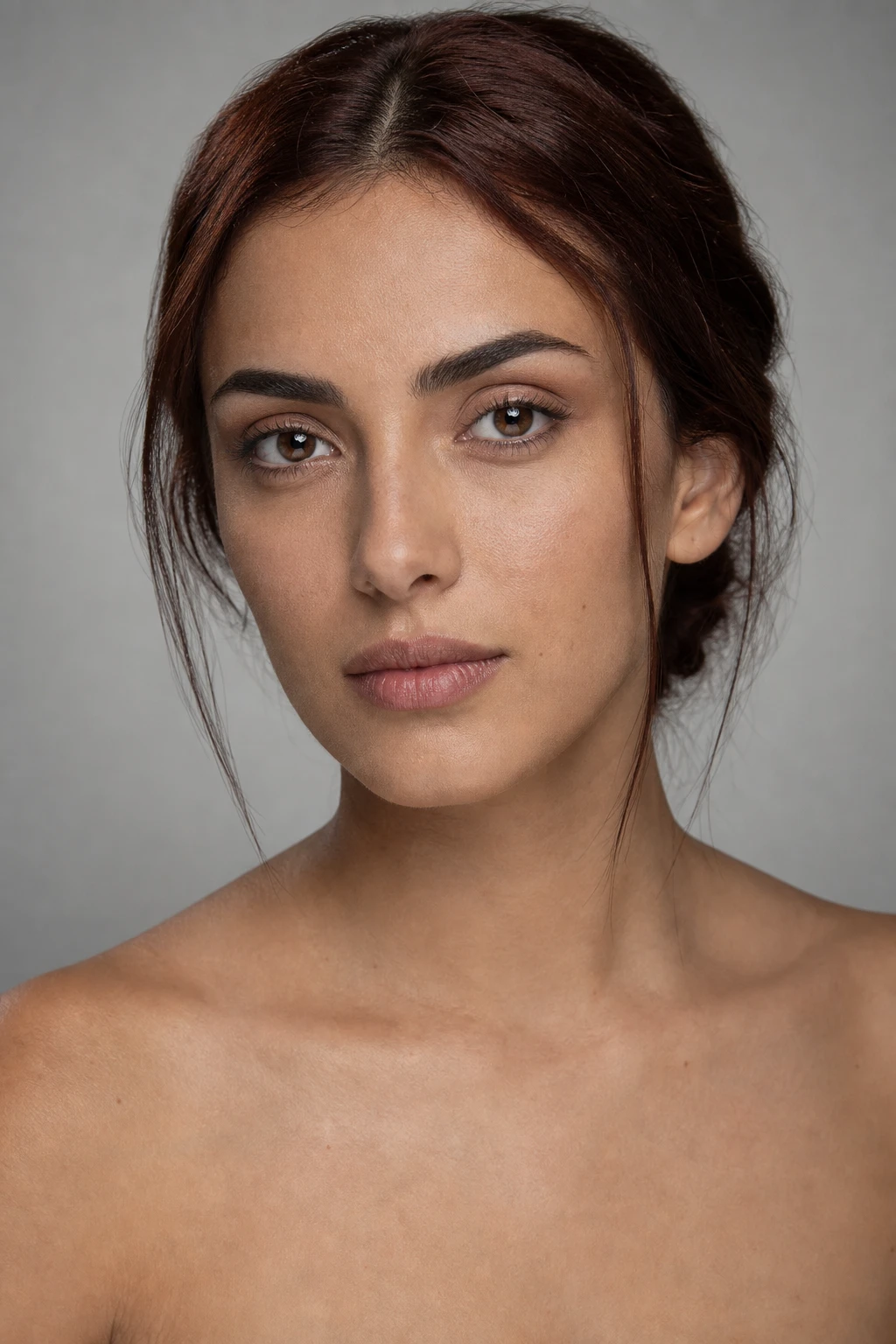
A three-quarter fashion portrait lit by one large octabox at camera-left: turned toward the shoulder, the head lets that single source both rim the hair on the far side and wrap around to model the near cheek — no second light required.
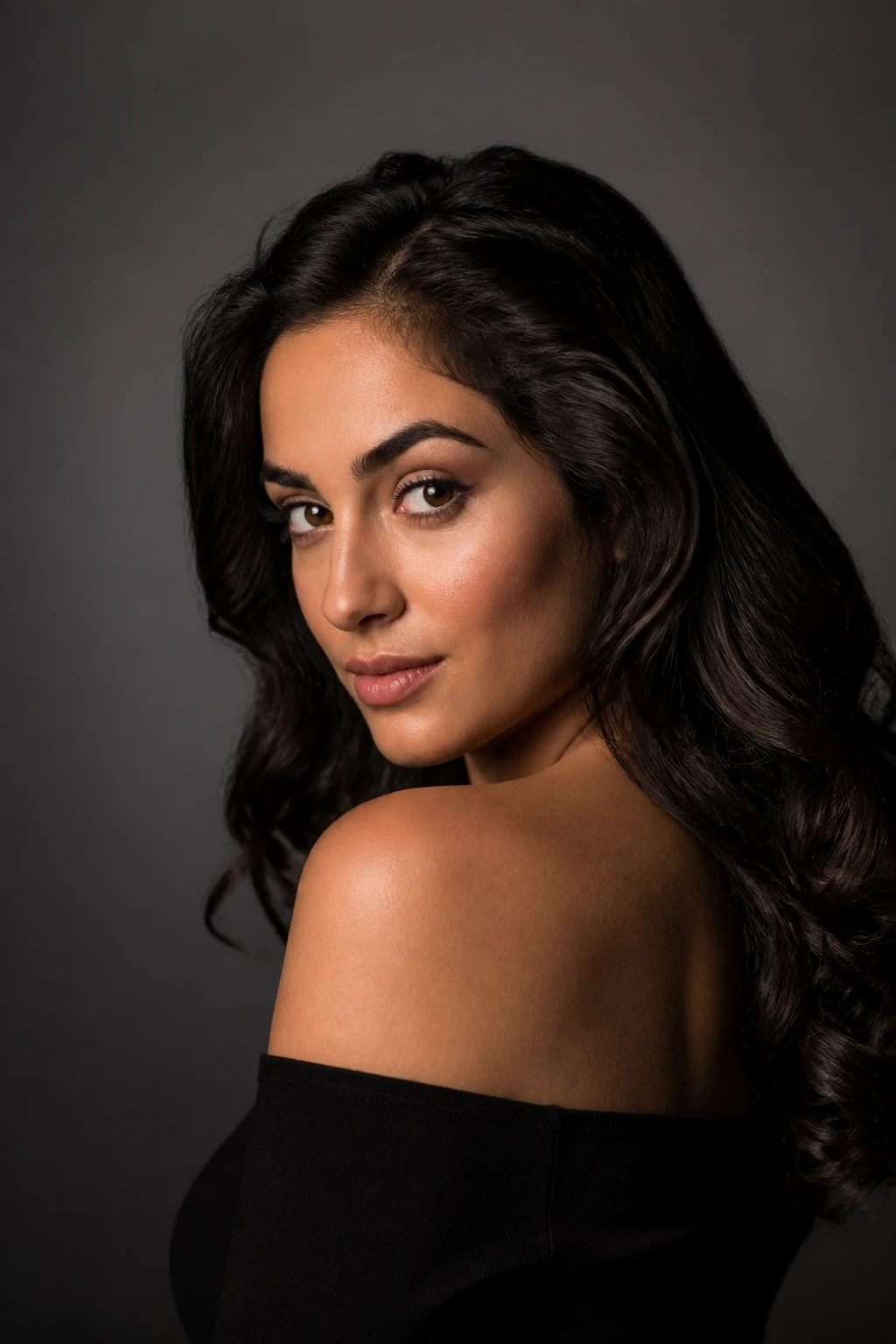
One octabox, a turned head — key and hair edge from a single light.
- Lights
- 1
- Contrast
- 3:1 – 4:1 across the turned face
- Catchlight
- Single soft catchlight, camera-left
- Key position
- Camera-left, wrapping the turned head.
- Mood
- Soft / Fashion
- Quality
- Soft Light / Diffused
- Subject
- Fashion
- Environment
- Studio
Mood variations
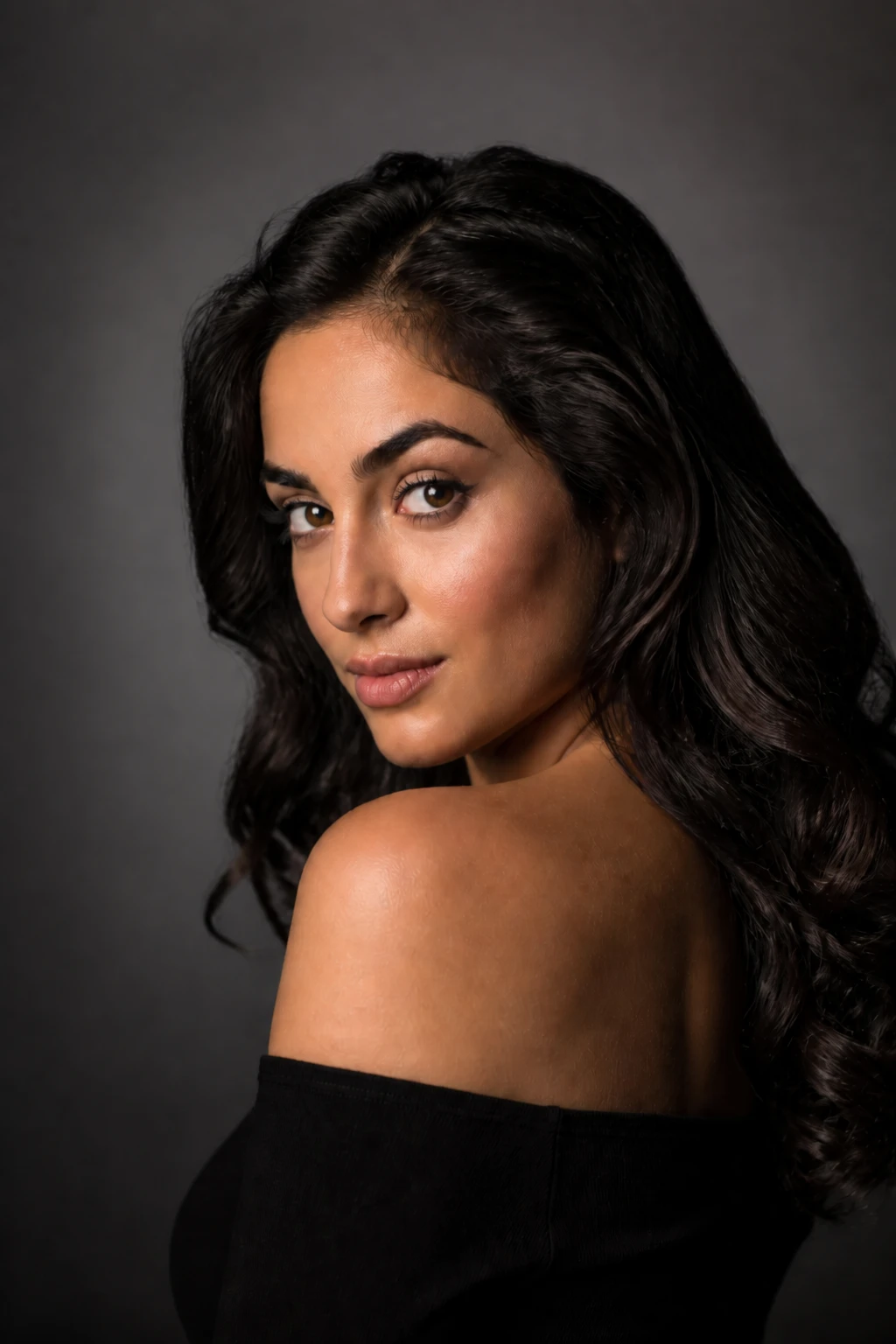
Closer Wrap
Move the octabox closer for a softer wrap on the near cheek while the far-side hair edge from the same single light holds.
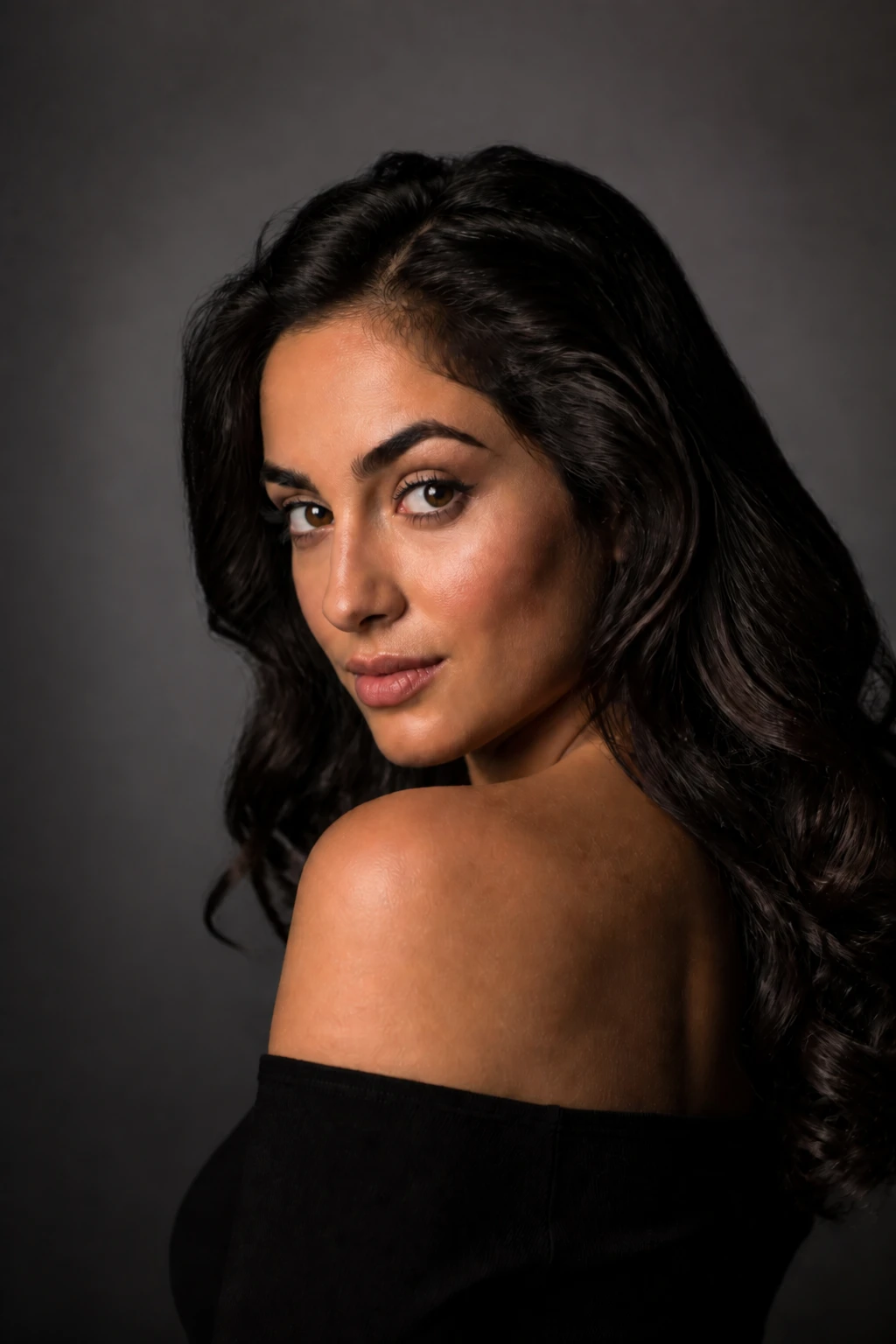
Farther Definition
Pull the octabox back for slightly harder cheek and nose modeling — still one light on the turned head.
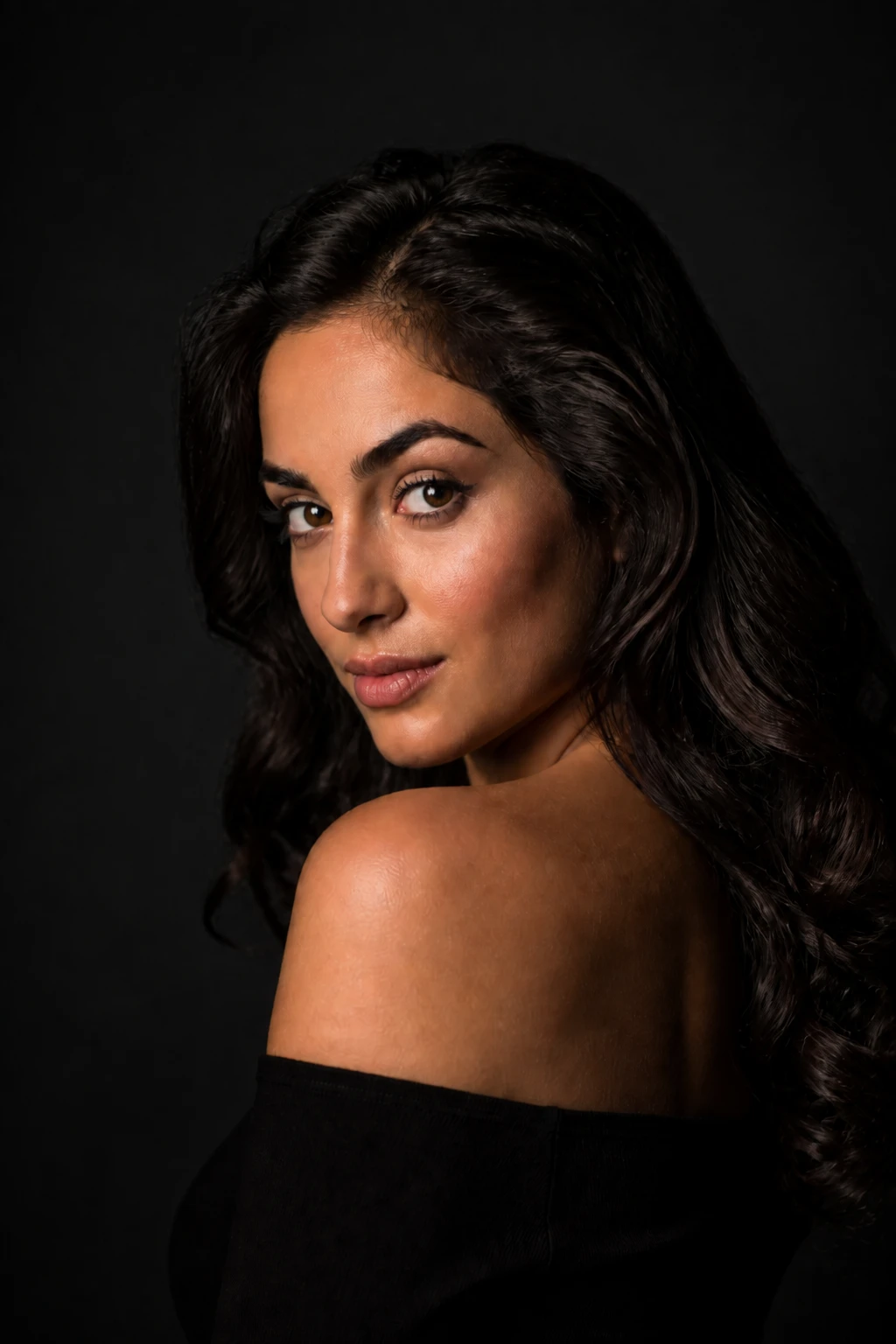
Darker Backdrop
Pull spill off the grey seamless so the background reads darker and moodier while the octabox key on face holds.
Final look
Base setup
When the subject turns her head away from a single side source, that one light does two jobs at once: it skims the hair and shoulder on the far side as a bright edge, and it wraps across the planes of the face that still turn toward it. The grey backdrop reads brighter on the light side and falls off across the frame, giving depth from a single octabox. The apparent 'hair light' is not a separate strobe — it is the key catching the edge of the turned head.
Camera & framing
ISO
ISO 100
Shutter
1/160 – 1/200s
Aperture
f/8
Exposure
Lens
50 – 85mm
Camera height
Chest to eye level
Framing
Three-quarter to full body, wardrobe readable
Lens & framing
Key notes
- 1Set one large octabox at camera-left, roughly at head height or a touch above, and have the subject turn her head back over the shoulder toward the lens.
- 2Let the head angle decide how much hair edge you get — the further she turns from the light, the stronger the rim on the far side.
- 3Position her so the octabox both edges the hair and still reaches the visible cheek; you are balancing rim and key from one source, not adding a second.
- 4Let the grey backdrop fall off naturally across the frame — brighter on the light side — for separation without a background light.
Gear alternatives
Same lighting job — budget, mid, and pro tools. Highlighted cells match what this setup names.
Large soft key
octabox
Round catchlights and broad soft wrap
- Budget
- Large umbrella (close)
- Mid
- Softbox
- Pro · this setup
- Octabox / parabolic