Beauty and headshot photographers
Beauty dish and clamshell
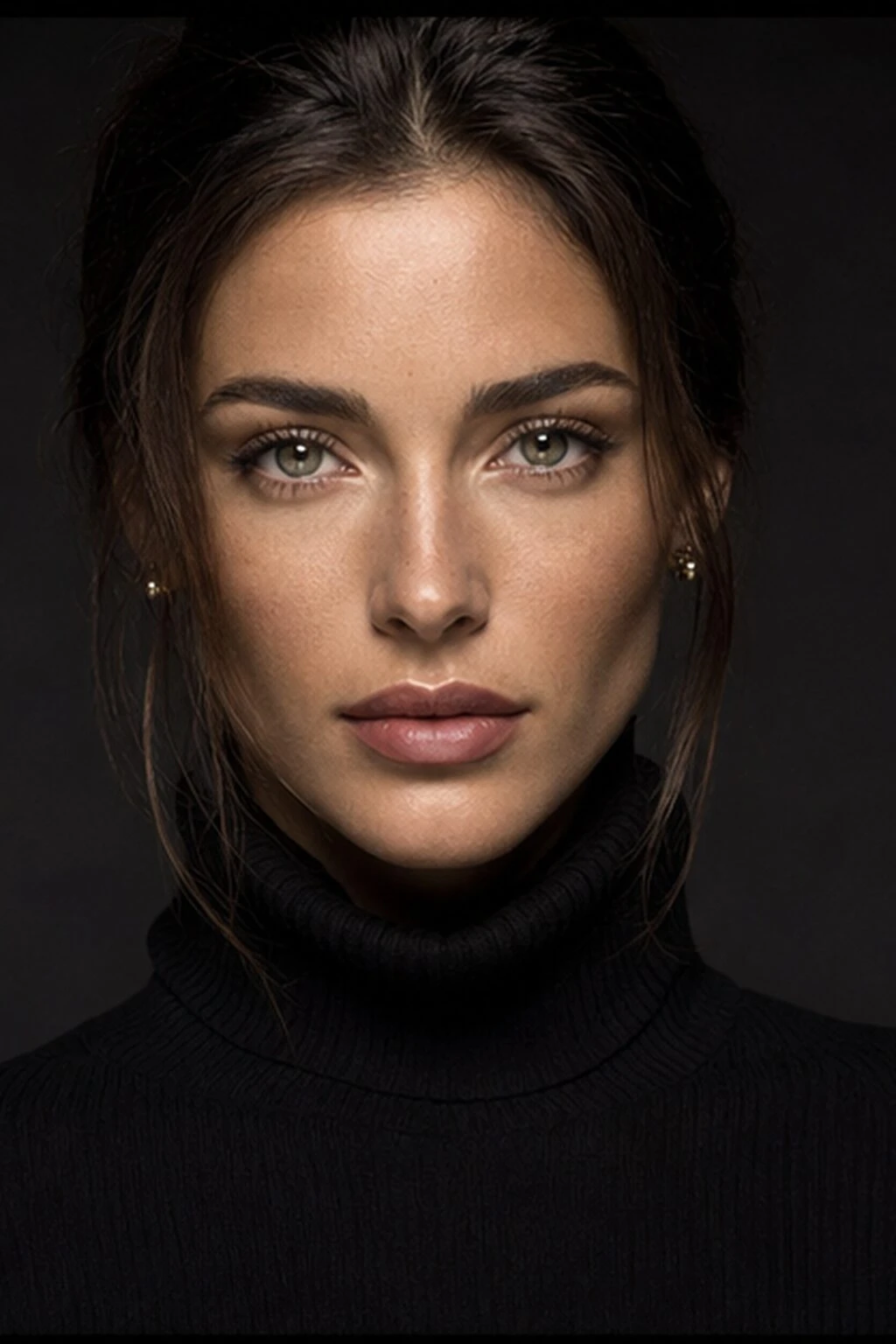
Overhead beauty dish plus under fill — even skin, controlled catchlights, commercial polish.
14 min read
What is a beauty dish?
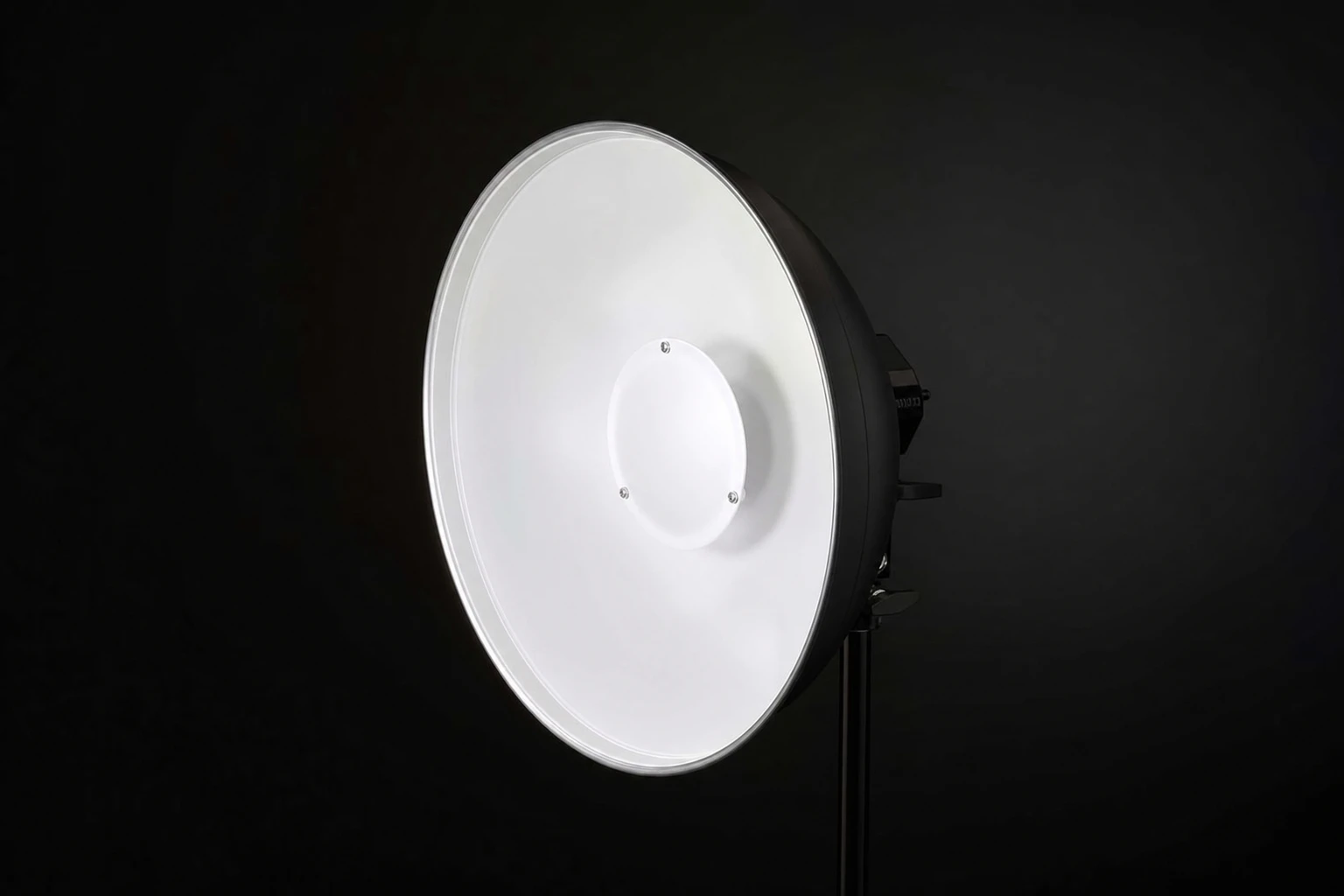
A beauty dish is a metal reflector shaped like a shallow bowl with a deflector plate in front of the flash tube, producing a directional, contrasty soft light with more punch than a softbox and more wrap than bare flash. The light character sits between hard and soft: shadow edges are visible but not razor sharp, skin texture reads with clarity, and catchlights often appear as a round or ring highlight depending on design. Beauty dishes became standard in commercial beauty and headshot work because they flatter bone structure while keeping pores and makeup visible for retouching decisions.
Photographers choose a beauty dish for overhead keys, on-axis butterfly lighting, and clamshell setups where a second source or reflector fills from below. The modifier rewards precise placement — small height changes move the nose shadow dramatically — which makes it a teaching tool for axis and distance. Compared to a softbox, a dish is harder and more efficient; compared to a bare head, it adds controlled wrap and a signature catchlight shape advertisers recognize.
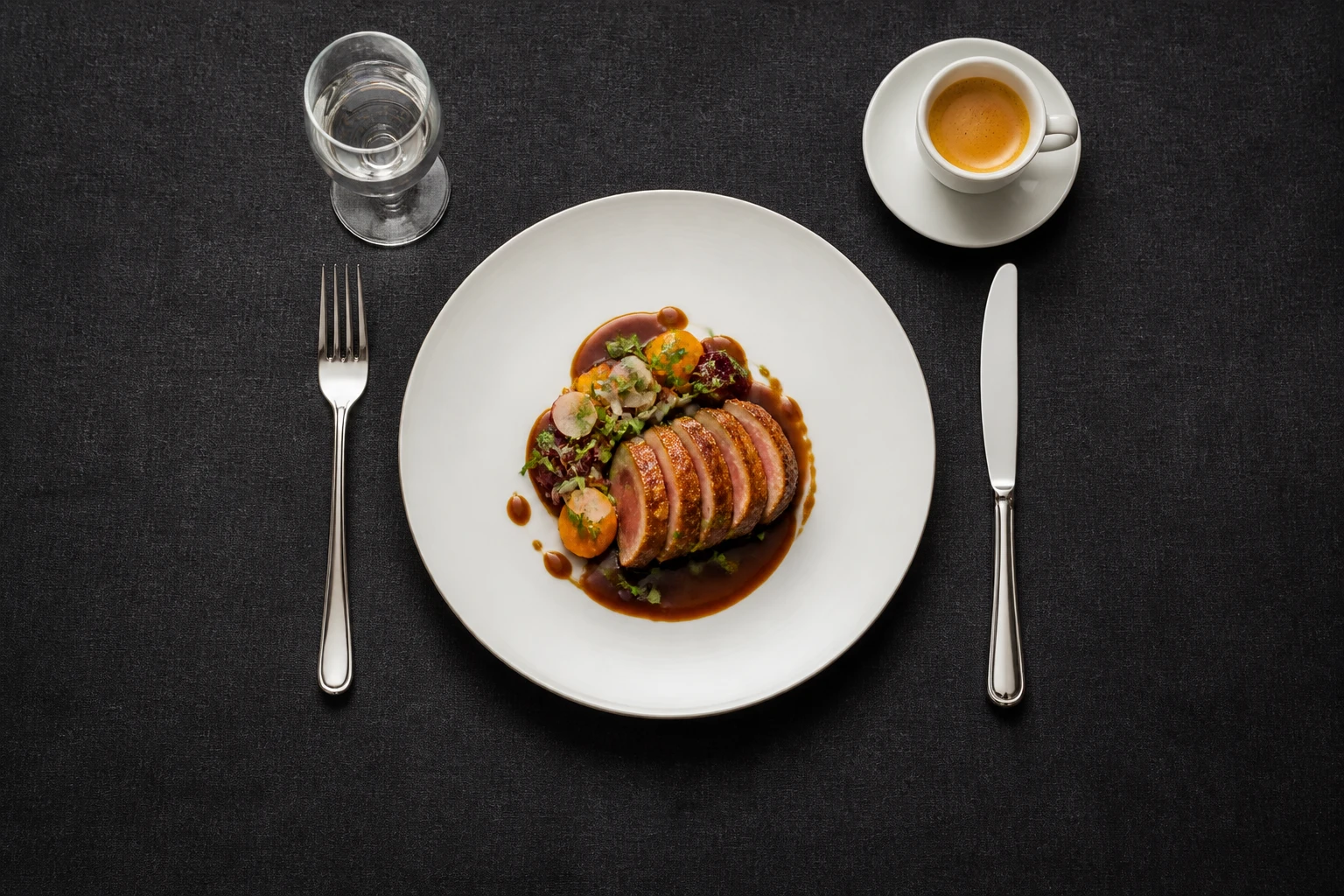
Clamshell lighting stacks a beauty dish above the camera axis with fill from below — often a stripbox, reflector, or second dish aimed up at the jaw. Butterfly lighting uses the dish on-axis above the face, creating a shadow under the nose and symmetric cheek modeling. Both patterns share the same modifier; axis and fill differentiate the look. Food and product photographers use overhead dishes for specular control on glossy surfaces using the same geometry at smaller scale.
Clamshell ratio is felt in the under-chin shadow — if it vanishes, lower fill is too strong, not that the dish failed.
Placement in practice
For butterfly, center the dish above the lens, slightly forward of the camera plane, angled down toward the mouth or upper chest. Height sets nose shadow length: higher lengthens the shadow under the nose; lower shortens it toward the lip. Start with the dish two to three feet above head height for seated portraits, then lower until catchlights sit at twelve o'clock in both eyes and the nose shadow forms a small butterfly shape without touching the lip.
For clamshell, keep the overhead dish as key and place fill below the chest line, angled up toward the jaw — stripbox, small softbox, or silver reflector on a low stand. Fill should not visible from camera if possible; hide stand and edge behind frame. Key-to-fill ratio often starts around two to one for beauty — key cheek brighter, shadow under chin lifted but not eliminated. Rotate subject slightly off-axis if perfect symmetry looks lifeless; two degrees of turn adds dimension without breaking clamshell logic.
Feather the dish by tilting left or right so the hot center misses the forehead — beauty dishes concentrate output in the middle. Edge placement on cheekbones reduces specular on oily skin while keeping eyes bright. Grid optional on dish when background must stay dark; grids tighten spill without fully softening skin character.
Distance and power
Beauty dishes fall off quickly because the source is physically moderate in size. Moving from four feet to two feet increases exposure sharply and can hot spot the forehead and nose bridge. Pull back when skin speculars clip; power adjustment alone flattens ratio between highlight and shadow less effectively than distance when the dish is already close.
Farther placement hardens shadows slightly and widens the field — useful when the subject is full-length but the dish must stay overhead. Clamshell fill distance matters independently: lower fill too close matches key and erases under-chin modeling; too far leaves jaw muddy. Match fill distance to key intent — beauty often wants jaw readable at one stop under key cheek.
Power sync between key and fill channels should be metered at the face, not at each modifier separately in isolation. Meter key at cheek, then add fill until under-chin rises to target density. Feather lower fill down if it spills into nostrils from below — upward fill from too close creates nostril glow unflattering in beauty work.
When the forehead blows before the jaw is lit, raise the dish and feather — distance and angle beat raw power cuts.
Fill, spill, and control
Clamshell fill is the primary fill story; negative fill on the sides deepens cheek contour when the brief wants sculptural beauty rather than flat catalog skin. Black flags left and right of the face absorb room bounce that clamshell otherwise lifts evenly. Use negative fill when shooting in white rooms for fashion beauty; skip for high-key e-commerce where cheek gradient should stay minimal.
Spill from an overhead dish hits shoulders, chest, and background. V-flats behind the subject absorb return and darken the backdrop halo. Grids on beauty dishes control background while preserving dish character on skin — faster than flagging every spill path. For reflective floors, black matting reduces upward fill into the jaw that fights clamshell ratio.
Below-fill options differ by tool: stripbox gives adjustable power and soft under-chin; reflector gives free but angle-sensitive lift; second dish at lower power matches commercial studio symmetry. Diffusion socks on beauty dishes soften slightly at cost of efficiency — try feathering before diffusing if character matters.
What to look for
Catchlight shape and position confirm axis — butterfly should show round or ring specular high in both eyes. Asymmetric catchlights mean the dish drifted off-axis or the subject rotated without adjusting overhead rig. Nose shadow under butterfly should be compact and centered; drifting shadow means dish not centered over nose.
Skin on cheekbones should hold detail without plastic shine — overexposure on T-zone is common with dishes because output is punchy. Under-chin in clamshell should show soft gradient, not second hard shadow from fill aimed too high. Lip and nostril highlight from below-fill indicates fill angle too steep — lower and tilt away from nose.
Shoulder and collarbone exposure often runs hot with overhead keys — check histogram for shirt blowout before skin. Hair halo from dish spill separates subject from background; if halo is unwanted, grid or flag behind shoulders.
Common mistakes
Lower fill too powerful turns clamshell into flat on-axis soft light with no cheek modeling. Symptom: absent under-nose shadow and equal cheek brightness. Drop fill power or move fill back until nose shadow returns, then lift jaw only as needed.
Overhead dish too low creates raccoon eyes and long nose shadow to the lip. Raise and tilt down gently until eyes brighten. Beauty dish height errors show immediately in catchlights — fix before retouching fifty frames.
Using clamshell in a white room without side flags produces wrap that looks like one big soft source. Cheeks lose contour; jaw still looks okay. Add negative fill on sides or accept butterfly-only without lower fill until environment is controlled.
Chasing softbox softness with diffusion socks on the dish until catchlight character disappears wastes the modifier's purpose. If the brief needs ultra-soft skin, switch modifier; if the brief needs beauty dish snap, keep dish character and control distance.
Building clamshell on set takes five minutes once ratios are understood: raise key dish, meter cheek, add lower fill at one-quarter key power, meter under-chin, adjust until jaw separates from neck without killing nose shadow. Shoot a gray card frame for color reference because daylight-balanced strobes (~5500K) and warmer tungsten practicals or modeling lamps mix easily in small rental studios. When the subject wears a high collar, lower fill may need to drop further so fabric does not glow from below while the face stays balanced.
Try it yourself
Walk the setup one light at a time, or dial passes live in the relight studio.