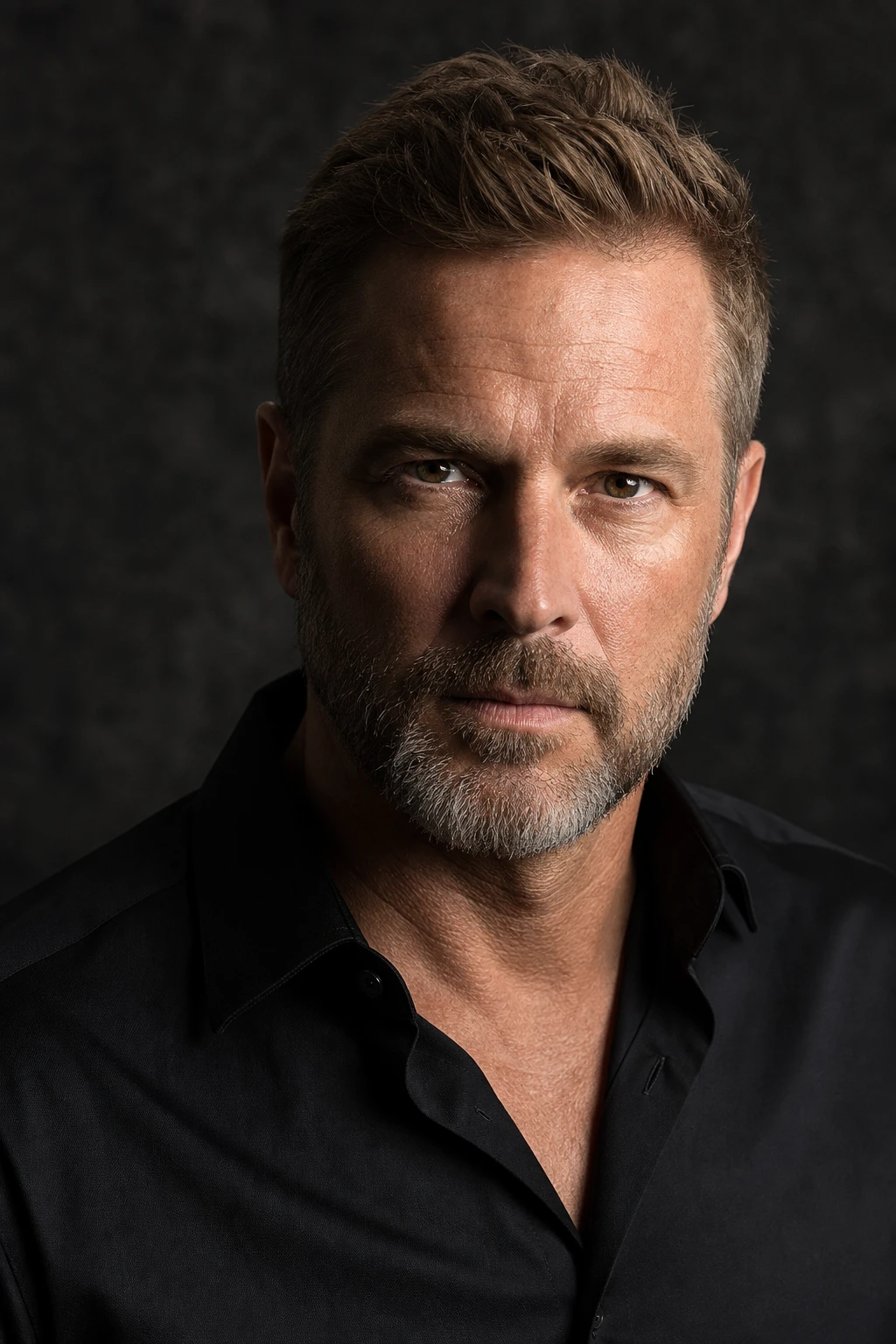
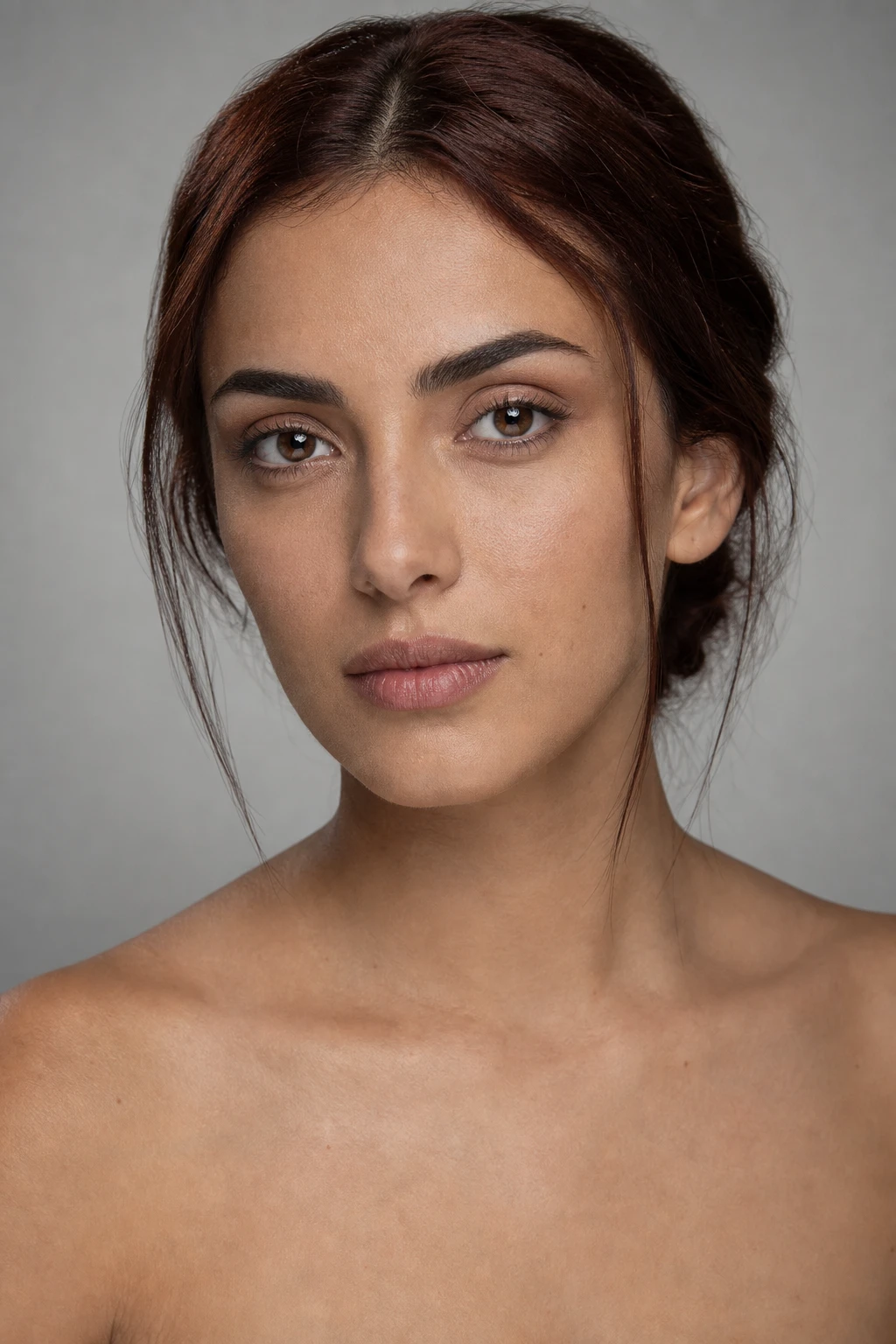
Lighting ratio is how much brighter the lit side of a subject is than the shadow side — usually written key:fill (2:1, 3:1, 8:1). It is a brightness relationship, not a softness relationship. Soft light can still run 8:1; hard light can still run 2:1. Ratio answers “how deep are the shadows allowed to go?” Softness answers “how sharp is the edge of those shadows?” Keep the two dials separate or you will fix the wrong one.
In stops: each stop of difference roughly doubles the linear ratio. About one stop between cheeks is near 2:1; about three stops is near 8:1. Photographers quote ratios because they travel between meters, diagrams, and mood language better than raw lux numbers.
When the number matters
Use a low ratio (around 2:1) when the brief needs open, readable faces — corporate headshots, beauty with detail under the chin, product labels that must not fall into a hole. Use a mid ratio (3:1–4:1) for classic portrait modelling. Use a high ratio (8:1 and beyond) when the shadow is the mood — drama, noir, one-light falloff into black.
Skip obsessing over the number when you are still placing the key: angle sets the pattern (loop, Rembrandt); ratio only sets how dark that pattern’s shadows go. Fix the stand first, then the fill.
How to set it — and prove it
You set ratio by changing fill relative to key: raise a fill lamp or bounce card to open shadows; dim fill, kill fill, or add negative fill to deepen them. The fill light entry is the role for what fill is; this page is the number that fill produces.
Our ratio lab locks a real face and a fixed key, then lets you drag only fill. The detents are calibrated to the rendered pixels, not to wishful labels:
- 8:1 — dramatic shadow cheek
- 4:1 — strong modelling
- 3:1 — classic working portrait (lab default)
- 2:1 — open and commercial
A true 1:1 is intentionally absent: forcing the shadow cheek to match the key cheek by fill alone clips highlights and lies about what a fill can do. If you need flat beauty light, move toward clamshell geometry and a large soft key — do not pretend a side-fill slider can invent it.
In the catalog, Dramatic Portrait authors an 8:1 contrast brief with deep shadow; Octabox Corporate Headshot aims near 2:1 for trustworthy skin. Soft One-Light Softbox Headshot is the lab’s own scene — one soft key, fill as the live axis. The with-and-without fill pair on clamshell — reflector in, reflector out, same key — is the owned proof that one card can rewrite ratio without touching the key.
What people get wrong
Soft box = low ratio. Wrong axis. Soften the edge with size and distance (light quality); open or crush the shadows with fill and negative fill.
Chasing 1:1 with a second strobe. Matching key power with fill kills modelling and often looks plastic. Keep fill the quieter voice; if you need even beauty light, change the key size and position, not only fill power.
Metering the wrong planes. Ratio is lit cheek versus shadow cheek (or lit product face versus its dark side) — not key stand versus fill stand, and not subject versus background. Background depth is a different light’s job (background light).
Adding fill when the pattern is wrong. If the nose shadow is in the wrong place, move the key. Fill cannot relocate a Rembrandt triangle; it can only brighten or darken it.
In the library
Open the ratio lab, then compare Dramatic Portrait (high ratio), Octabox Corporate Headshot (low ratio), and Soft One-Light Softbox Headshot (the lab face). For the fill instrument itself, read fill light; for crushing shadows without adding watts, read negative fill.