Location and natural-light photographers
Scrim softening for daylight
How a scrim softens hard sun on faces and tabletops without rewriting the whole sky — coverage, distance, and fill.
9 min read
What is a scrim?
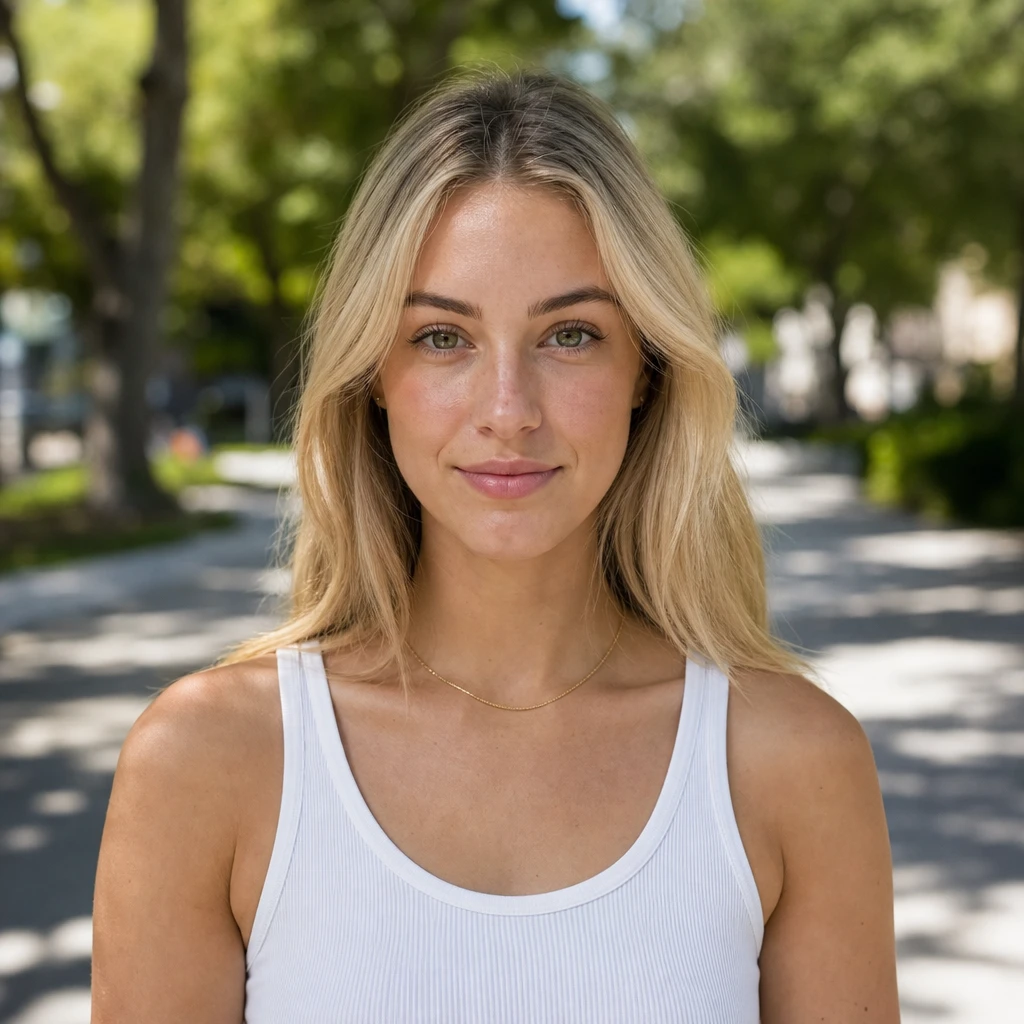
A scrim is diffusion held between a hard source and the subject so the key softens without turning into a second powered light. Outdoors that source is usually the sun; indoors it can be a window edge, a fresnel beam, or a bare strobe you refuse to umbrella. The scrim increases the apparent size of the source as seen from the face, which lengthens the shadow edge and lowers local contrast on skin while the rest of the world — sky, street, far background — can stay hard and bright. That split is the lesson: you manage the subject’s light, not the entire hemisphere.
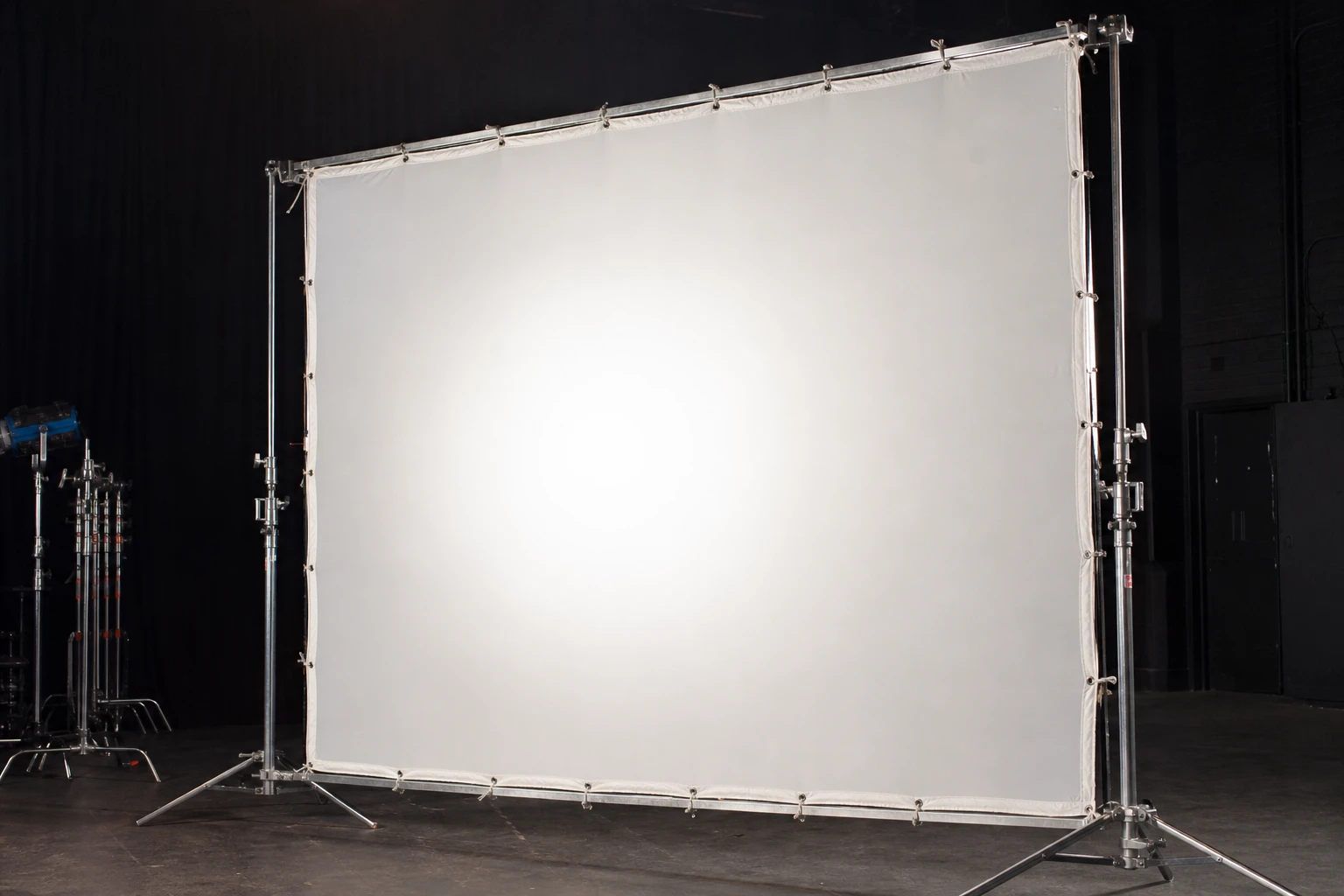
Photographers choose scrims when reflector fill alone cannot save a face under noon sun, when they need soft key and hard rim in the same frame, or when food and tabletop work must keep daylight direction without specular violence on glaze and metal. A handheld silk or diffusion panel over a standing subject is the portable version; an overhead frame on stands is the set version; a large overhead or side scrim over a table is the food version of the same physics. Scrims are not bounce cards. Bounce returns light into shadow; scrims change the key that creates the shadow.
Scrim work differs from simply waiting for cloud cover because you keep direction and timing. Cloud softens everything and kills specular motivation; a scrim softens only what it covers. It also differs from a softbox: a softbox is a self-contained source. A scrim borrows an existing hard source and edits its quality on the subject. Adjacent tools — ND filters, reflectors, HSS — solve exposure and fill; the scrim solves key quality when the sun is already the right story but the wrong hardness on skin.
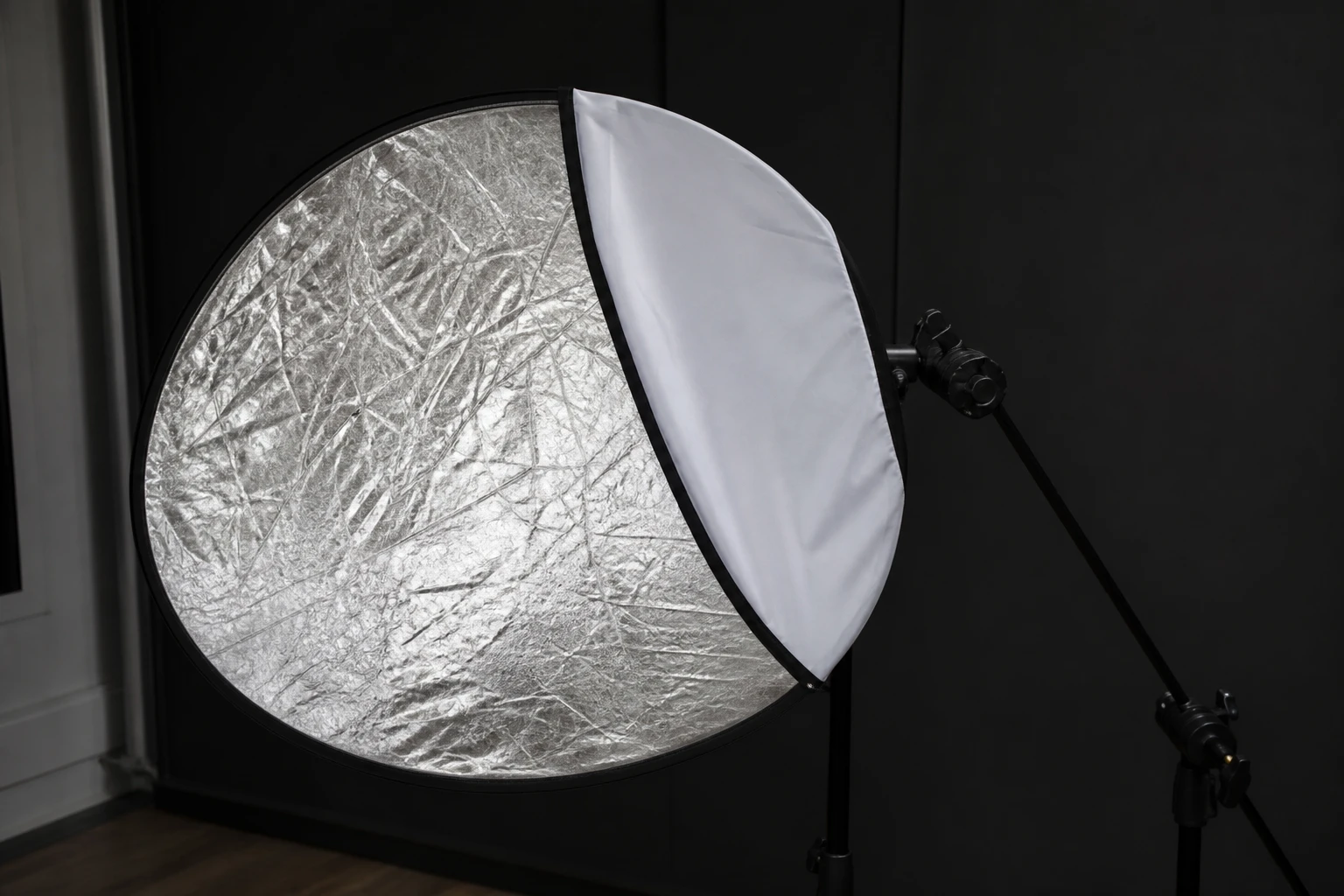
Soften the face first, then decide fill. A reflector under hard noon sun often fights a hard key; a scrim makes the reflector useful again.
Placement in practice
Place the scrim so the subject’s face and upper torso sit in the diffused beam while the camera still sees the real environment beyond the frame. For handheld sun portraits, an assistant holds the panel above and slightly toward the sun, angled so the silk catches the disk and throws a soft pool onto the face. If the scrim is too small or too far from the subject, hard sun leaks around the edge and you get mixed edges — soft on the forehead, hard on the jaw. Move the panel closer until the entire head lives inside the soft pool, then feather so the brightest part of the silk does not sit as a specular mirror in sunglasses.
Overhead frames on stands lock the same idea for longer shoots. Raise the frame until the soft pool covers head and shoulders; watch for stand legs and frame edges in wide lenses. Side scrims for tabletop sit between window or sun and the plate, close enough that glaze and sauce catch a large soft source instead of a tiny sun disk. Keep the scrim out of the photograph unless the lesson is the gear — teaching frames usually want the effect, not the silk in the corner.
Angle matters as much as coverage. Tilting the scrim changes how much sky versus sun feeds the diffusion and can cool or warm the key slightly. If the subject steps forward out of the pool, hardness returns instantly — mark a standing position on the ground when you work handheld. For backlit sun with a scrim in front as face key, the scrim becomes the main facial source; expose for the face under the silk, not for the bright rim on the hair unless you want a silhouette.

Distance and power
Scrim-to-subject distance sets softness and falloff. Closer diffusion looks larger on the face and wraps more; farther diffusion looks smaller and harder again, approaching the naked sun’s behavior. That is the same angular-size rule as softboxes, applied to borrowed light. When the face still feels crunchy under a silk, move the scrim closer before you buy a thicker stop of diffusion — thickness cuts exposure and can muddy color; proximity often fixes hardness with less light loss.
Sun plus scrim still obeys exposure math. Diffusion costs stops; your shutter, aperture, ISO, or ND choice must absorb that loss. High-speed sync and neutral-density filters pair naturally with scrim work when you want wide apertures in daylight after the silk eats a stop or two. Do not confuse underexposure with soft light: a dark, hard face under a scrim that was never covering the sun is a placement miss, not an ND problem.
Power on a strobe behind a scrim is a studio cousin of the same setup. The scrim becomes the source face; moving the head back from the silk hardens the softbox-like glow, moving it closer softens and brightens the center. Outdoors you rarely “power” the sun — you move subjects, change scrim distance, or wait for the sun angle. When clouds thicken, the scrim’s relative effect shrinks because the ambient key is already soft; pull the panel or switch to reflector fill only.
If the jaw is soft and the ear is hard, the scrim edge is cutting the head. Enlarge coverage or move the subject deeper into the pool before you touch exposure.
Fill, spill, and control
After the scrim softens the key, fill becomes a separate lever again. White or silver bounce on the shadow side lifts eyes without undoing the soft key. Negative fill on the opposite side restores cheek shape when overhead silk wraps too far. Flags keep the soft pool off a bright wall that would otherwise bounce fill back into the face and flatten the portrait you just softened.
Spill around the scrim is the classic failure mode. Hard sun past the frame edge lights hair or shoulders while the face sits soft — a hybrid that looks accidental. Feather the panel, enlarge it, or flag the leak. Background control is honest outdoor logic: the scrim does not dim the distant street. If the background blows while the face is correct, use ND, composition, or accept bright bokeh — do not expect a one-meter silk to manage a sunlit facade fifty meters away.
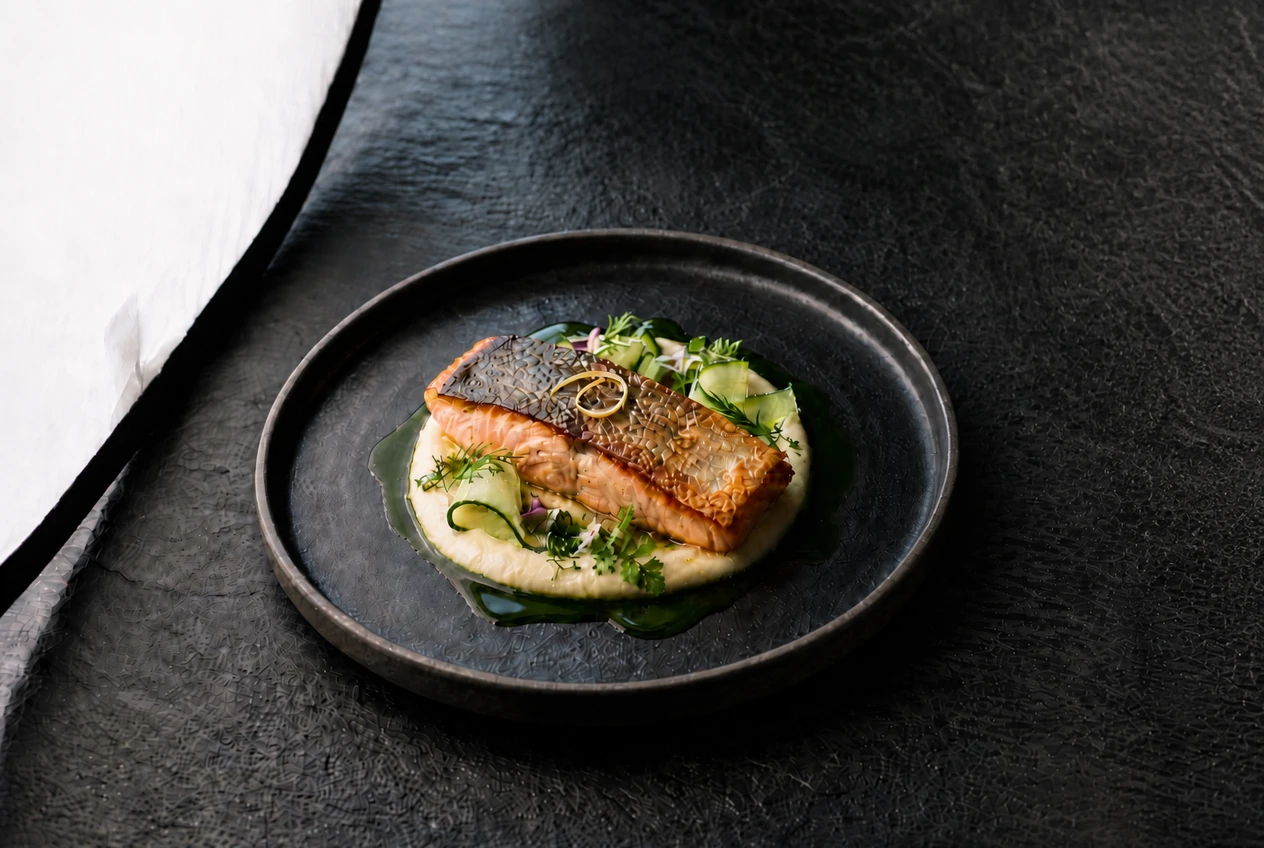
For food and product under a large scrim, watch tabletop reflections. Soft daylight from a big overhead silk draws long soft speculars on glaze; a hard window slit draws small hot spots. Side cards and black cards still apply under the scrim — the scrim sets key quality; cards set reflection content. Keep steam and hands out of the silk’s shadow line so motion blur and soft key stay intentional.
What to look for
On faces, soft shadow edges under the nose and chin tell you the scrim is working. Catchlights should look larger and softer than bare sun — often a rectangular or panel-shaped specular instead of a hard disk. If you still see a tiny sun disk in the eye, hard light is reaching the face around or through a thin panel; fix coverage. Skin texture should calm without turning plastic; if pores vanish and the face goes gray, you may be underexposed under heavy diffusion or filling too much from below.
Hair and shoulders should not suddenly turn hard while the cheek is soft. Scan the silhouette for mixed quality. Background brightness relative to the face is a second check: outdoor scrim portraits often keep a brighter world behind a correctly exposed soft face — that contrast is allowed and often desirable. On tabletop, specular size on sauce and ceramic should match a large source; tiny white dots mean the scrim is not the effective key on that surface.
Wind and motion show up as flicker in the soft pool when handheld silk shakes. Stabilize the panel or switch to a framed overhead before you blame the camera. Color shifts under dense diffusion can go slightly cooler; white-balance from a card under the scrim, not from open sun beside it.
Common mistakes
Using a scrim as a reflector. Holding diffusion beside the face in open shade does almost nothing useful; the panel must intercept the hard source. Symptom: no change in shadow edge, frustrated assistant, brighter only where the panel bounced a little skylight. Move the silk into the sun path between sun and subject.
Stopping at “add silk” without covering the whole head. A small disc over the forehead leaves a hard jaw and mixed catchlights. Enlarge or move closer until nose, chin, and both ears sit in one soft quality, then refine.
Fighting the background with the scrim. Expecting a handheld panel to darken a sunlit building behind the subject leads to endless underexposure on the face. Soften the subject, then solve background with angle, ND, or composition. The outdoor invariant still holds: you do not manage the distant sun with a one-meter tool.
Skipping fill discipline after softening. Soft noon key plus silver bounce at arm’s length can flatten the face into a beauty dish look you did not ask for. Set scrim, read cheek contrast, then add bounce in small moves. Soft key does not mean zero shadow — it means a soft edge on the shadow you still chose.
Try it yourself
Walk the setup one light at a time, or dial passes live in the relight studio.
Terms in this guide

Tools in this guide
Part of a learning path
Related guides
Reflector fill outdoors and in
Bounce light back into shadow side — silver, white, or gold — without a second source.
ND filters and daylight exposure
Fixed ND, variable ND, and when high-speed sync replaces a filter — keep wide aperture in sun without lying about your light recipe.
Window light for portraits
Read angle, size, and time of day — then match or complement window light in studio.