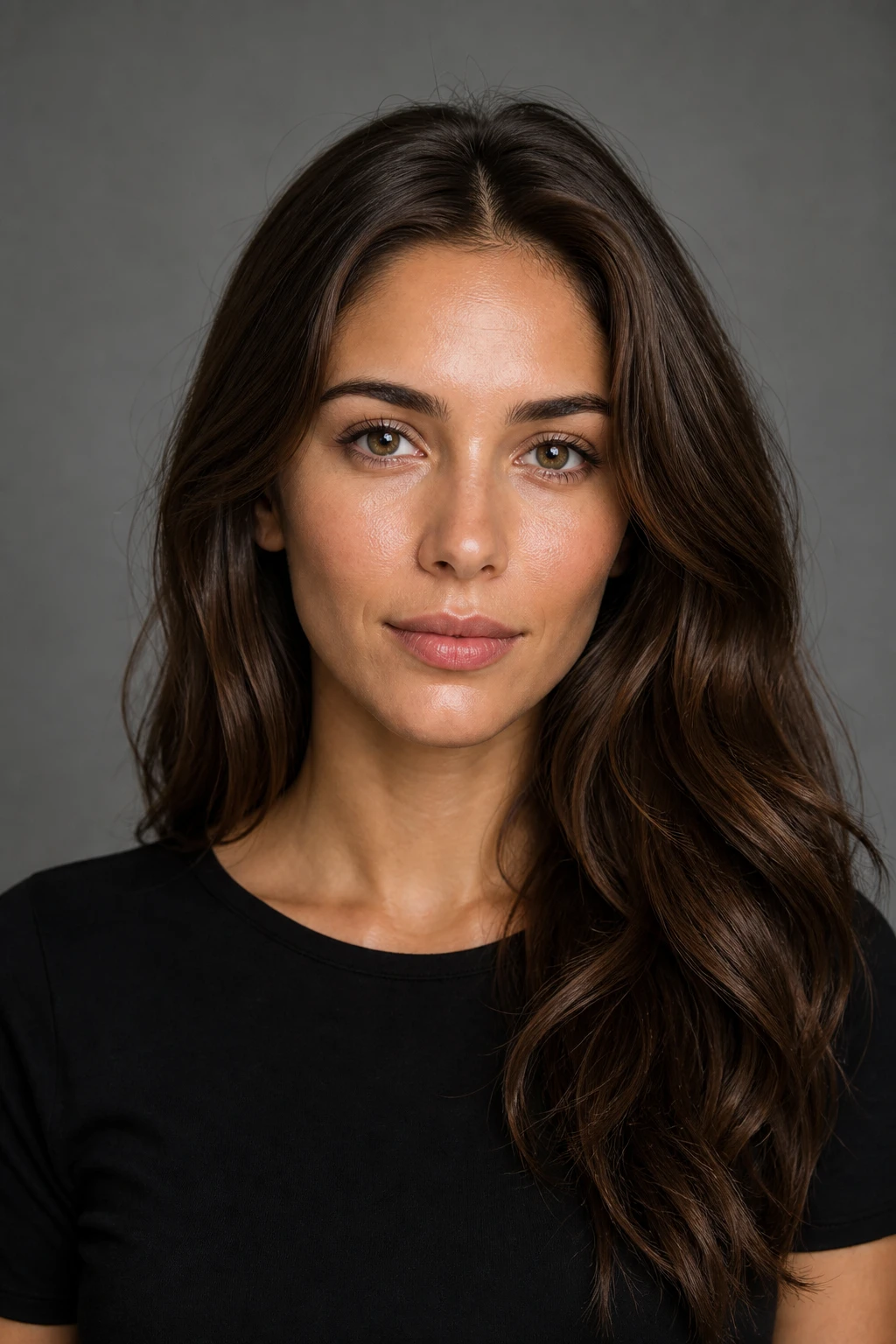
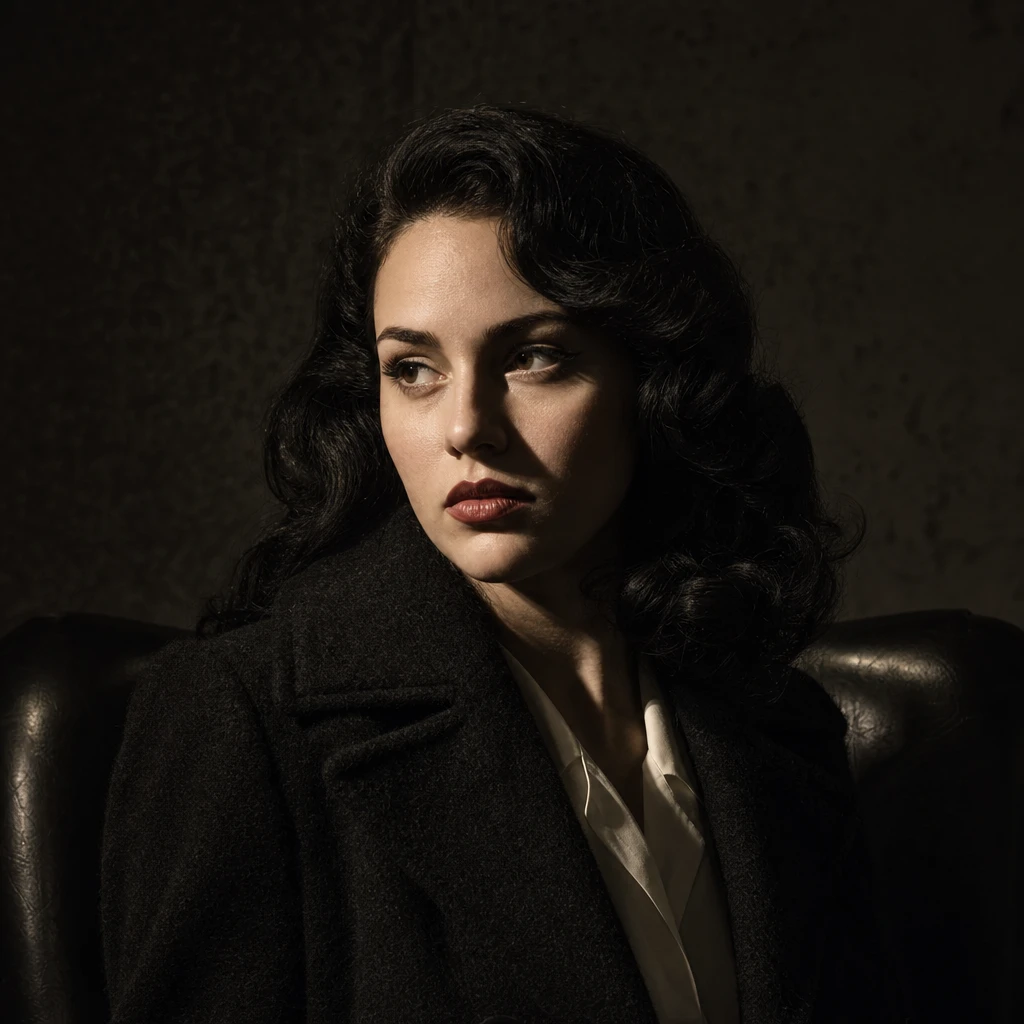
Light quality is how hard or soft a shadow edge looks — not how bright the light is, and not how deep the shadows run. A small source far from the face draws a crisp black line under the nose; the same power through a large source close to the face turns that line into a soft roll. Softness is set by angular size: how big the source looks from the subject’s point of view. Buy a bigger modifier, or walk the one you own closer — both raise angular size; only one costs money.
When it matters
Reach for hard light when the picture needs a graphic edge: film-noir cheekbones, product speculars, a crisp rim that separates hair from black. Reach for soft light when skin must stay kind, labels must stay readable without knife-edge shadows, or you need wrap that forgives small posing mistakes. Skip the softbox when you are chasing a hard graphic look and then wondering why the shadow will not sharpen — softness is not a mood filter you dial after the fact; it is geometry you set with size and distance.
Softness is also not the same question as lighting ratio. You can light softly at 8:1 (deep open shadows with feathered edges) or hard at 2:1 (crisp edges with bright fill). Mixing the two words is how people buy a huge octa and still get a flat face — or a bare speedlight and still get muddy contrast.
How to see it — our ladder
Our light-quality lab holds one face, one key angle, and five frames of increasing angular size. The numbers are authored gear and distance, not adjectives:
| Stop | Gear | Distance | Angular size | Edge | | --- | --- | --- | ---: | --- | | 1 | Bare speedlight | 2.0 m | 3° | Razor — Hard | | 2 | 60 cm softbox | 2.0 m | 17° | Firm, thin feather | | 3 | Same 60 cm box, walked in | 1.0 m | 33° | Everyday soft portrait | | 4 | 120 cm octabox | 1.2 m | 53° | Creamy cheek roll | | 5 | Same octa, pulled close | 0.8 m | 74° | Wraparound — shadows almost gone |
Stops 2→3 and 4→5 are the same modifier at two distances. Softness doubles without buying anything — that is the cheapest upgrade in lighting, and it is why “I need a bigger softbox” is often the wrong first move. Scrub the lab rail and watch the nose and jaw edge; the catchlight grows with the source.
In the catalog, Softbox Distance Comparison Portrait teaches the same lever as a single-variable study: hold the box, change distance, read the edge. Film Noir Fresnel keeps a hard beam for graphic mood; One-Umbrella Beginner Portrait is the soft everyday wrap. Softbox Grid Spill Control shows that a soft source can still be contained — softness of the edge is not the same as spill on the background.
What people get wrong
Calling power “hard.” Turning a softbox up does not harden the shadow; it only brightens the exposure. Hardness is angular size. If the edge is soft and you want it hard, shrink the source or walk it back — do not reach for the power dial.
Calling a softbox soft at any distance. A 60 cm box at 2 m is only about 17° on our ladder — firm, not wraparound. At 1 m the same box is 33°. Distance is half the modifier.
Confusing soft with low contrast. Soft edges and deep ratios can live together. If the face feels flat, check fill and ratio before blaming the softbox.
Gridding to “make it harder.” A grid mainly kills spill and narrows the beam; the face edge may stay soft. Use a grid when the background must stay dark (grid spill control), not as a substitute for a smaller source when you need a hard nose shadow.
In the library
Start with the light-quality lab, then Softbox Distance Comparison, One-Umbrella Beginner Portrait, Film Noir Fresnel, and Octabox Soft Portraits when you want the long-form soft-modifier walk.