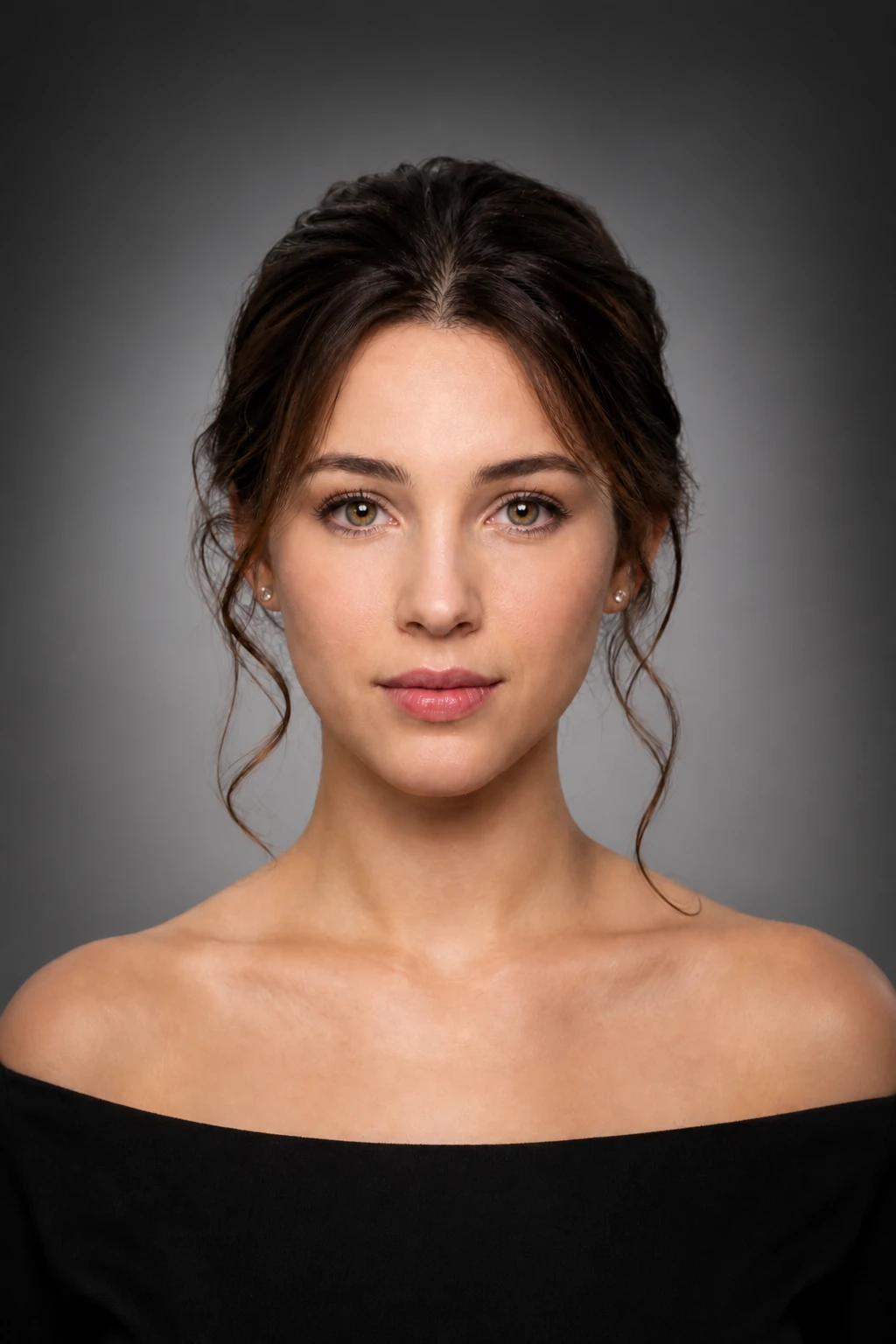
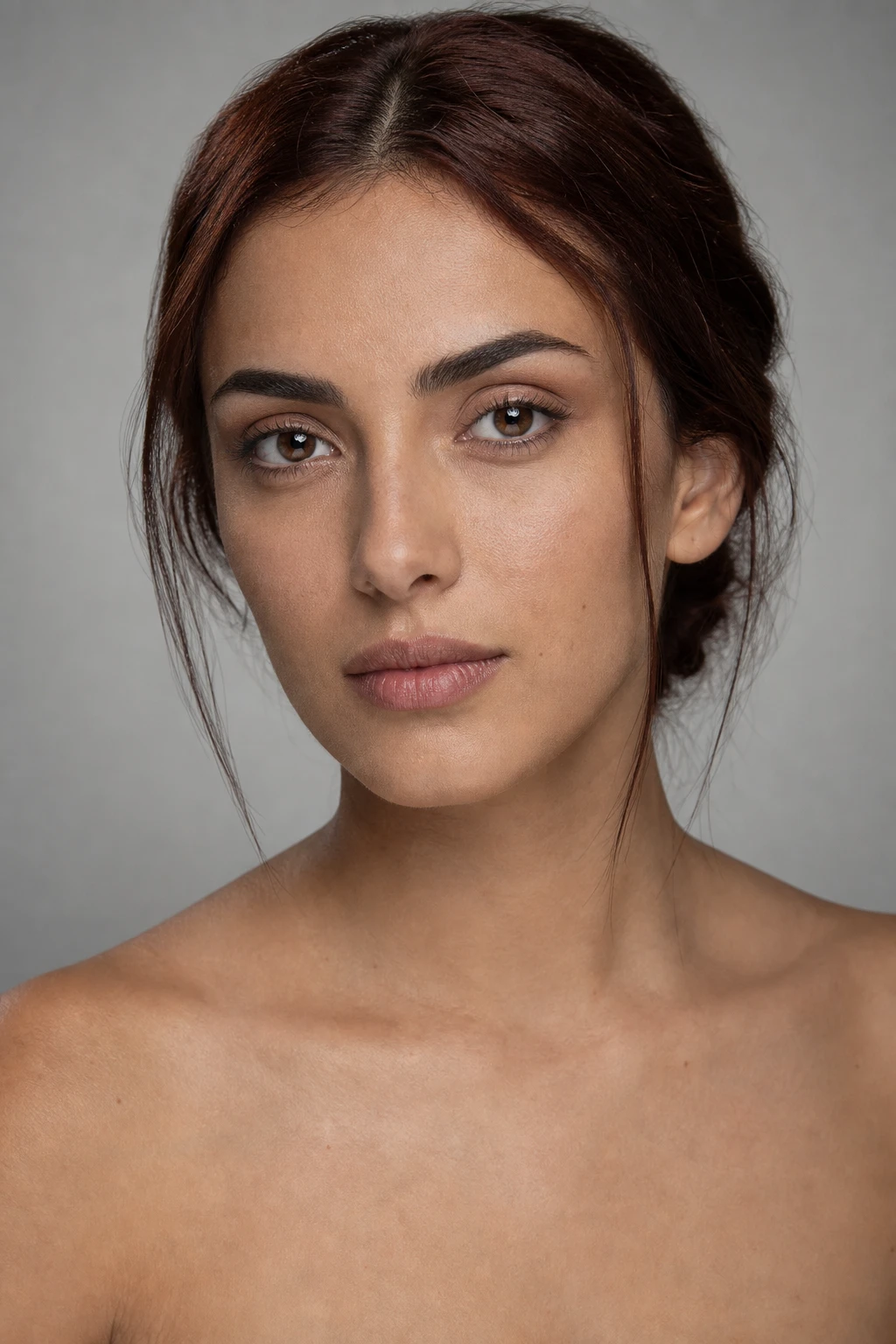
Glass Is a Mirror
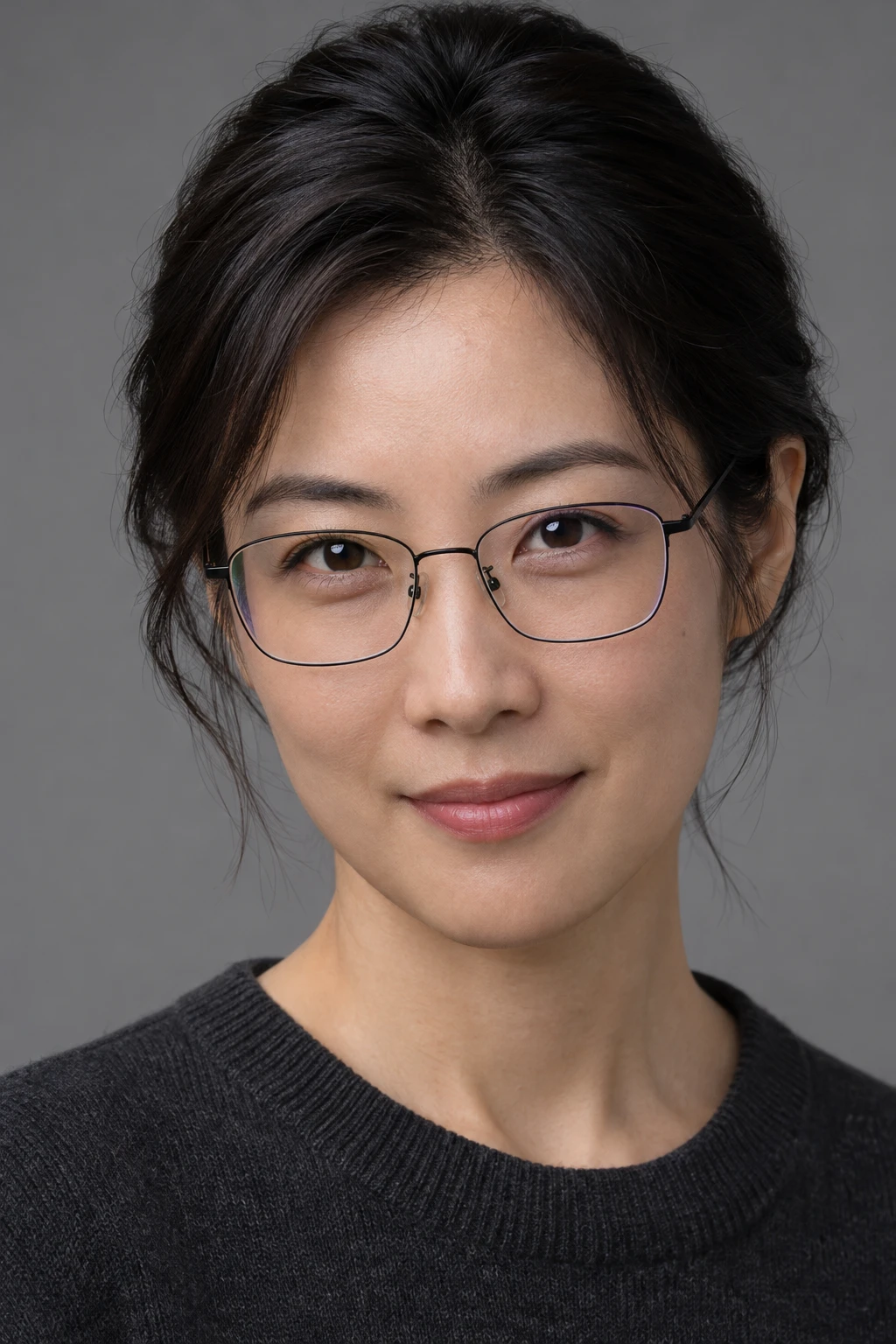
Eyeglasses Portrait Without Glare
Lighting setup
A head-and-shoulders portrait of a woman in thin black metal-framed glasses, chin slightly lowered, on mid-grey. One large softbox, high and wide at camera-left, lights her softly; its reflection misses both lenses, so her eyes read cleanly through the glass. The only traces of the lenses are a faint green-violet tint at the outer edge of the lens on the light's side and a slight step in the cheek line behind each edge.
Learning path
This setup appears in curated assignments — continue the sequence when you are ready.
- Step 8/10Beginner portrait lighting
One more headshot problem before you add a second source: glasses. Raise the box and take it wide until the lenses stop mirroring it — judge the glass, not the face.
- Lights
- 1
- Contrast
- About 1.3:1 across the face (≈0.4 stop)
- Catchlight
- One soft catchlight high on the left of each iris (about 10–11 o'clock); nothing on the lenses
- Key position
- Large softbox about 45° camera-left and high — about 40° above her eye line
- Technique
- Key light
- Mood
- Soft / Commercial
- Quality
- Soft Light
- Subject
- Pending
- Environment
- Studio
Final look
Base setup
A spectacle lens is a curved mirror. Seen from the camera, it reflects a small slice of the room around and just below the lens — so any light near the camera, or low in front of her, lands on the glass as glare over the eyes. Raise the softbox and take it wide, and its reflection is thrown out of that slice: here the box sits about 45° round and about 40° up, and even its nearest edge stays out of the lenses' view. Lowering the chin tilts the lenses down, which pushes the reflection of a high light further away. Glare arrives first at the edge of the lens nearest the light — that is where the faint coating tint sits here, so it is the edge to watch as you move the box. The shadow side stays open, less than half a stop down, because the box is large and close.
Camera & framing
ISO
ISO 100
Shutter
1/200s
Aperture
f/5.6
Exposure
Lens
85mm
Camera height
Eye level
Framing
Head and shoulders, chin slightly lowered, framed close to the top of her hair
Lens & framing
Key notes
- 1Place the box high and wide — here about 45° camera-left and well above her eyes — then look at the lenses, not the face.
- 2Ask for the chin slightly down: it tilts the lenses toward the floor, away from a high light.
- 3If glare appears, it starts at the lens edge nearest the light: raise the box or move it wider, a few degrees at a time.
- 4Every other source obeys the same rule — no reflector under the face, and any fill high and wide on the other side.
- 5Check the eyes at 100 % before you shoot the set: glare over an iris is slow to retouch and rarely convincing.
Gear alternatives
Same lighting job — budget, mid, and pro tools. Highlighted cells match what this setup names.
Soft key
softbox
Soft wrap with controllable edges
- Budget
- Shoot-through umbrella
- Mid · this setup
- Rectangular softbox
Main flash
strobe
Controlled burst power for modifiers and freeze
- Budget
- Speedlight / hot-shoe flash
- Mid · this setup
- Monolight strobe
- Pro · this setup
- Pack + head or high-output strobe