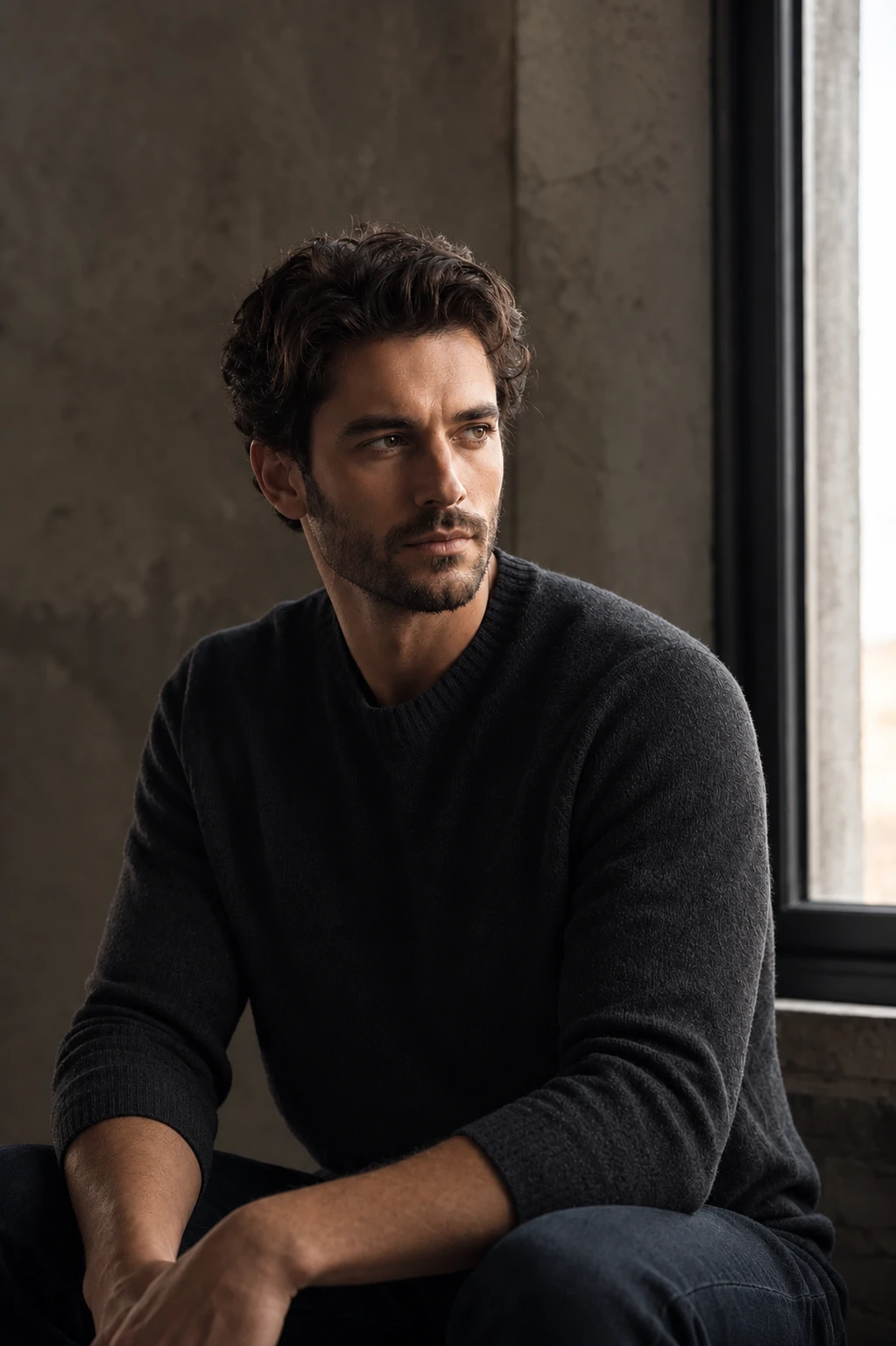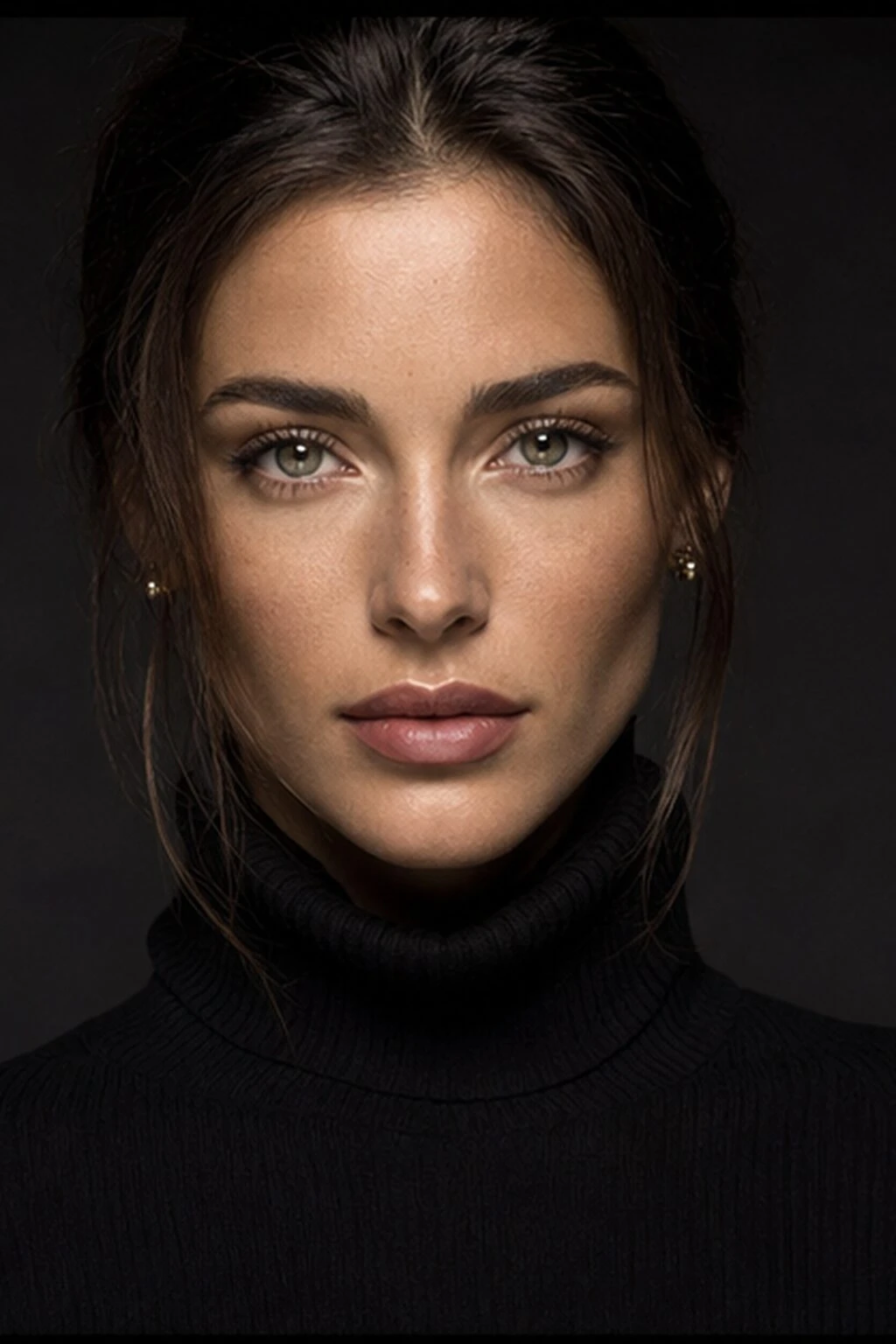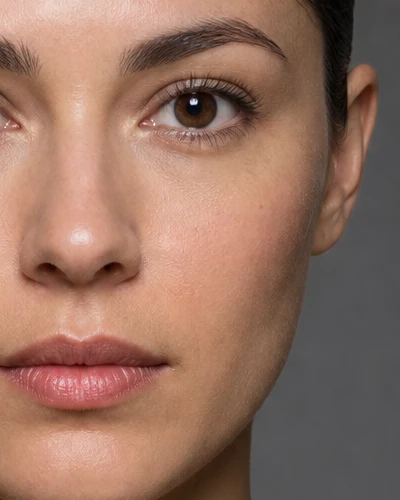
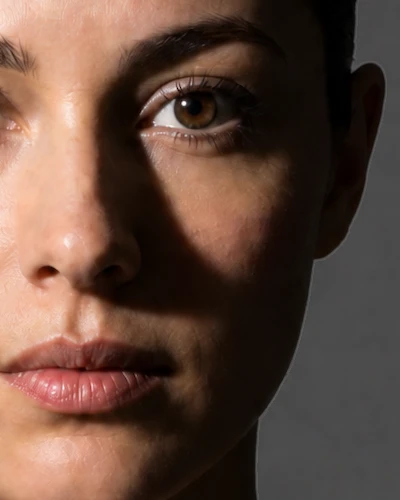
The key light is the shot's main light — the one that decides where the shadows fall and therefore what shape the subject appears to have. Every other light in a setup is defined relative to it: a fill answers the key's shadows, a rim separates what the key models, a background light controls what the key leaves behind. One light earns the name in every setup, and it is the one you place first.
When "key" means something
The word matters most when there is more than one source: in a three-light setup, knowing which one is the key tells you which one to move when the face looks wrong. In 90 of the 101 setups in this library, exactly one lamp carries the key role — and in single-light setups the key is simply the light, which is why one-light work is the fastest way to learn what the key alone can do.
How to read a key from a photograph
Two questions, both answerable from pixels: which side, and how far off-axis.
Side is easy — the brighter cheek points at the key. Off-axis angle is a magnitude, and our own library measures it as a ladder: an on-axis key leaves the two sides of a face within about a third of a stop of each other; at 30° the gap grows to a stop or more; at 40°, about three stops; and at 45° — the classic portrait key — four stops and beyond. On our dramatic portrait, the temple on the key side measures +4.68 stops over the shadow side: a 45° key, stated by the pixels as plainly as by the diagram.
The catchlights corroborate: their position in the iris points back at the key, and their shape names its modifier — a square catchlight is a softbox, a round one an umbrella or dish.
What people get wrong
Moving the key last. When a multi-light setup looks wrong, the instinct is to add or adjust fill. Usually the key itself is the problem — its angle sets the pattern (butterfly, loop, Rembrandt are all just key positions), and no amount of fill repairs a pattern that is wrong at the source.
Confusing bright with key. The key is the light that models — the one whose shadows define the form. A rim can be the brightest light in the frame and still not be the key; in our backlit reference the window out-powers everything, yet the face is keyed by a humble reflector in front.
Letting the key drift while chasing power. Angle changes shape; power only changes exposure. If the face's shape is right but dark, turn the power up — do not slide the stand.
In the library
Ninety setups carry an authored key. Four teach it best: Dramatic Portrait (hard 45° key, measured), Soft One-Light Headshot (the same angle made gentle by a big modifier), Rembrandt Window Portrait (daylight as key), and Butterfly Beauty Dish Portrait (the on-axis case).