Guide Number (often printed GN) is a flash’s power rating: how far that flash can still deliver a usable exposure at a chosen aperture and ISO. Manufacturers usually quote it in meters (or feet) at ISO 100 for a full-power dump into a standard reflector. It is not a softness rating, a zoom setting, or a brand-quality score — it is a distance budget for one full pop.
The working relationship is simple: Guide Number ÷ f-number ≈ subject distance (in the same units the GN uses). A flash rated GN 36 (meters) at f/4 wants the subject near 9 m for a full-power, ISO-100 exposure outdoors with no bounce. Halve the distance and you gain about two stops of light; double it and you lose about two. That is the same inverse-square physics you already feel when you walk a softbox in or out — Guide Number just puts a number on the bare flash’s ceiling.
When the number matters
Use Guide Number when you are planning range: will this speedlight hold a face across a plaza, fill a group on stairs, or punch through a silk without climbing to ISO 6400? Use it when comparing two flashes at the same ISO and zoom — the higher GN means more reserve before you run out of stops.
Ignore the brochure number when the flash is bounced, gelled, behind a softbox, or cut with a grid. Those tools spend power on purpose. The bounce entry covers why a ceiling eats stops; Guide Number only describes the lamp before you tax it.
Three dials people mix up
Photographers often ask for “types of speedlight” when they mean three different controls:
1. Power (output) — manual fractions such as 1/1, 1/2, 1/8, or a studio pack’s continuous dial. Lower power = less light at the same distance = you must move closer or open the aperture. This is the real “how bright” lever on modern flashes.
2. Distance (stand placement) — moving the flash closer or farther changes exposure by inverse square and also changes how hard or soft it looks (light quality). Guide Number tells you the far end of what full power can still hold; walking in is how you spend less power for the same exposure.
3. Zoom head (coverage) — many speedlights zoom the reflector from wide (~24 mm) to tele (~105 mm). Zoom does not invent watts out of nowhere; it concentrates the same flash into a narrower beam so the center of the frame gets more light and the edges fall off. Useful for a distant subject or a gridded editorial look — wrong for even wall bounce, where you usually want the head wide.
Older “auto” or thyristor flashes (and some simple fixed-output units) hide power behind a sensor that quenches the tube when it thinks the subject is lit. Useful for run-and-gun, but harder to teach: the flash decides the dump, so your diagram cannot name a stable fraction. Manual power is the teaching default on LightSchemes — you set the stop, then move the stand.
Studio strobes and speedlights obey the same Guide Number / distance idea. The strobe simply starts with a larger budget (more watt-seconds, slower recycle). A pocket flash that is “weaker” is often just out of GN range for that aperture — open up, raise ISO, move closer, or switch to a bigger pack.
How to read it on set
Meter or chimping still wins over arithmetic, but the Guide Number habit keeps you honest before you climb a ladder: if the math says you need f/2.8 at 12 m and you are at f/8, the flash is not broken — you asked for four stops more than the rating allows. Bounce and modifiers make the shortfall worse; grids and zoom heads can recover a little in the center of the frame by concentrating the beam.
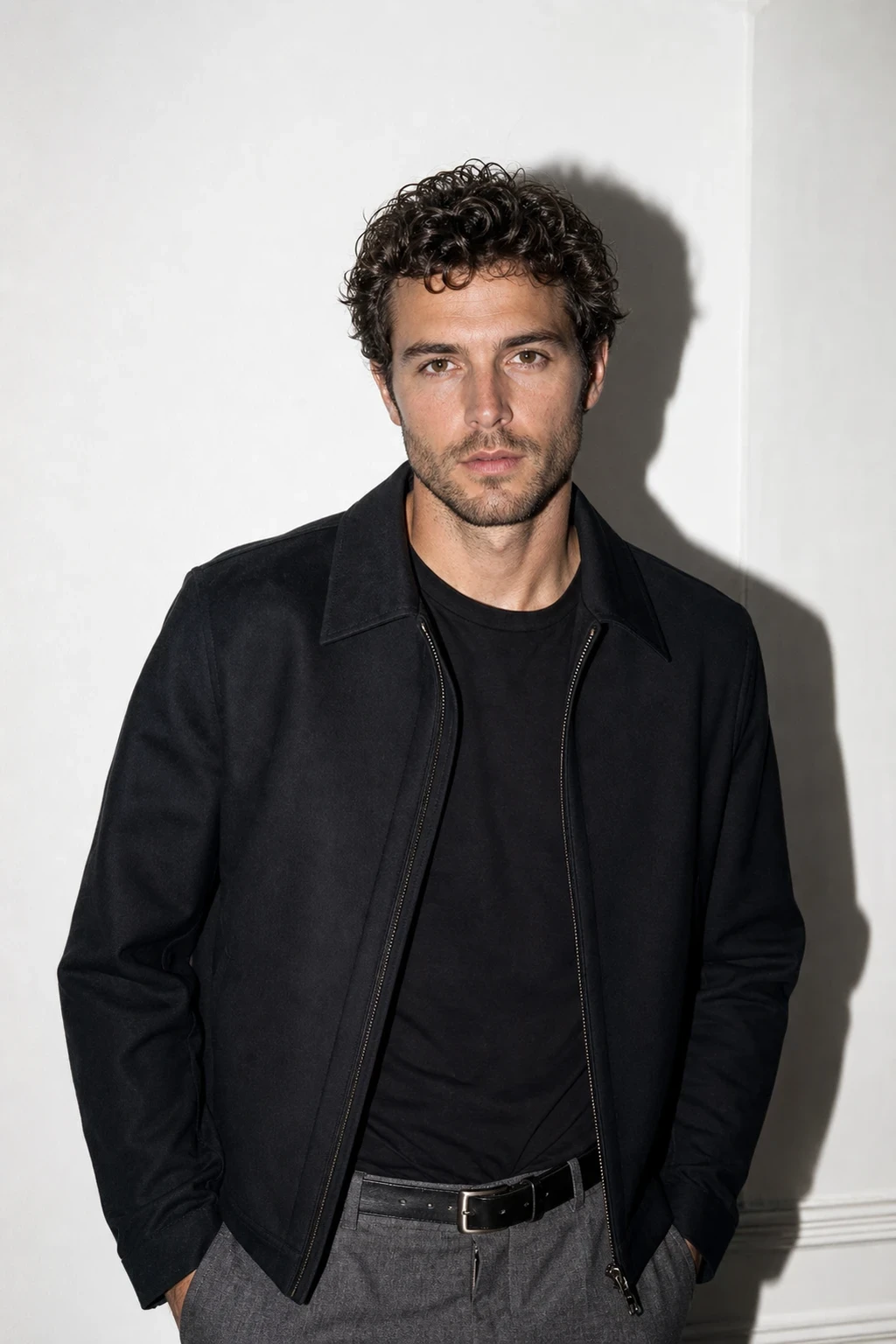
In our library, On-Camera Direct Flash Fashion is the blunt case: the flash sits near the lens, power and distance decide whether the face holds without a softbox. Speedlight Gridded Editorial Portrait shows the other extreme — a small hard source with a grid, where zoom and power both matter and every stop is precious. Speedlight Bounce Event Portrait spends Guide Number into a wall on purpose so the surface becomes soft; the brochure GN still tells you whether you have reserve left after that tax.
What people get wrong
Treating Guide Number as “quality.” A high GN flash can still look ugly on-camera; a lower GN flash with a bounce card can look beautiful. Softness is size and distance (light quality), not the number on the box.
Confusing zoom with power. Zooming to 105 mm brightens the center and darkens the edges. It is not the same as raising 1/4 → 1/1. If the whole face needs more light, raise power or move closer.
Believing the published GN outdoors with a softbox. Softboxes, umbrellas, and ceilings rewrite the budget. Use Guide Number to choose which flash to bring, then meter the modified result.
Leaving auto/TTL as the permanent mode. TTL is a starting guess. Once the ratio and distance are right, lock manual power so the next frame matches the last — especially when teaching from a scheme.
In the library
Hardware: speedlight and strobe. Placement craft: Off-camera speedlight basics. Frames that make the power story visible: On-Camera Direct Flash Fashion, Speedlight Gridded Editorial Portrait, and Speedlight Bounce Event Portrait. For how distance changes the edge of the light, not only the exposure, read light quality.